Running my first marathon
Since I was a kid, sports have always been part of my life. I grew up playing soccer several times a week, discovered gravel biking when I moved to Lake Constance, and more recently got into lifting weights at the gym. Soccer was the biggest part for me: training and matches three times a week for years. After a severe knee injury and many muscle strains, I decided to stop playing actively.
To keep my cardio up and push myself for a real challenge,, I decided to register for my first major running event. Not a half-marathon, but straight to the full distance: the "3-Länder-Marathon" in Lindau / Bregenz.
I knew a half-marathon would be doable, even with messy training. But 42 kilometers in less than 4 hours? That required months of consistency. The actual challenge is not only race day, but all the weeks and months before it.
Training and Preparation
The marathon was scheduled for October 12, 2025. The soccer season ended at the end of May, so June was a clear starting point for running. That meant about four months of training. It should be enough, since I wasn't starting from zero and already had a good fitness base.
I looked up different training plans. Most of them recommended three or four runs per week. Because I still wanted to go to the gym or calisthenics park 2-3 times a week, I set up my own compromise:
- One short run (~1 hour) with intervals (500-1000 m, around 180 bpm heart rate, 3-5 repeats)
- One long run every weekend, starting at 20 km and slowly increasing up to 35 km
- Optional recovery run when there is time and motivation (30-45 minutes, easy pace)
The goal was clear: start slowly and increase volume while listening to my body. The strain on the body during long-distance running is definitely different from the strain in a soccer match. The body has to adapt to this specific discipline. In the last two weeks before the race, you normally taper down: rest and decrease volume to be fresh on race day. Nutrition and sleep are also important factors, not only for running but in general.
Starting with my first runs longer than 15 km, I quickly had problems with my feet. My old running shoes were okay, but after a professional running analysis on a treadmill with cameras, we found out that they didn't really fit my body. With my thin Achilles tendon and a tendency for my ankle to collapse inward, I needed more stability. After changing shoes, things got much better. If you ever decide to run long distances, I highly recommend going to a professional running shop and getting an analysis for your specific needs. A trending shoe doesn't mean it's a good fit for you. I switched from the popular Hokas Clifton 9 to Brooks DEFYANCE 13, and my feet and knees felt much better, even though the Brooks aren't as cushioned as the Hokas.
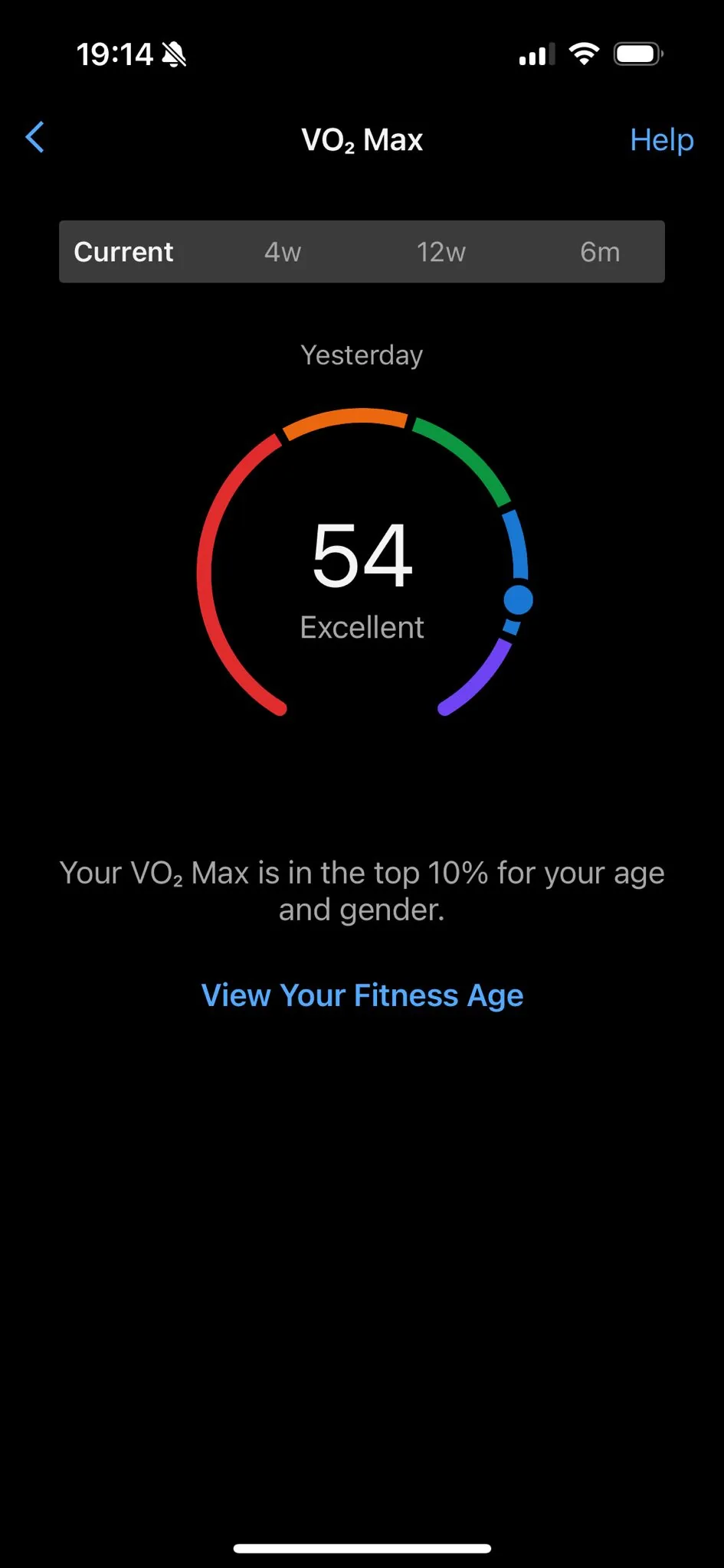
For intervals, I never had issues. A 10 km run with high intensity was fine for me, and I quickly pushed my VO₂max up to 54 (ml/(kg*min)), where it now seems to saturate. The long runs were much tougher. I had to force myself to stay slow, keep the heart rate in zone 2, and not over-pace at the beginning of a 20+ km run.
Another newbie mistake I made: I thought I could run without nutrition. After my first 30 km run, I felt really sick. Lesson learned: now I always carry a running vest with 1.5 liters of water, electrolytes, and some fast carbs. With that, even a 30 km Sunday morning run feels manageable, and I can still enjoy the rest of the day afterwards.
The biggest challenge was not motivation but time. A long run of 30+ km easily takes more than three hours. During summer, with trips, friends, and family visits, I sometimes had to do these runs mid-week or very early in the morning.
Except for one week when I caught a summer cold, the training went pretty smoothly. For sure, there will be days when your legs feel heavy or you're just not in the mood to run. If you want to run a marathon, be aware that you'll challenge not only your physical limits but also your mental limits. Not every run will be fun. Sometimes it rains, your knee hurts, or you really wish there was a toilet nearby. That's all part of it.
Crossing the 30 km mark in training gave me confidence. I knew that if I could do 30, I could also do 42 with the race atmosphere. Still, I wasn't sure I could finish in under 4 hours.
Another important point is knowing what you're going to wear on race day. Test those clothes during your long runs. You should also know what to eat before the race. For me, Skyr with oats, banana, and dates worked really well.
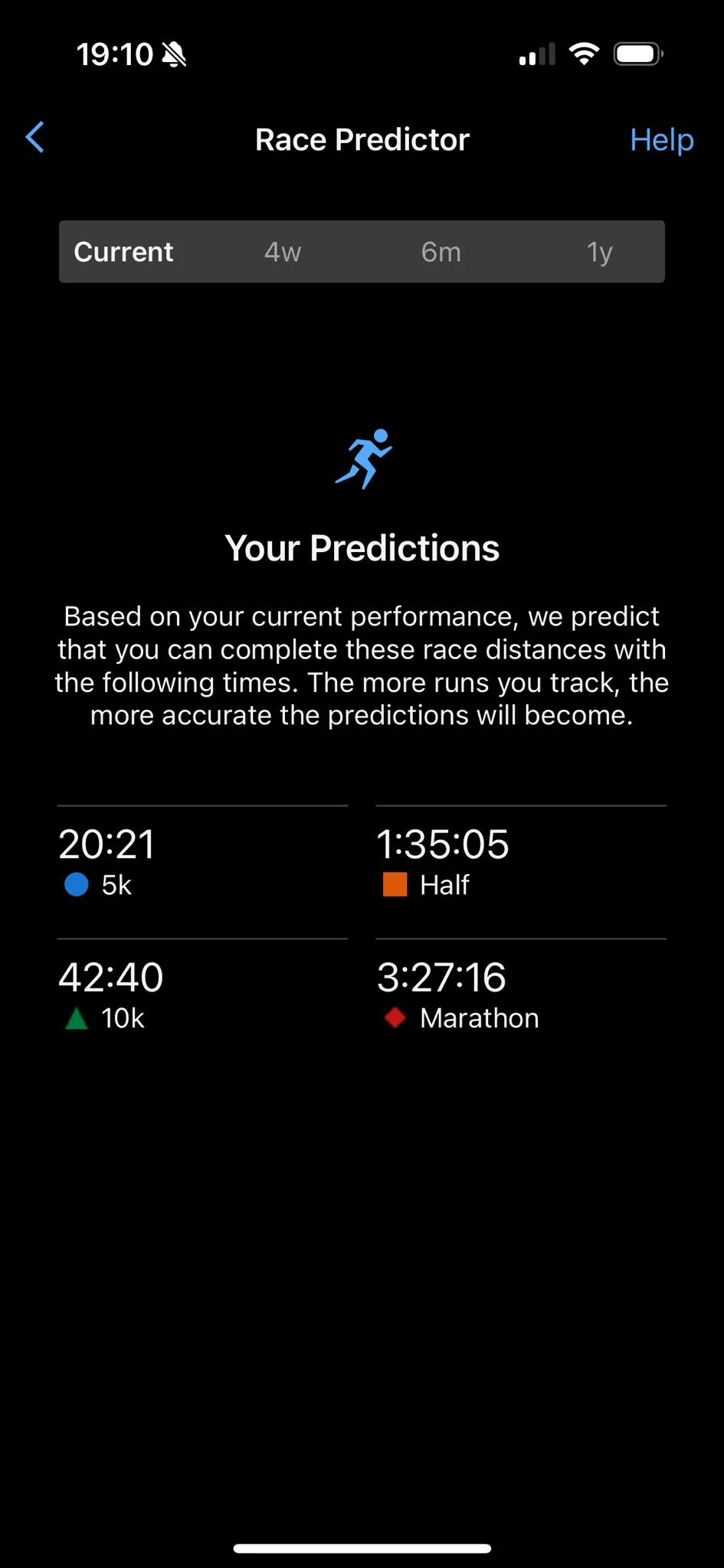
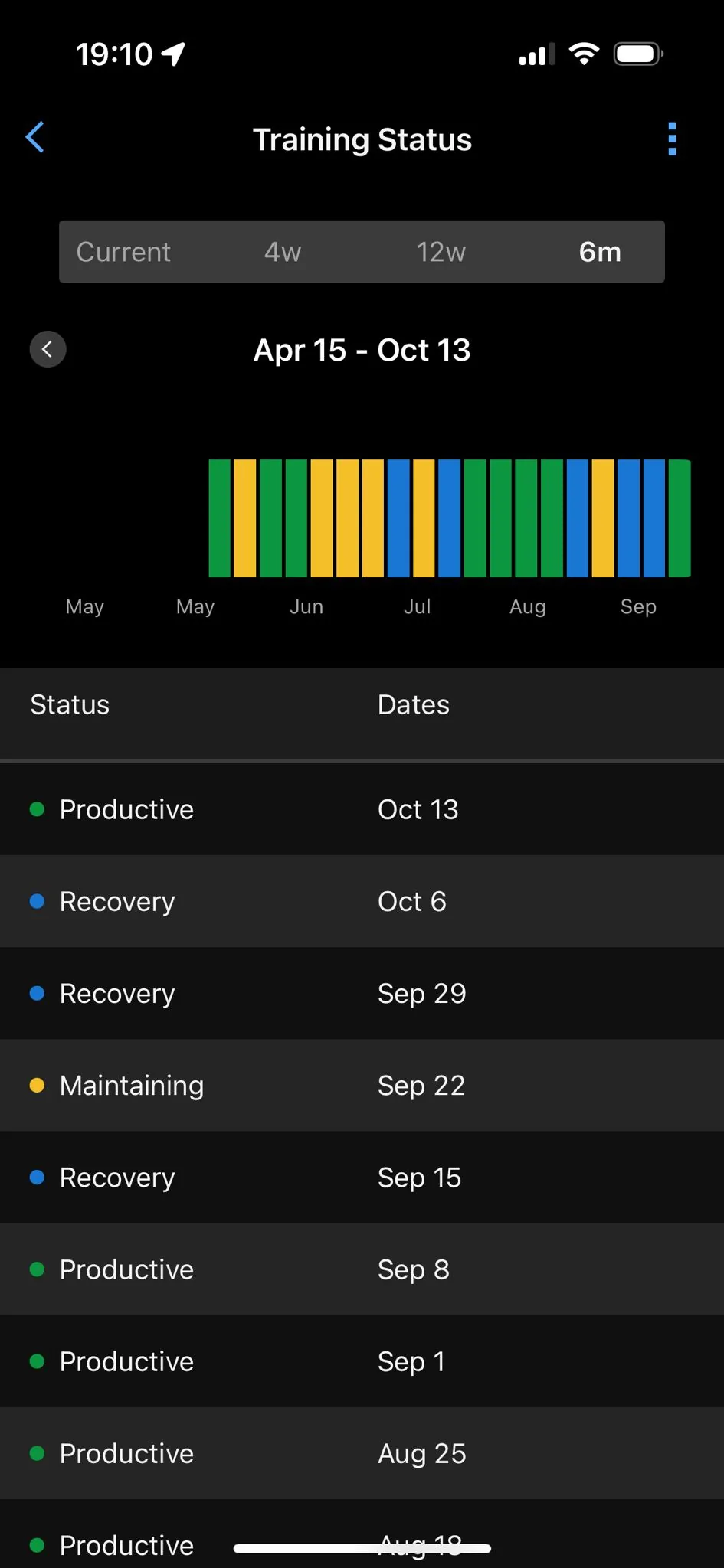
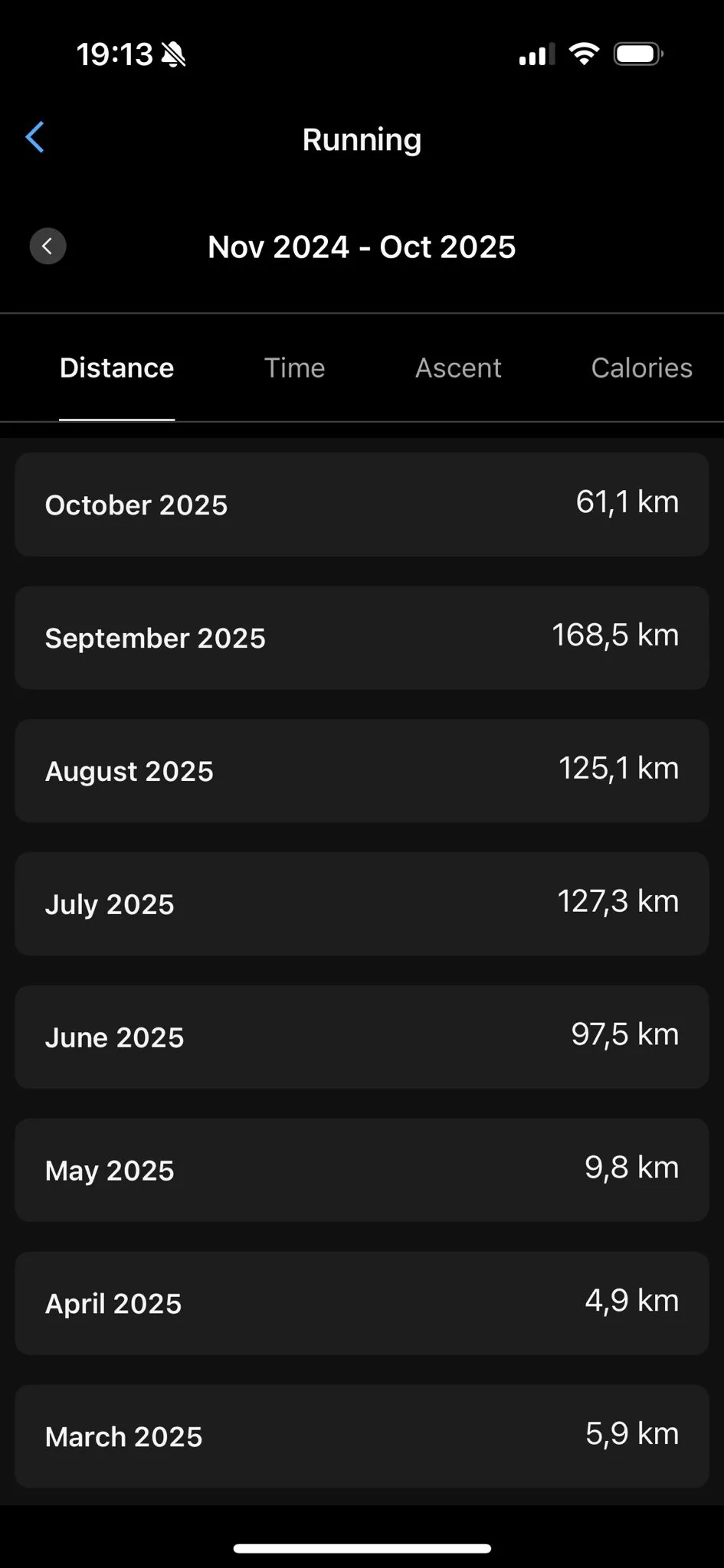
In the images below, you can see some of my training data from Garmin Connect. I continuously increased the distance per month. Somehow I was often in the "maintaining" state and not always in "productive." Shortly before the event, I went into the "recovering" state according to the taper-down plan. The pace estimation seems to only consider cardiovascular fitness, but not muscles, tendons, and joints. These were my bottleneck when running the full marathon distance.
Race Day - and the Result
October came faster than expected. Standing at the start line in Lindau with thousands of runners, I felt both nervous and excited. I needed to run faster than 5:40 min/km on average to reach my goal, so I started at around 5:20 min/km with the plan to slow down slightly in the second half if necessary. In the end, I finished my very first marathon in 3 hours and 51 minutes.
Looking back, I can only recommend going for the full distance if you're somehow into running. Training for a marathon can be tough. It requires discipline, willpower, mental capacity, a good sense for your body, and good time management. Zone 2 training was new for me, but it had a huge positive impact on my endurance and recovery. I want to include it in my training plan throughout the year, even though it's time-consuming.
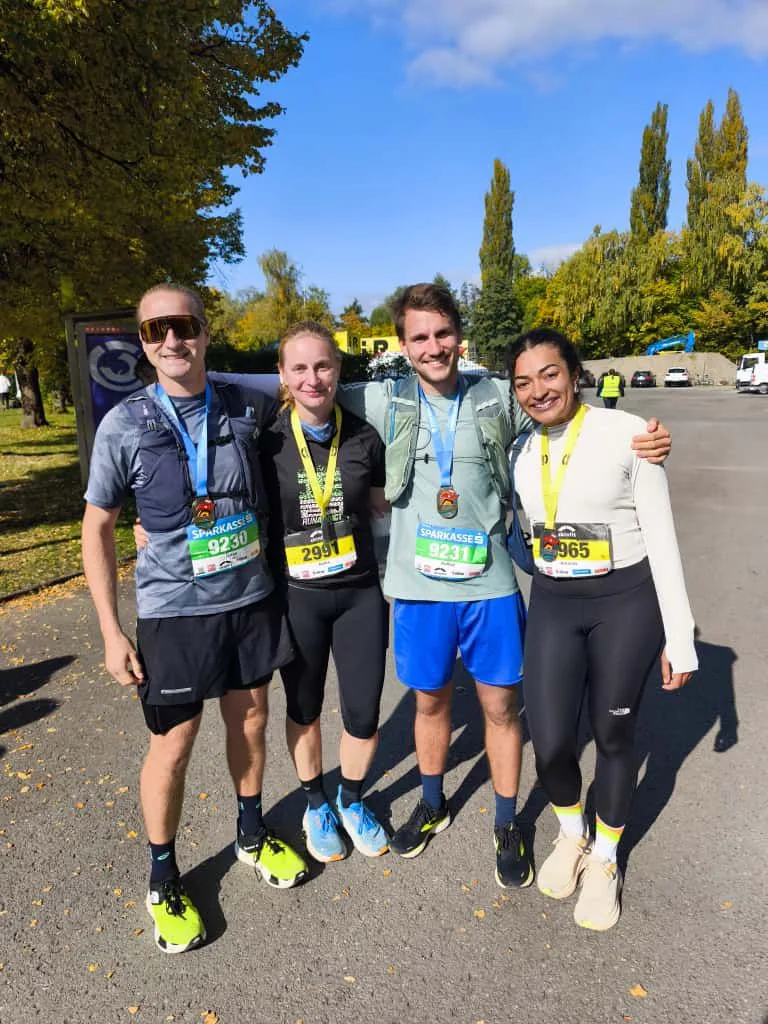
The marathon itself was a really cool event and, for me, an important new experience. I ran the full distance together with a friend, while both our girlfriends completed the half-marathon. Sharing this experience with them made it even more special.