
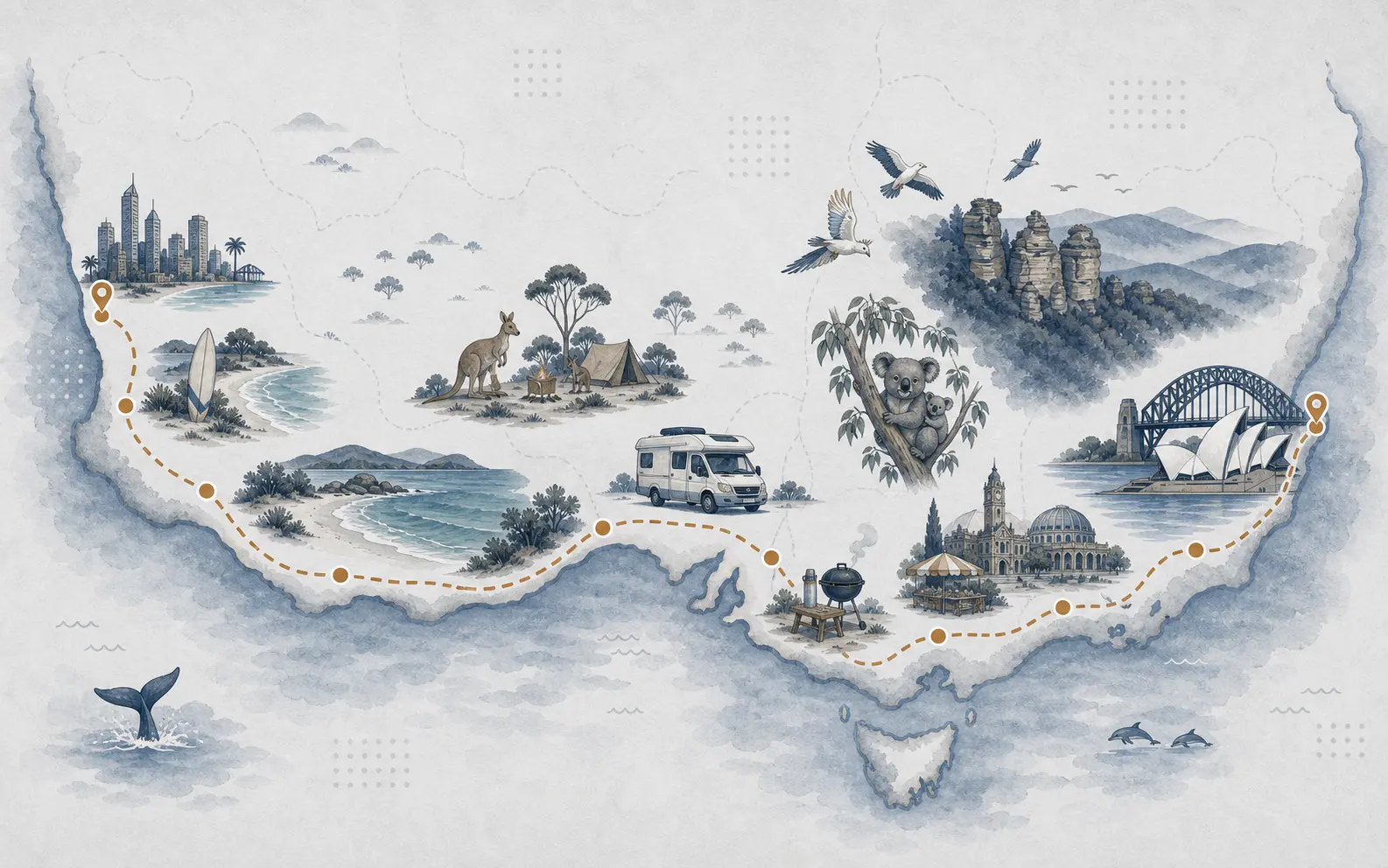
Road trip from Perth to Sydney - one month and 6,700 km (12/2025)
I've traveled quite a bit over the last couple of years: Thailand, Morocco, the United States, Peru. Great experiences, but I didn't document them properly. Not in a way that makes you feel the trip again months later. Photos are usually scattered across devices and clouds, mixed with thousands of screenshots, memes, and random food shots. And even if you do have the pictures, how often do you actually open them and recap the trip in your spare time?
I started making photo books after bigger trips. It's a lot of work, but it's the kind of work you appreciate later when you sit on the couch and flip through real pages, remembering details you would've forgotten otherwise. It's also nice when you have guests around: showing them your travel experiences in a photo book instead of swiping through your smartphone.
Since I created this website a few months ago, I wanted to write down this trip in a way that's readable and useful for future me and for anyone thinking about doing a road trip in Australia.
In December 2025, we drove from Perth to Sydney in a motorhome. Western Australia, the Nullarbor, South Australia, Victoria, and New South Wales: beaches that look like paintings, exciting wildlife, weather in all seasons, lots of BBQ stations, big cities, and very friendly people. Here is the full recap:
Ho Chi Minh City Layover (30.11)
The trip started in Munich, then a long flight to Vietnam (11 hours), and after that another flight to Perth (9 hours). We had a layover of roughly 9 hours in Ho Chi Minh City, long enough to leave the airport and get a quick impression of the city and some real food.
We took a Grab (basically Uber) into District 1, walked through busy streets and crowded markets, and ended up eating somewhere without really knowing what we ordered. To me, it felt like Bangkok in terms of energy and sweaty 30°C, but this time with Christmas decorations all over the city. Time went fast and the layover was used really well.
Perth (01.12 - 04.12)
We landed in Perth late at night, around 22:00, and took an Uber to the Criterion Hotel, where we stayed until the 4th of December. Quick check-in and straight into bed after this long trip to Australia. It's a really old hotel, but if you don't need a modern room and can live with an old carpet, this might be a cheap option with a great location. We loved it.
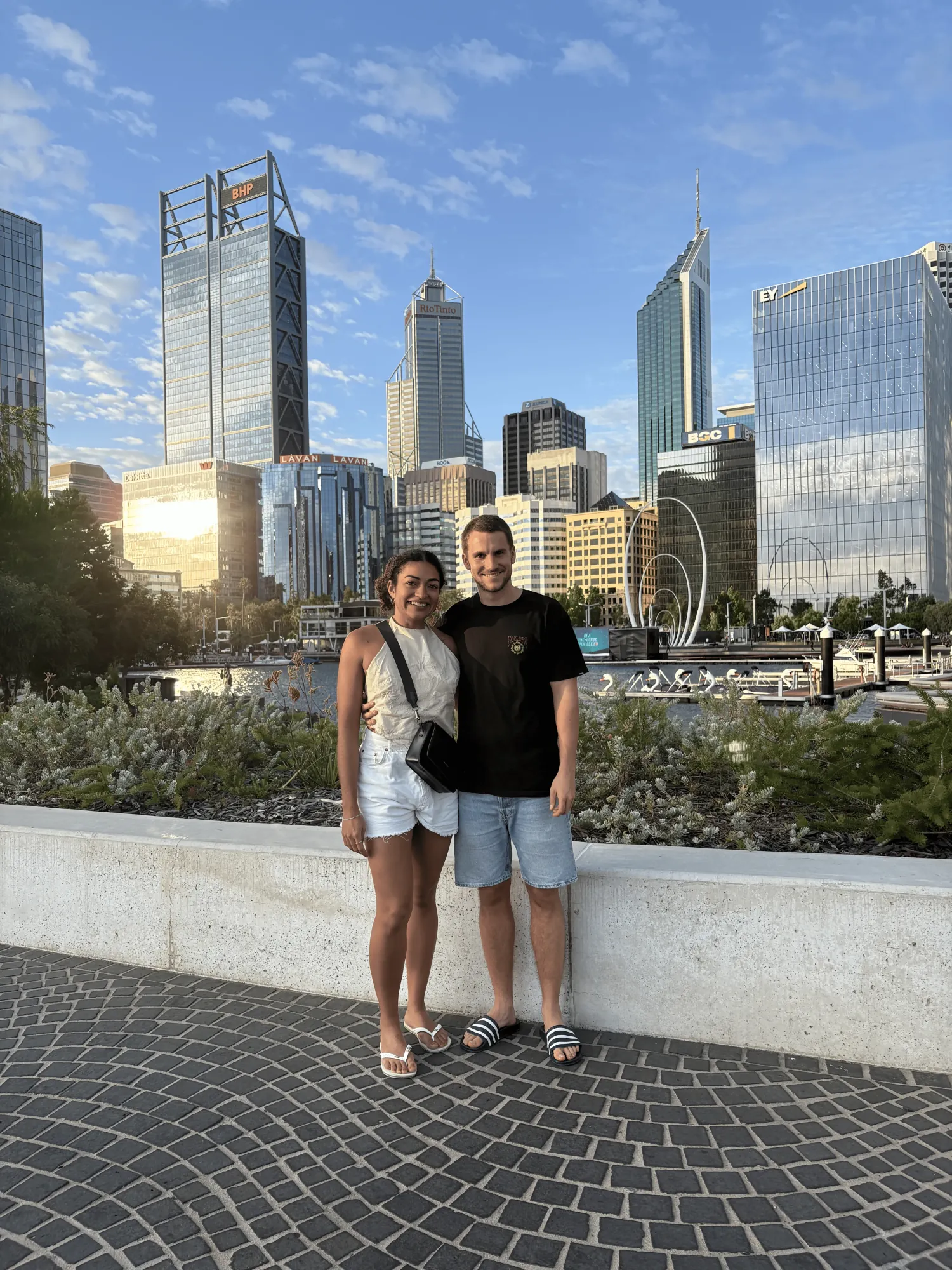
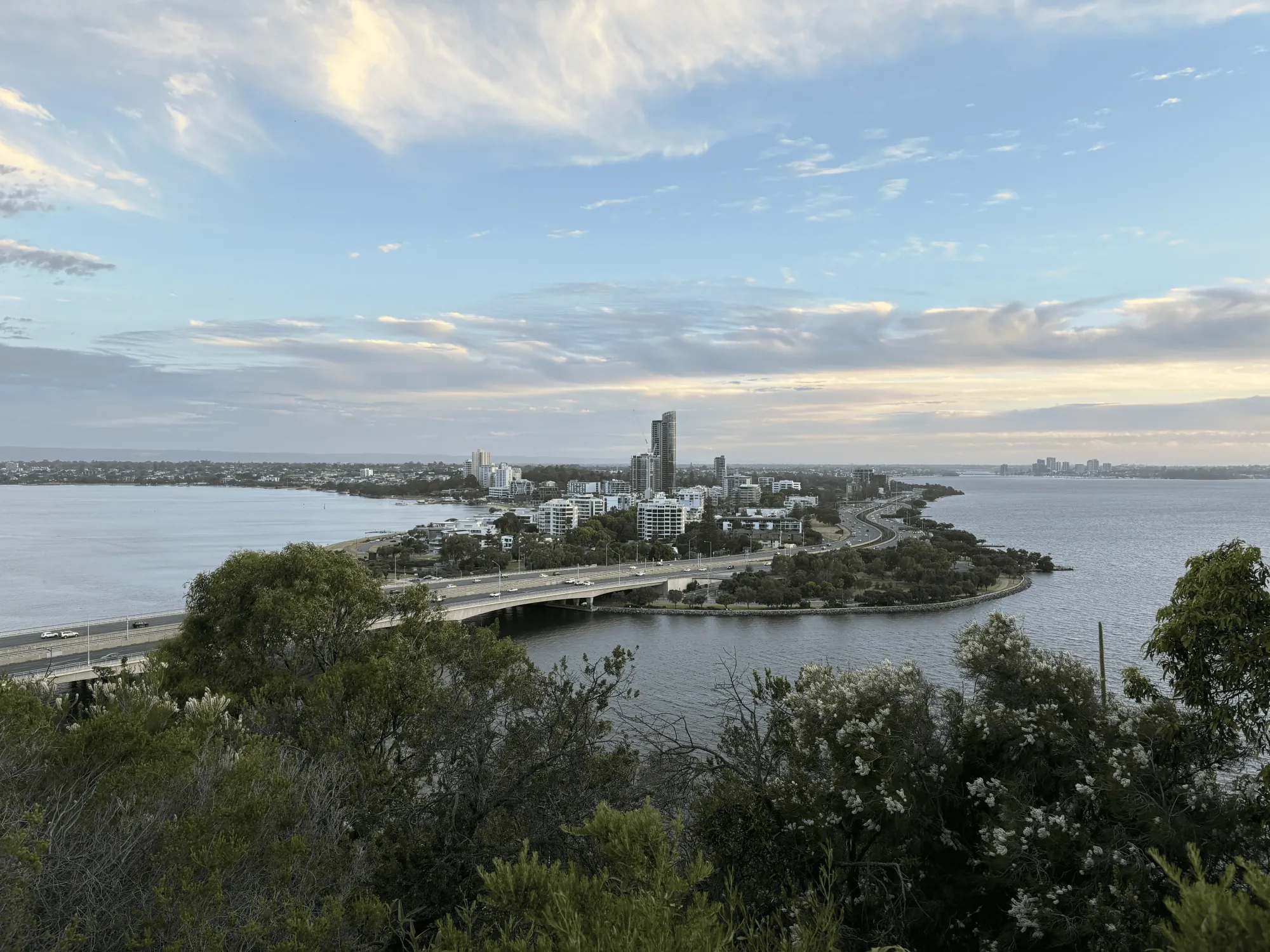
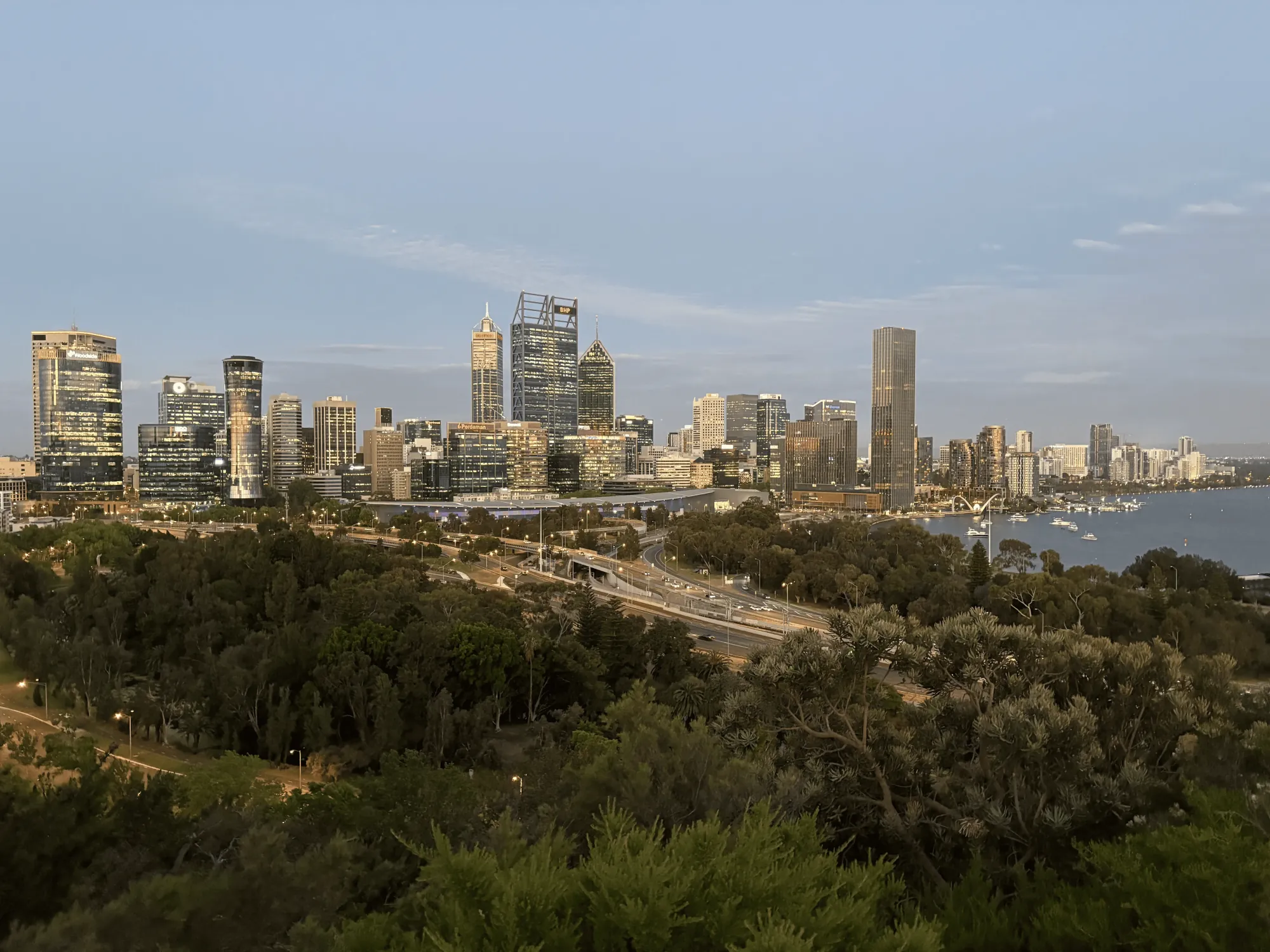
The first morning we went for a run on Heirisson Island, a recommendation from a friend of mine for our first real Australia moment: seeing kangaroos. You'll spot them between the trees in shady areas. Perth itself felt clean, relaxed, and surprisingly modern. We did sightseeing, visited the Perth City Library, and later did the Perth Mint tour. Probably not interesting to everyone, but I've been collecting some silver coin series produced there for a few years. In the evening we walked along the Swan River and went up to Kings Park. The sunset from the State War Memorial viewpoint with the skyline in front is a real Perth highlight. Dinner was at a small Asian place: cheap, simple, extremely good. Australia can be expensive in many ways, but you can still eat well without going crazy. In contrast to the suburban parts, the big cities in Australia are very multicultural and you can find great restaurants for basically anything.
Rottnest Island (03.12)
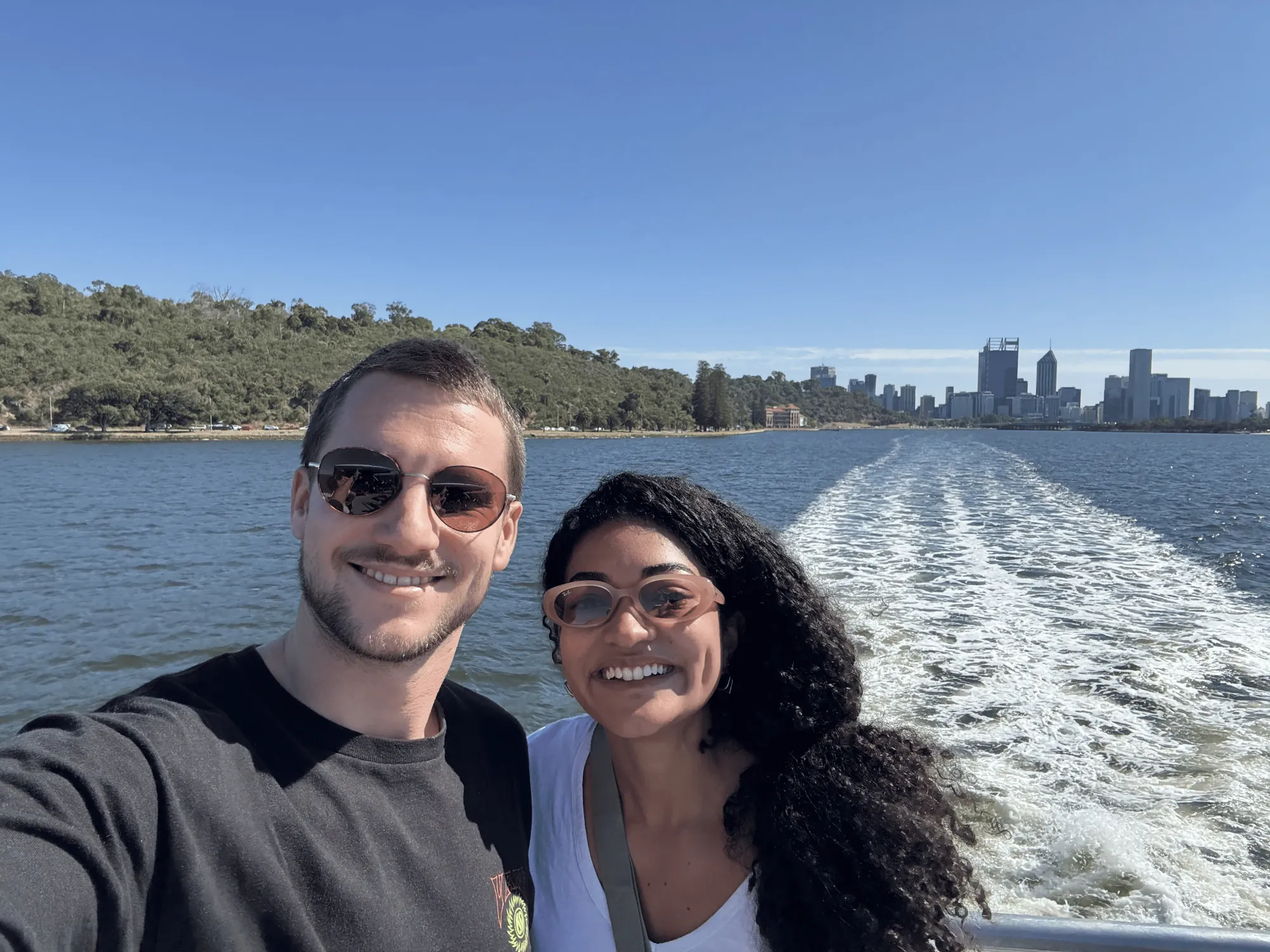
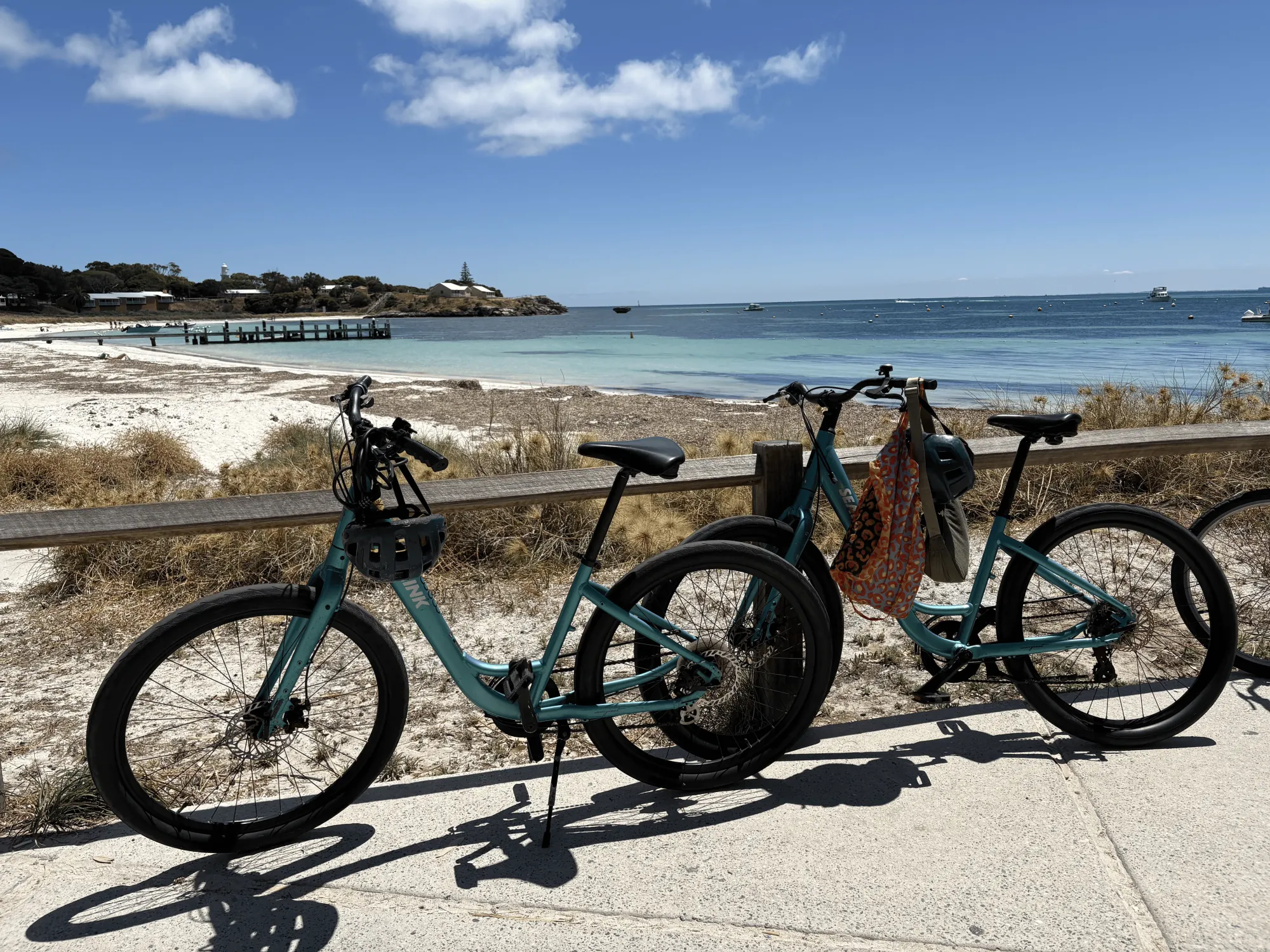
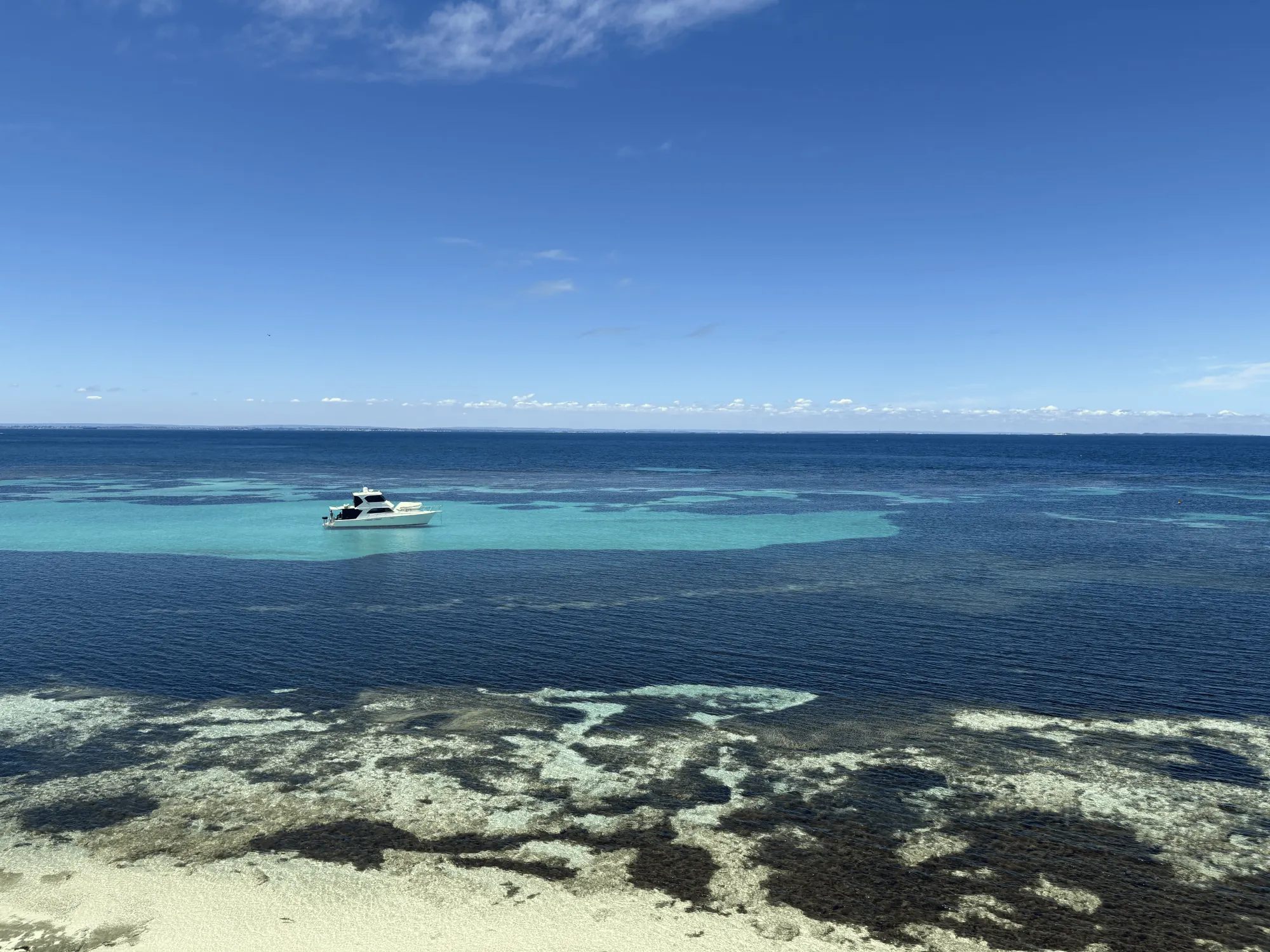
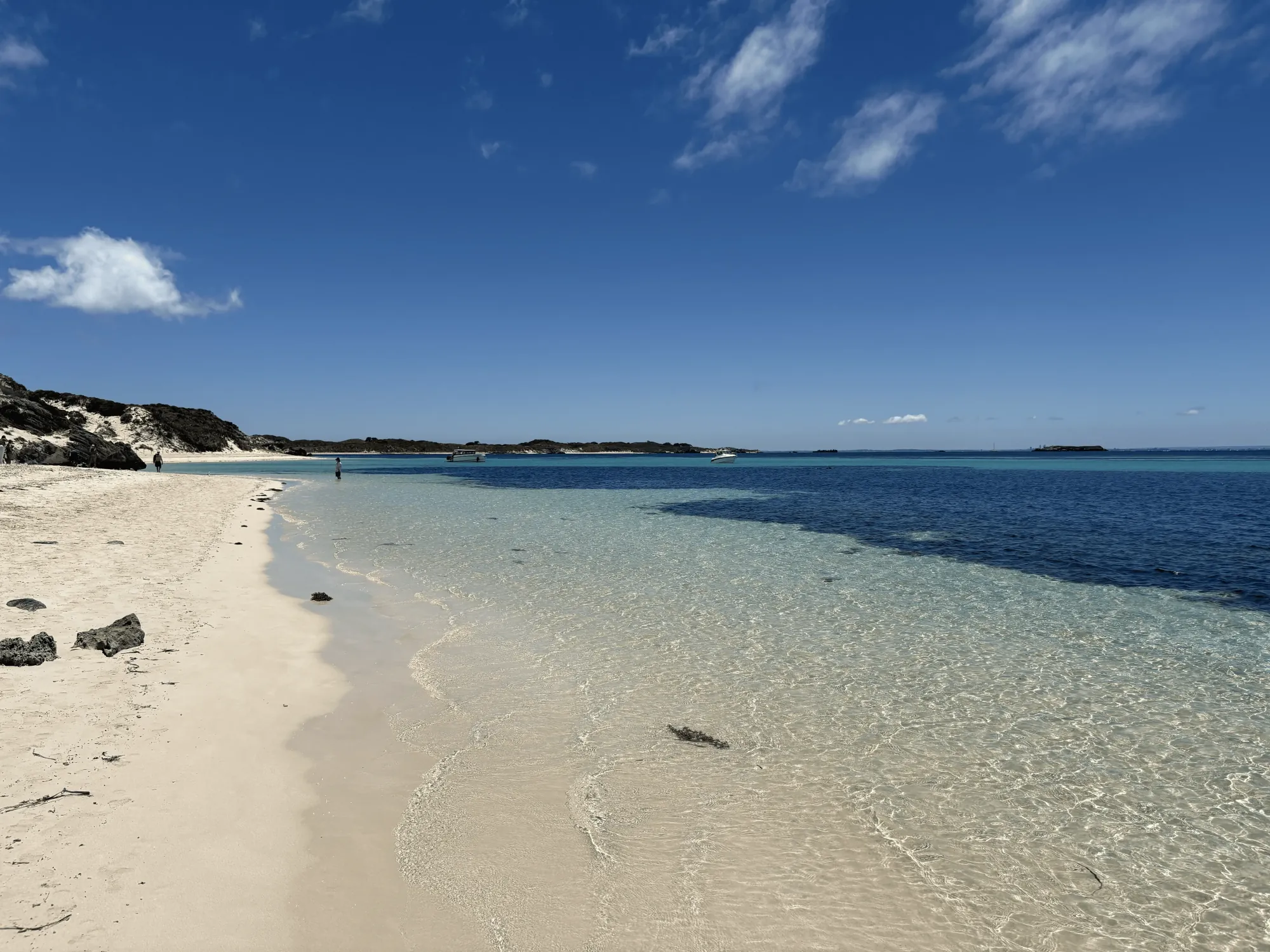
Rottnest Island was our first proper day trip. We took the ferry from the city (Barrack Street Jetty, not from Fremantle), rented bikes, and basically did the classic "cycle around the island and stop at beaches" tour. Ricey Beach was our favorite: quiet, clear water, and far less crowded than the main spots. We also saw quokkas, which was both cute and slightly sad depending on where. In nature spots, they're just doing their thing. In the touristy parts of the island, they're clearly used to humans and kind of out of their intended ecosystem.
Camper Pickup & First Free Camp Near Pinjarra (04.12)
We did a morning run to see more parts of Kings Park than on the sunset evening, then checked out and took the bus to pick up the camper. It's like you know it from stories: you wave to the driver to make them stop, and even in the big cities most people exit with a "thank you".
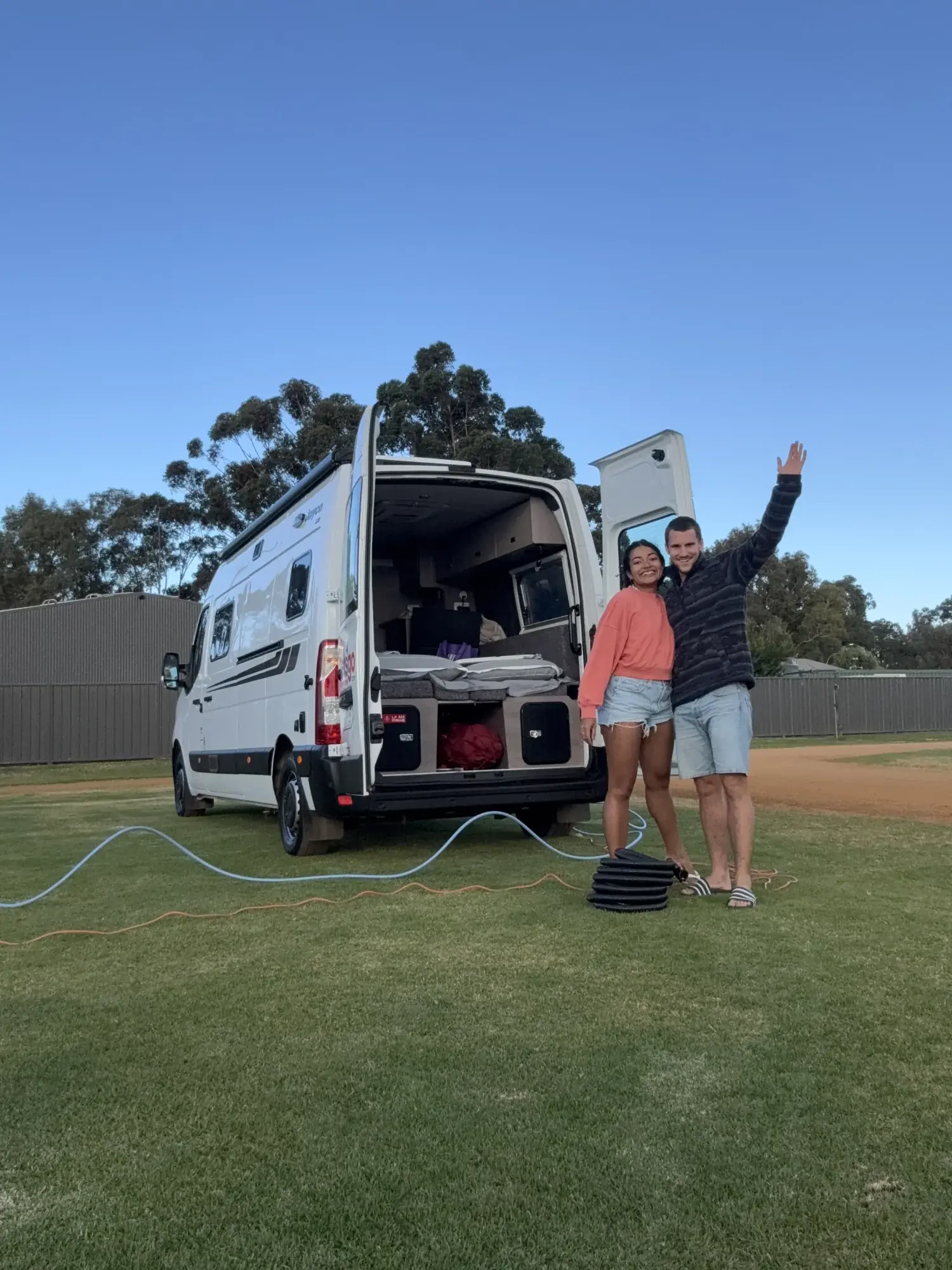
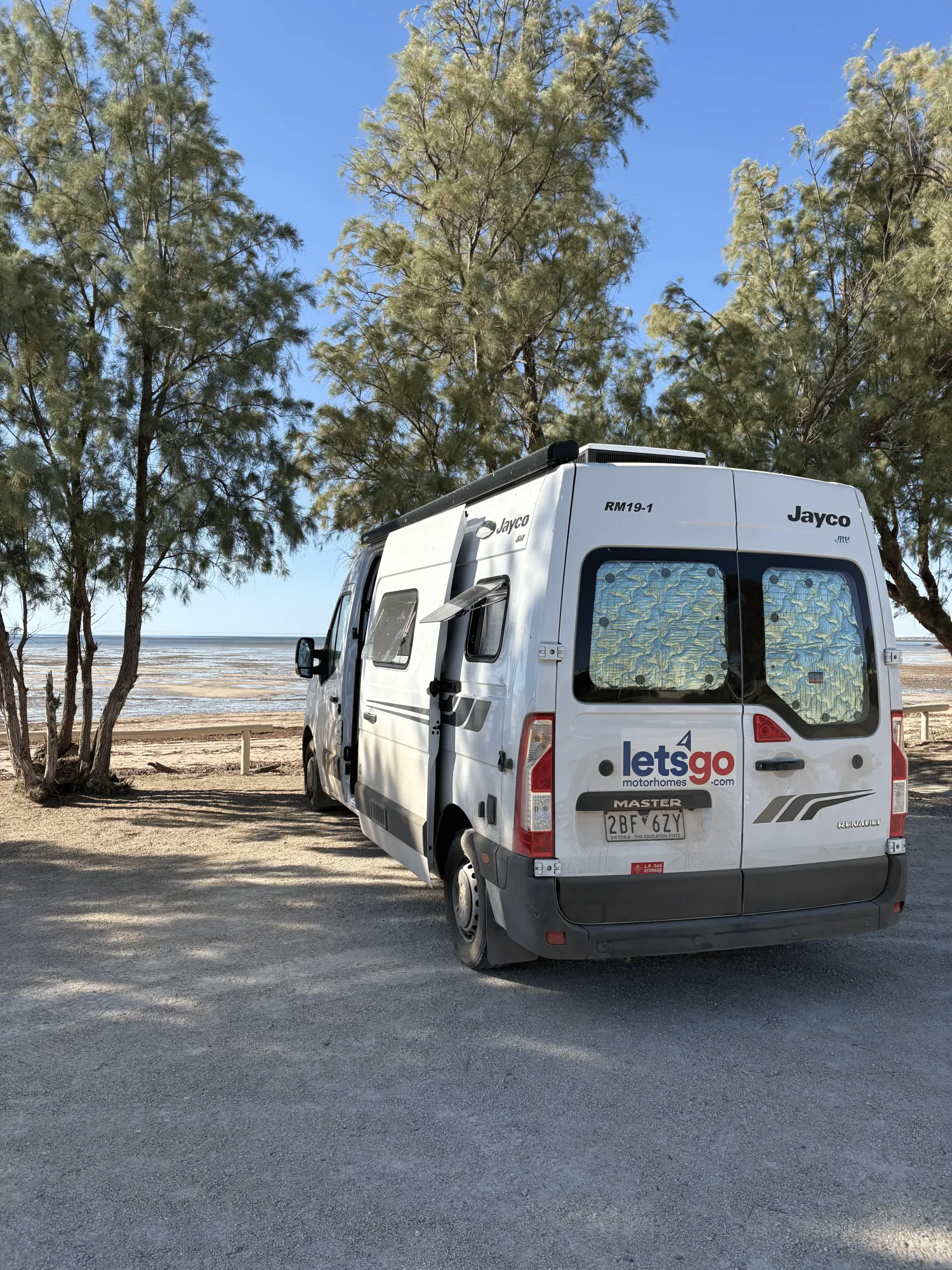
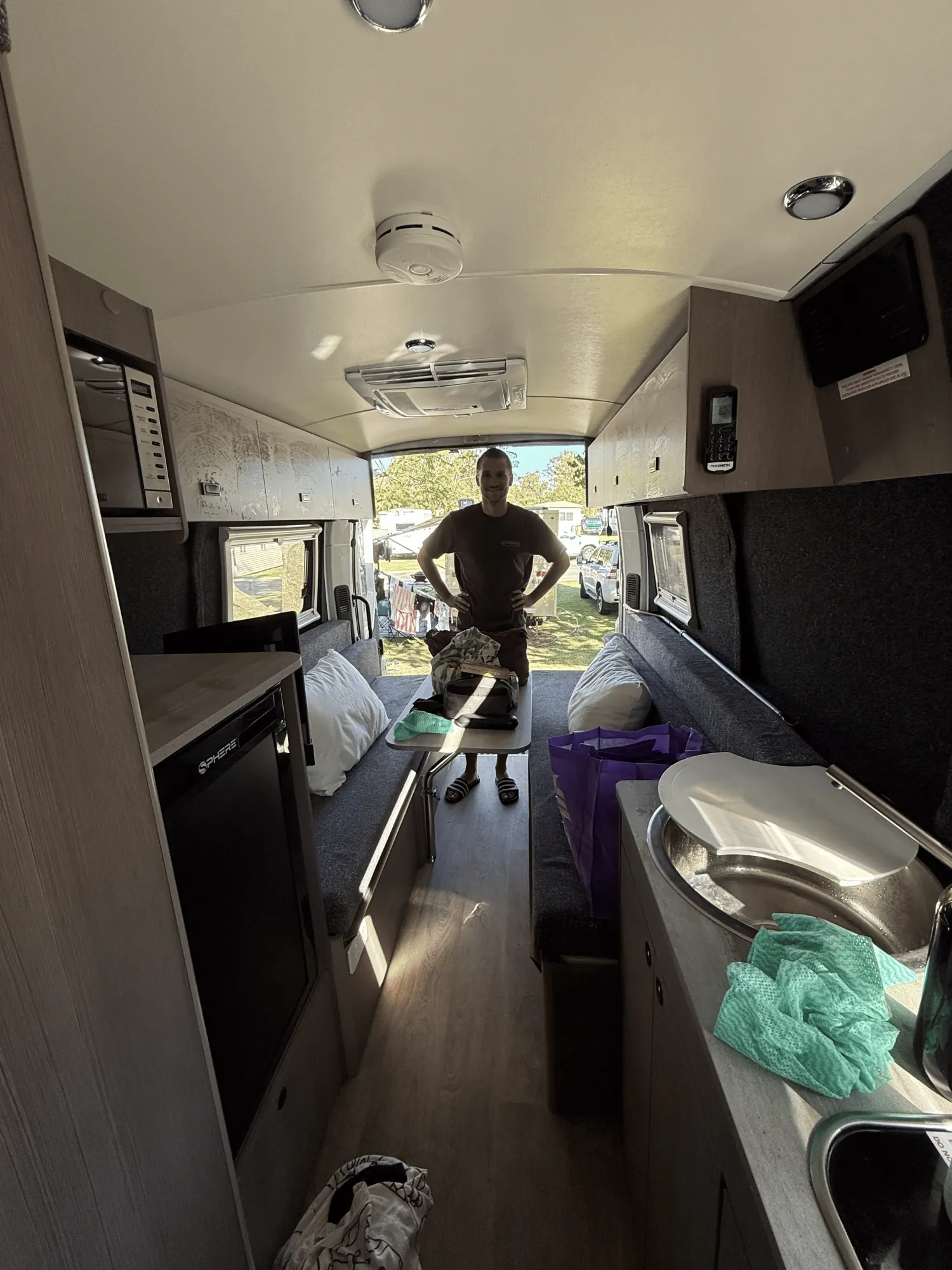
First impression of our motorhome: this thing felt like a small ship. We were happy, but also slightly intimidated. I got used to driving on the left side and going clockwise into roundabouts pretty quickly, but until the end of the trip I never got used to the long wheelbase. Parking backwards, I always ended up two parking slots beside the one I intended to.
We stopped at Aldi, stocked up the fridge, and drove south. Busselton was too far for a relaxed first van day, so we ended up free camping near Pinjarra. It felt good to fall asleep in the van for the first time, but the free spot was directly beside a train crossing. You can't imagine how slowly trains drive in Australia, and they use a horn to make you aware of themselves. Once per hour, all night. I don't recommend the spot unless you have no other option.
Busselton to Dunsborough (05.12)
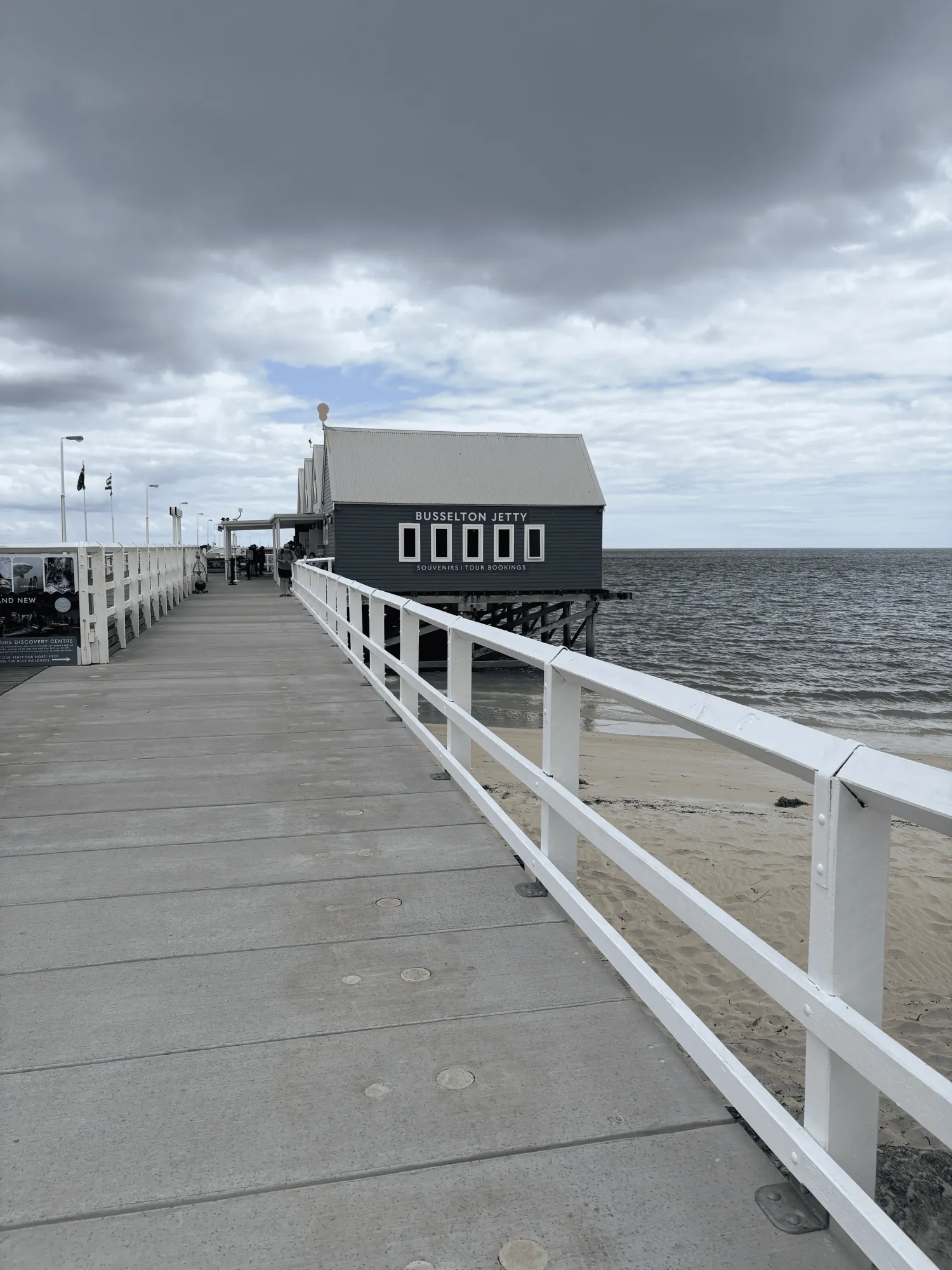
We drove to Busselton and walked the jetty (1.8 km, yes!). Long, straight, simple. If you want, you can even hop on a small train to get out.
After that we continued towards Dunsborough and stayed at our first proper campsite, Southern Stars Holiday Park. That day was also the day we properly learned the camper basics. An Aussie helped us with power, water, waste, and toilet emptying. I really had a hard time following him and his slang.
We used a BBQ station and made chicken with rice. Across Australia you'll see a lot of BBQ stations. They're powered by gas and you just need to push a button to get 15 minutes of heat. You'll find them all over the country: at caravan parks, but also in public places like beaches or playgrounds. Aussies are really friendly people, so you'll often end up in a nice, casual conversation with the people using the BBQ station next to you.
Dunsborough & Castle Rock Bay (06.12)
In the morning, whenever possible, we did a small workout. Whether it was running or exercises depended on the circumstances. Whenever there was a playground nearby, I chose calisthenics. After that we cooked our "standard breakfast" in the camper: eggs, toast, avocado, sometimes bacon, muesli, yogurt, instant coffee.
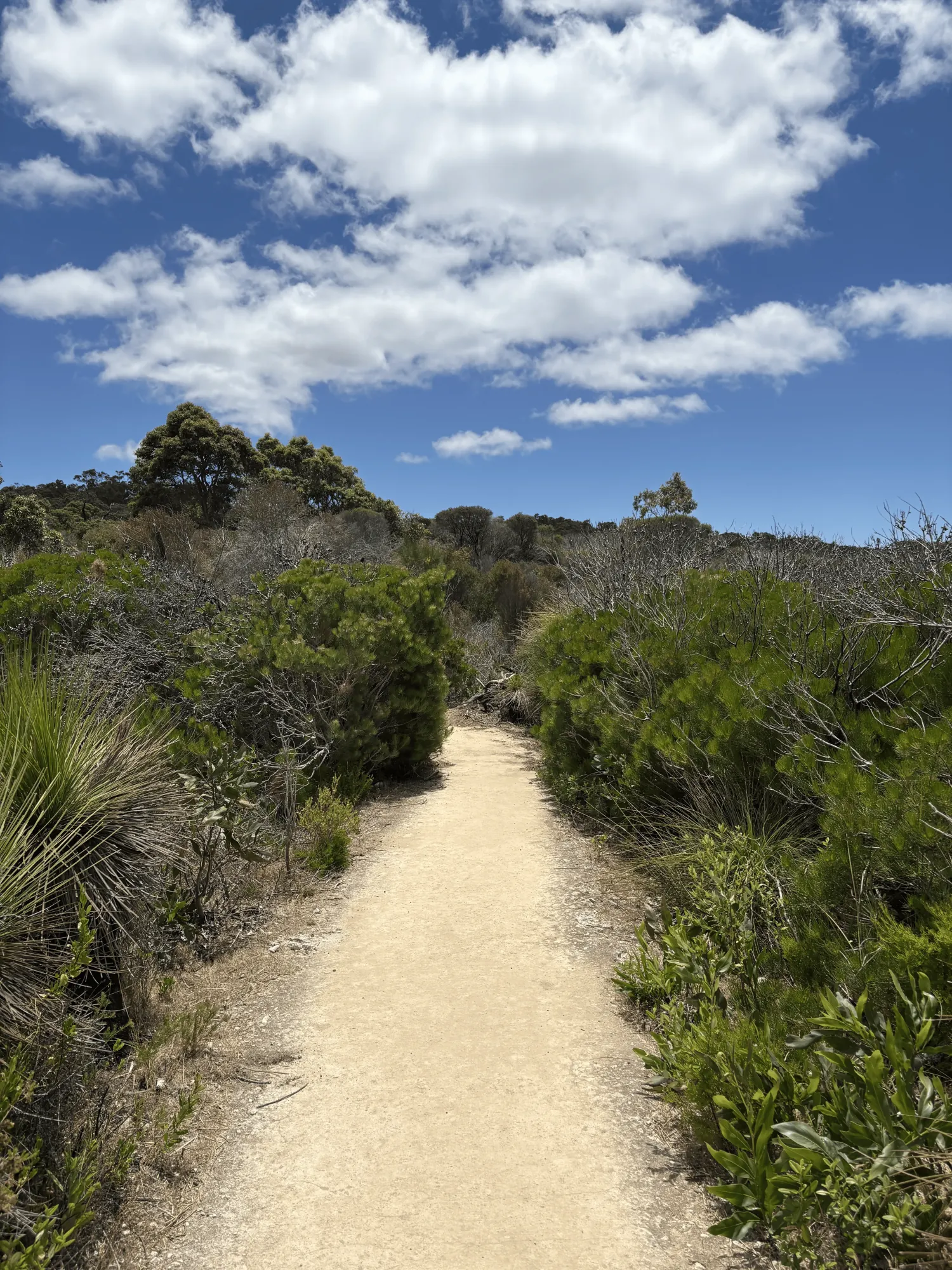
In Dunsborough we parked the camper here close to the start of a trail and walked to Castle Rock Bay. The trail was beautiful and the beach was unreal. The only nasty thing was the 1,000 flies around you while walking. Especially in Western and Southern Australia, we had so many flies that it was sometimes not possible to have breakfast outside with a camping table and chairs. I'm not sure if this is a regional or seasonal phenomenon. If you're there around December in the more rural parts of Western Australia, you'll have flies around you all the time.
In the afternoon we headed towards Margaret River, but we had problems finding a campsite. Many places were fully booked and free camping was not allowed in this area. We ended up on an overflow option in the Margaret River Tourist Park. To this day, I'm not 100% sure what exactly makes Margaret River so special compared to other parts of Western Australia. We were basically just passing through and probably missed the core experience.
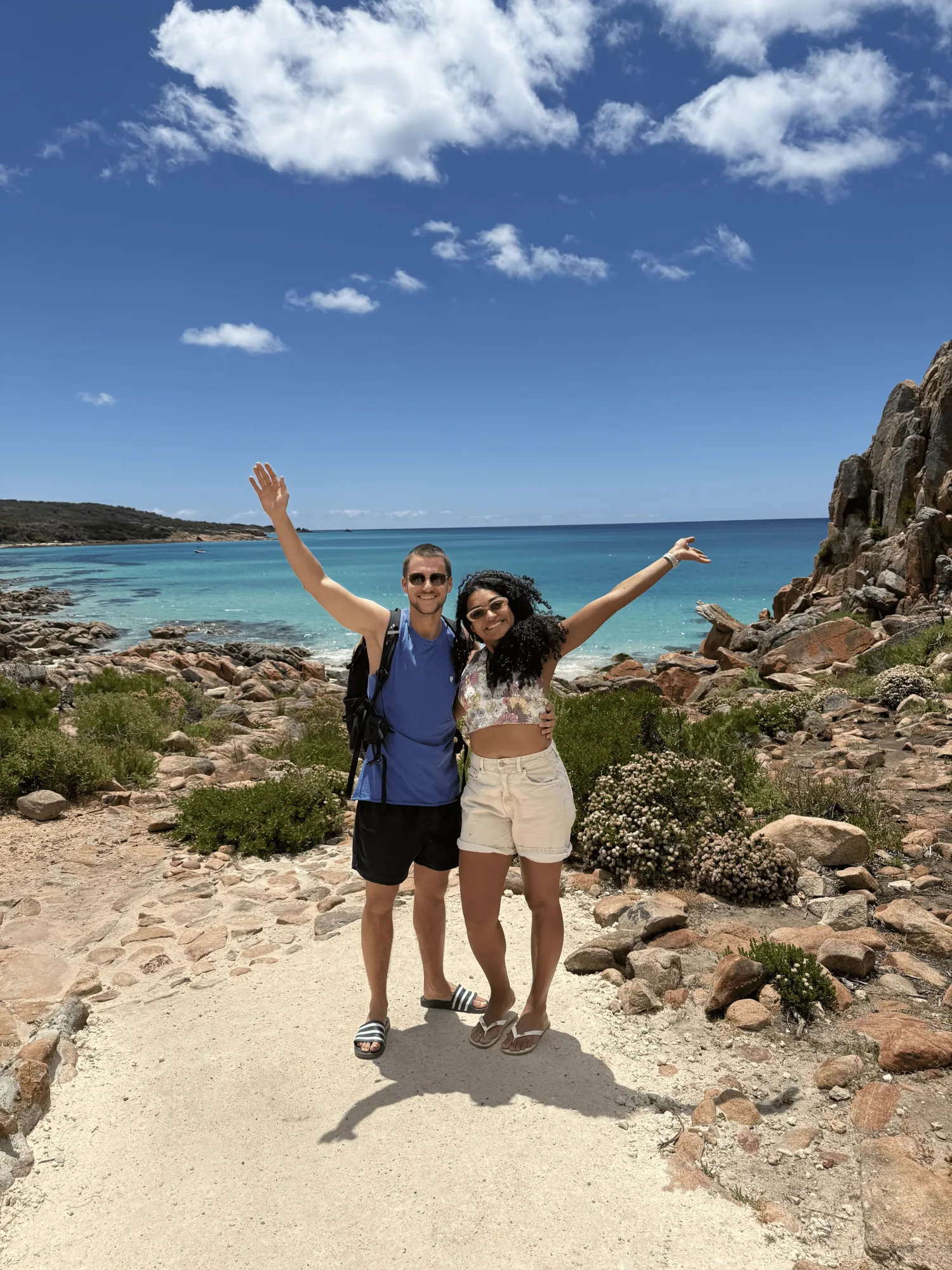
Augusta to Denmark (07.12)
We drove to Augusta and checked out the lighthouse at Cape Leeuwin and the cape where the Indian Ocean meets the Southern Ocean. In my opinion it’s worth visiting even though it might be one extra hour in the car.
Albany was originally planned for that day, but we stopped at a vineyard on the way, did a small tasting, and the owner recommended Denmark instead. We got gifted some incredible organic avocados and bought a bottle of wine.
The drive to Denmark was one of the prettiest roads: forest, red soil, and deep green and brown tones.
We stayed at BIG4 Denmark Ocean Beach Holiday Park and had intense kangaroo contact. Starting at dusk, the kangaroos occupied the empty campsites on the caravan park in big groups.
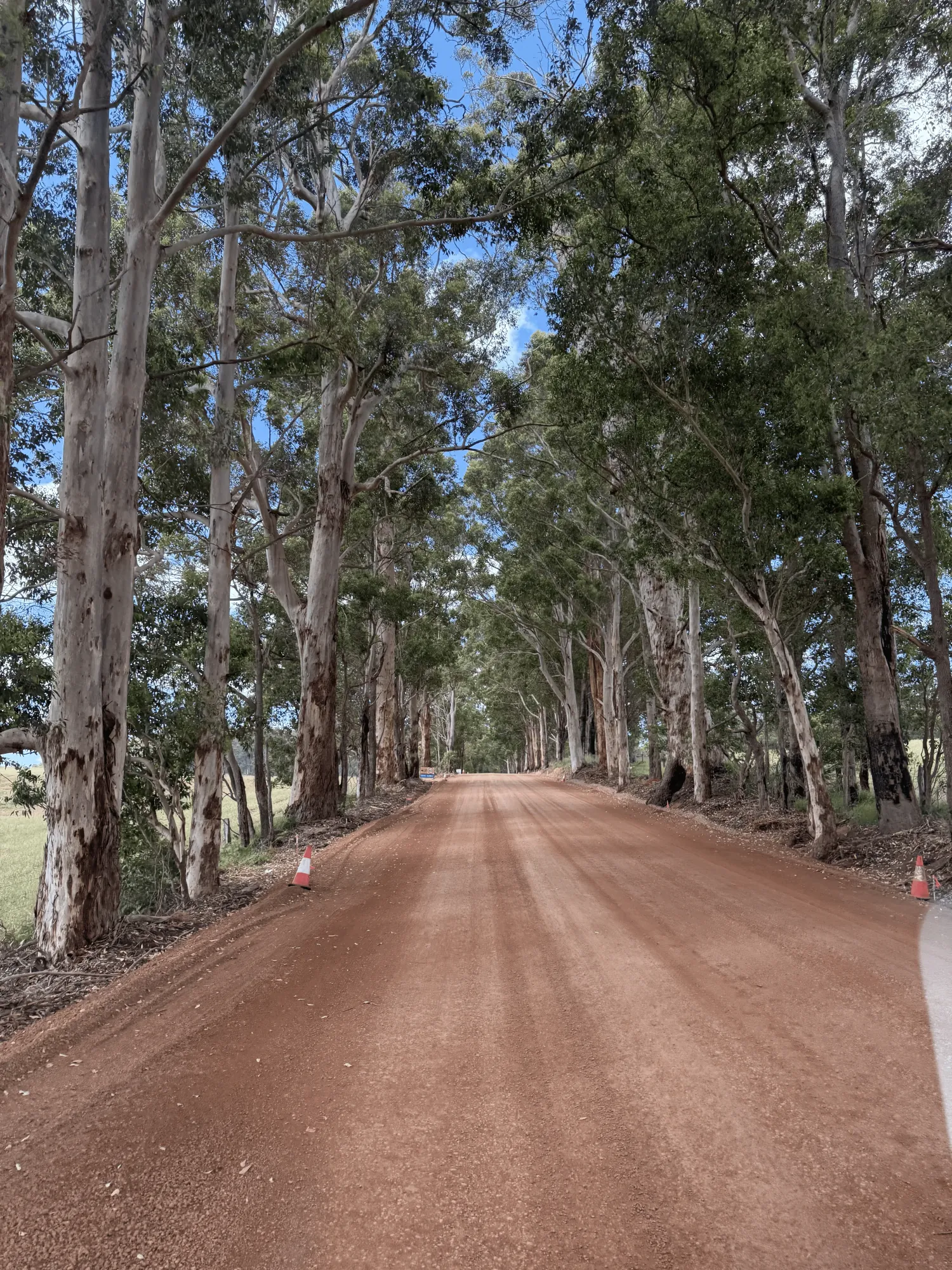
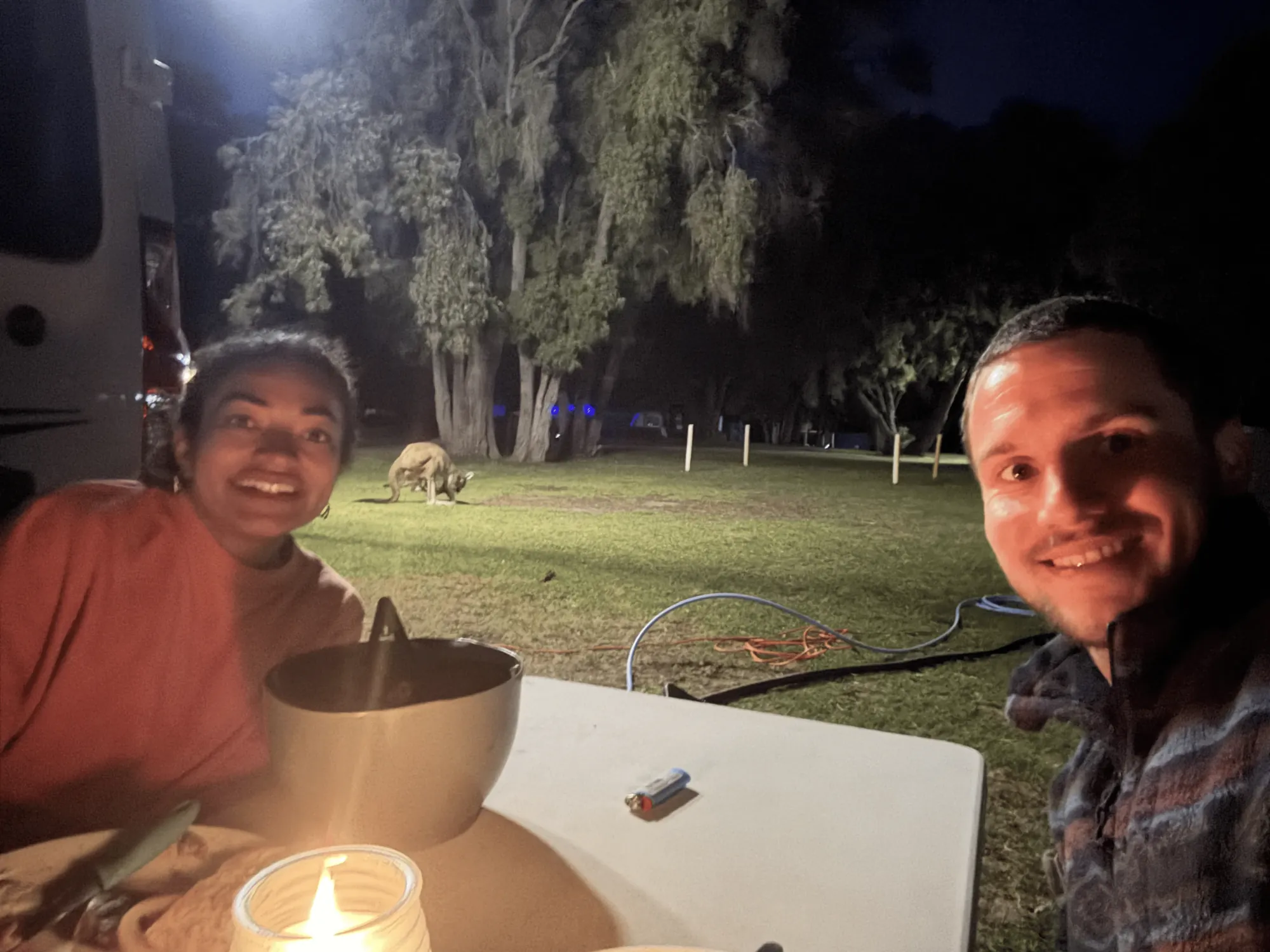
Valley of the Giants, Elephant Cove & Greens Pool (08.12)
We had a slow start and drove to the Valley of the Giants treetop walk. The red tingle trees reminded me of Sequoia parks in the US, just with their own Australian personality.
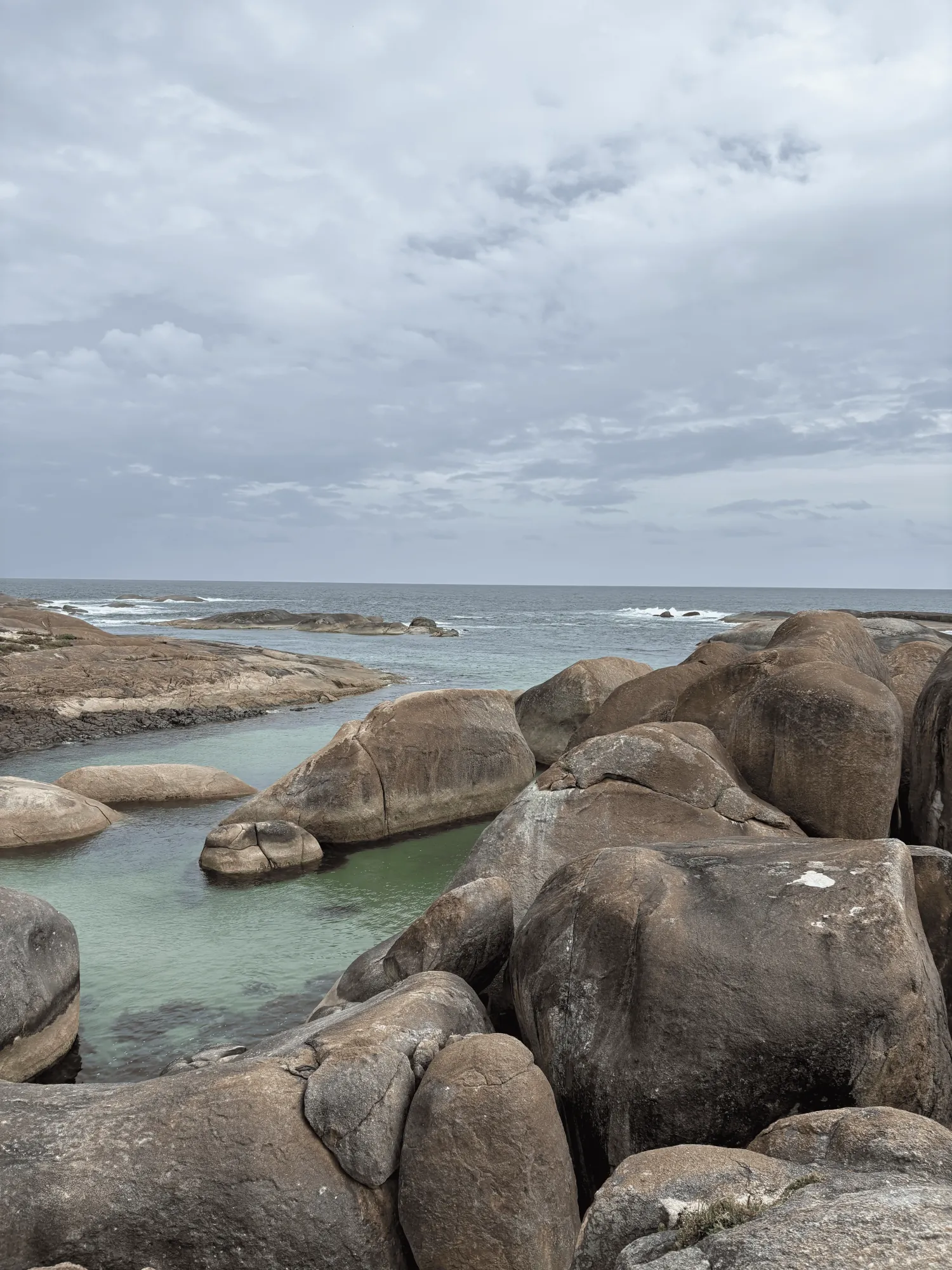
After that we went to Elephant Cove and Greens Pool. Both are absurdly beautiful. The only "problem" was the weather: cold, cloudy, and windy. That's something people underestimate. The south-west and south of Australia can be surprisingly cold even in summer. We had days with 17°C and nights dropping to 9°C. A couple of days later you can have sunny days above 30°C.
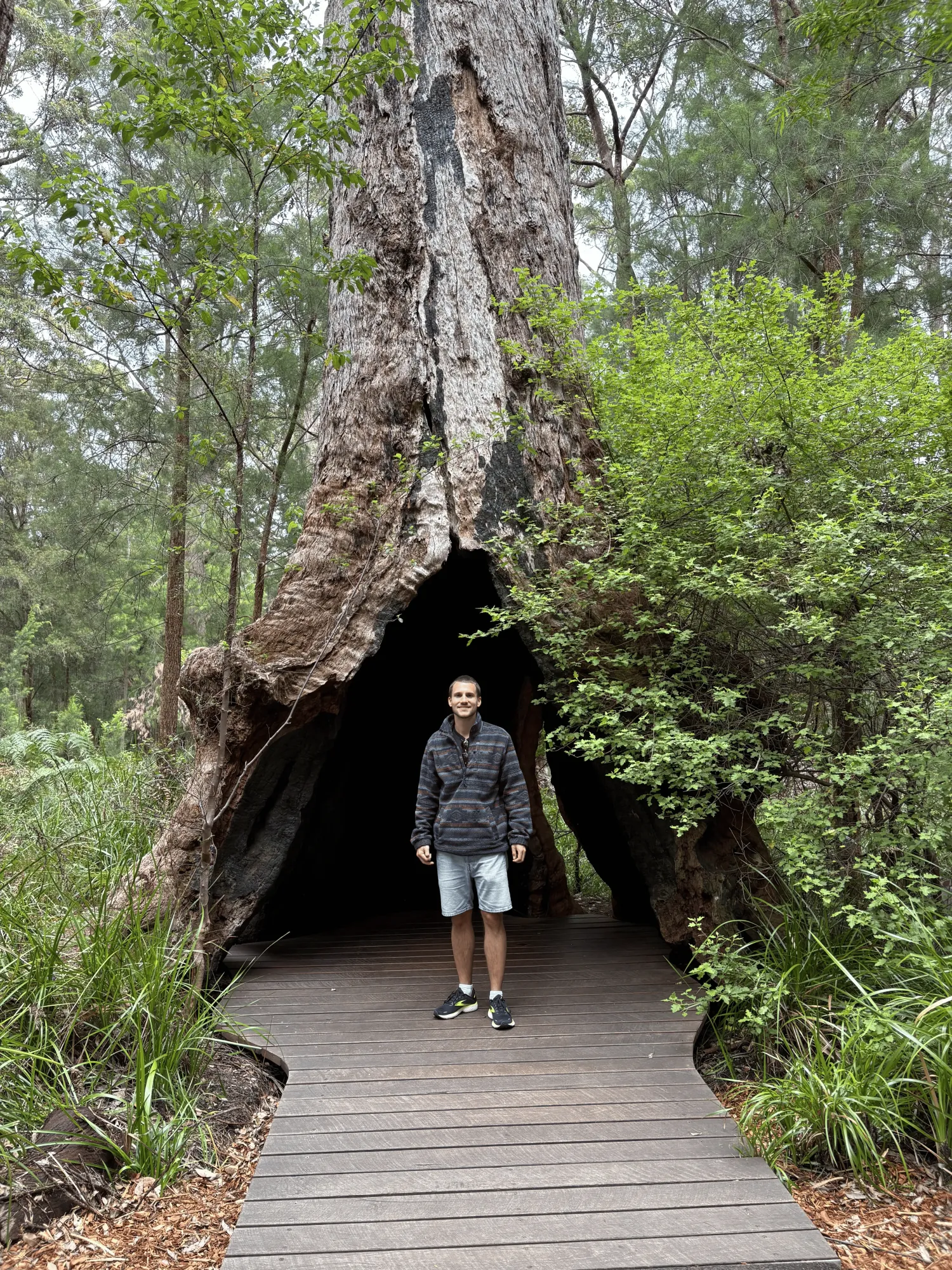
Albany & Torndirrup National Park (09.12)
In Albany we stopped at Bunnings and upgraded our camper setup with some fairy lights and Christmas decoration. Bunnings is basically the Australian version of Home Depot / OBI / Baumarkt.
That day we went out for breakfast. I really enjoyed ordering poached eggs, since I'm not great at making them myself. Eggs Benedict is a solid choice: usually two poached eggs plus toast, spinach, and Hollandaise.
My girlfriend started ordering mocha everywhere from that point on, hot or iced, while I kept ordering a Long Black (Americano). Australians do great coffee. On other trips that was often something I missed from home, but not in Australia.
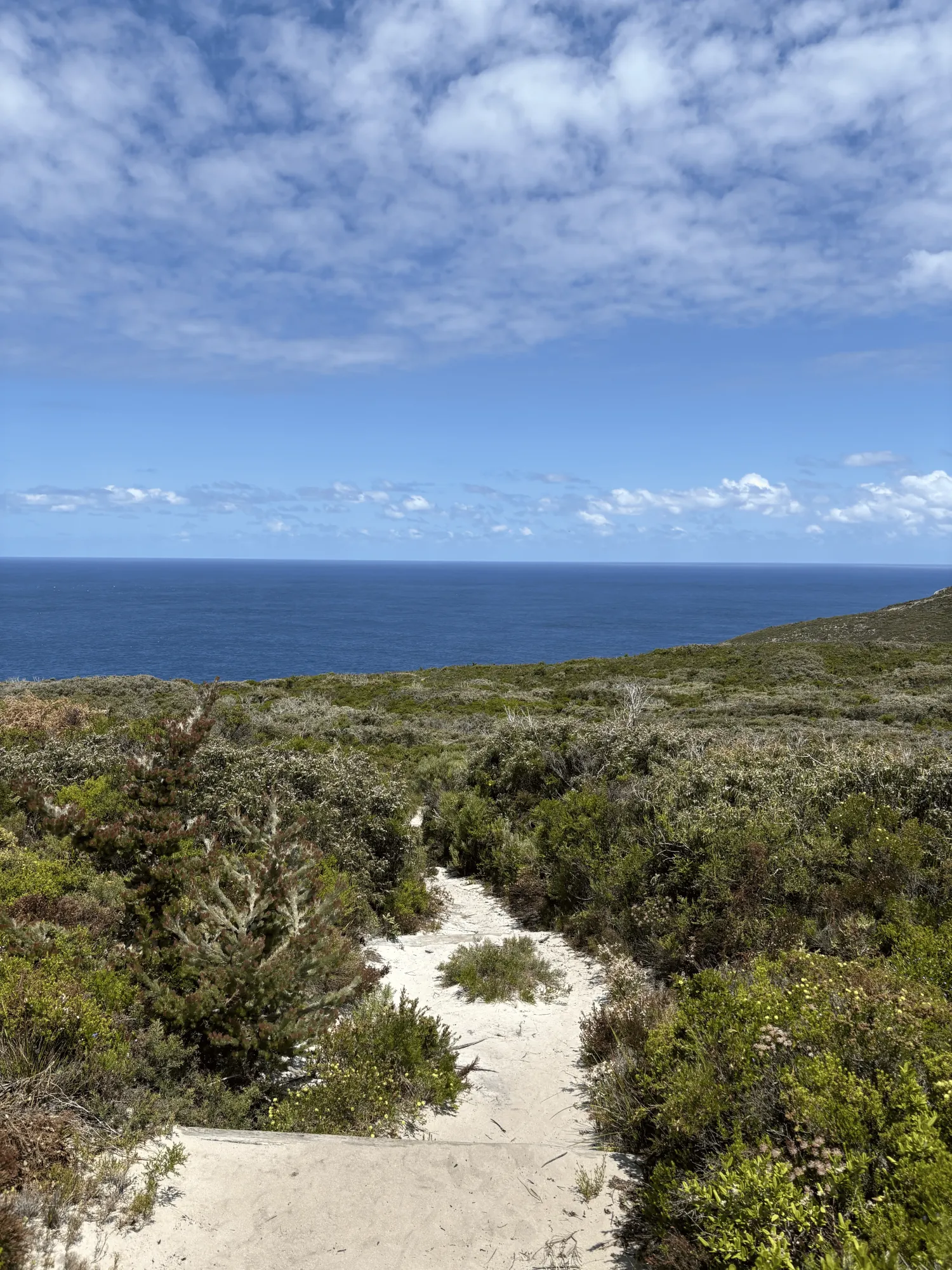
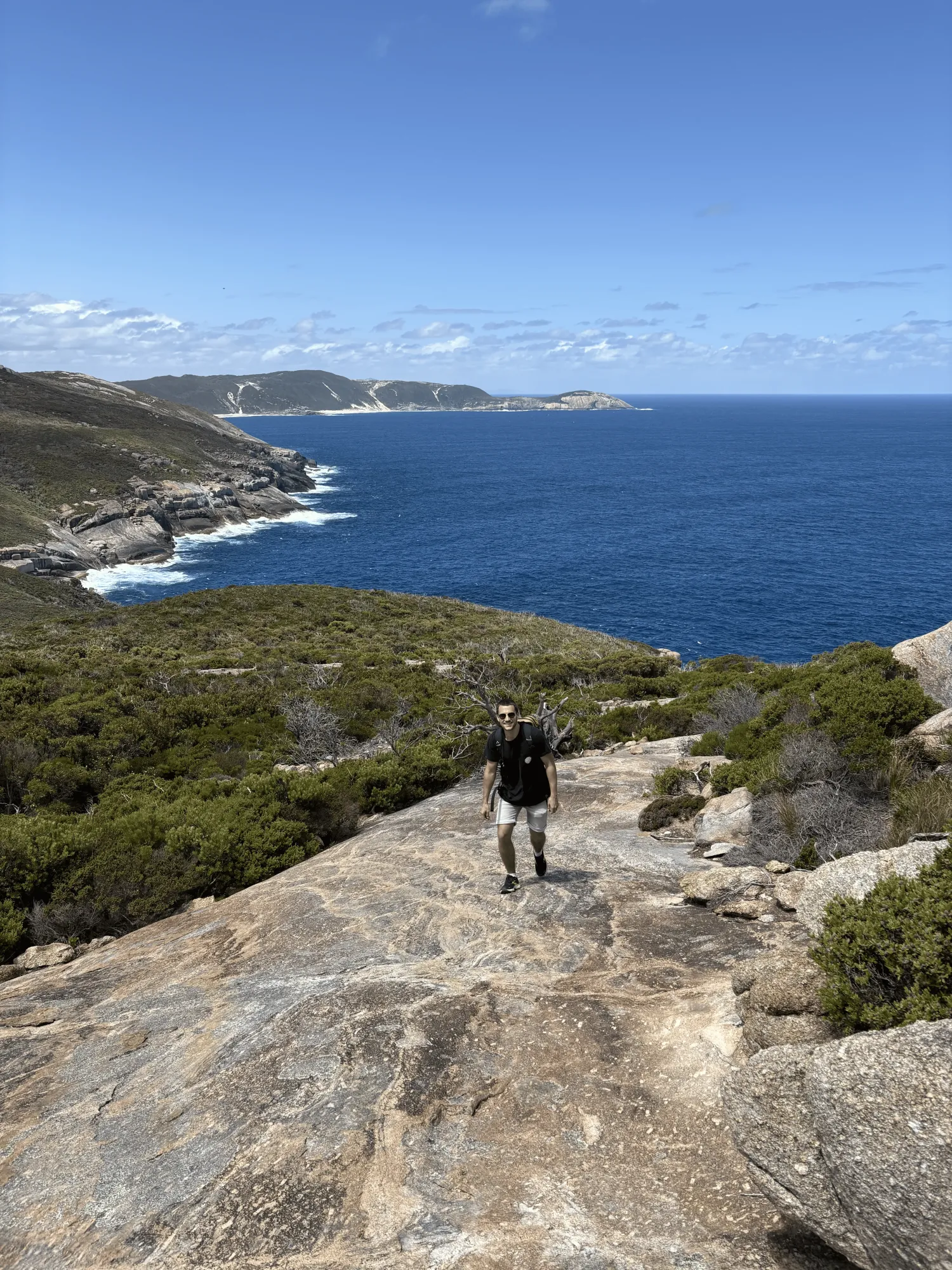
Around Albany itself, we did the Bald Head hike in Torndirrup National Park. Coastal trail, strong wind, insane views. It was probably the number one hike of our whole trip. We cooled down at Misery Beach afterwards, which is extremely beautiful but had surprisingly expensive parking. I think it included the entry fee to the national park itself. Still worth it. Normally you don't pay for parking in Australia, except big-city car parks, which we never used with the 3m+ height motorhome.
Our first-choice campsite was booked out, so we stayed at Happy Days Caravan Park (cash, unpowered). Cheap, simple, and perfect for a one-night stop. In Australia you can pay for almost everything by card, but sometimes it's worth having some cash for an extra discount...
Bremer Bay (10.12)
On that day we drove to Bremer Bay, checked in, had breakfast, and somehow felt knocked out. After a nap we walked towards the beach on a trail, but returned quickly because it was cold and windy. The rest of the day was slow and relaxed. We didn't do much in this area, but I think you can spend more time there. The region is known for whale expeditions because there is a big canyon in the ocean out there.
Esperance & Cape Le Grand National Park (11.12)
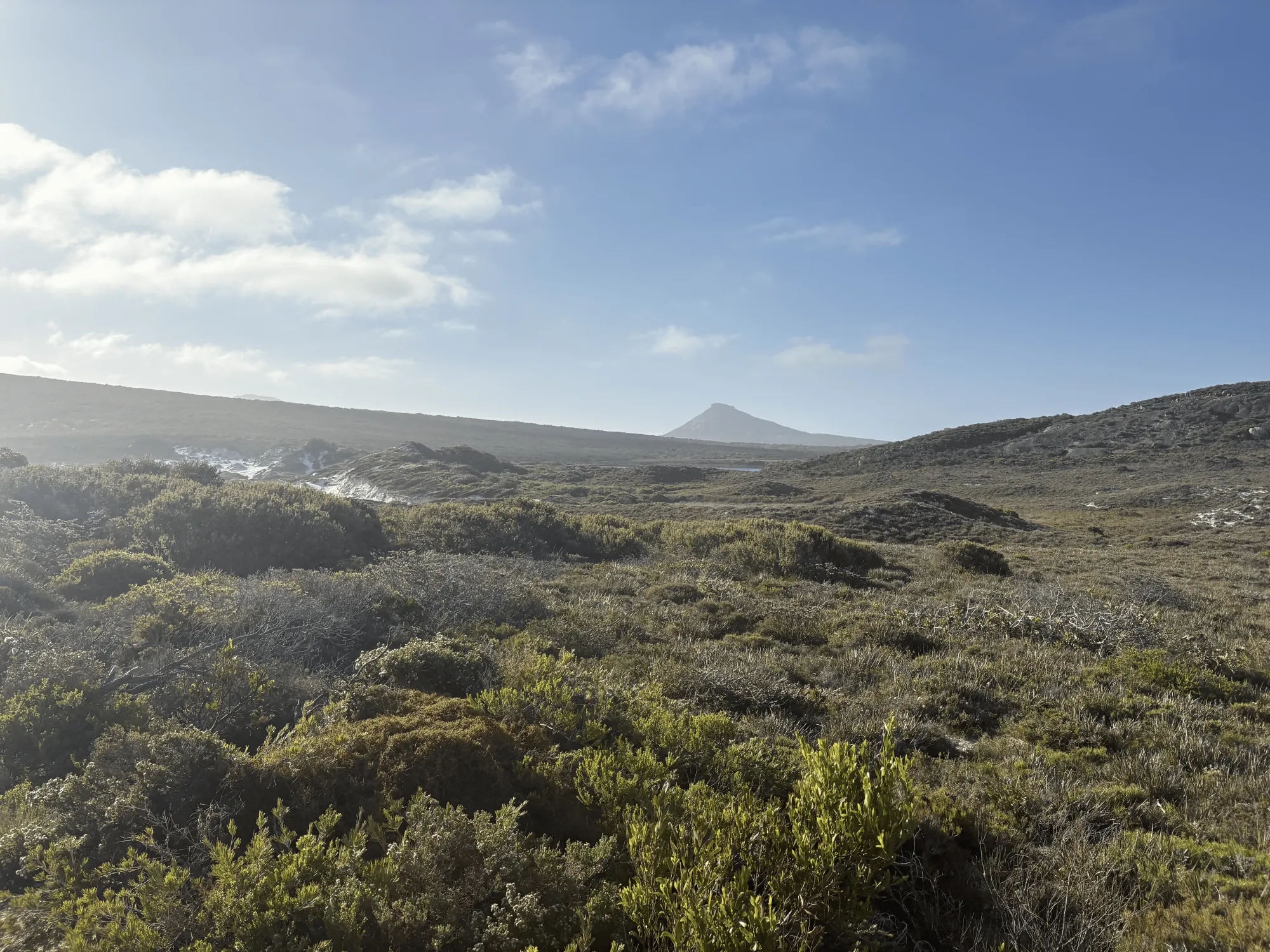
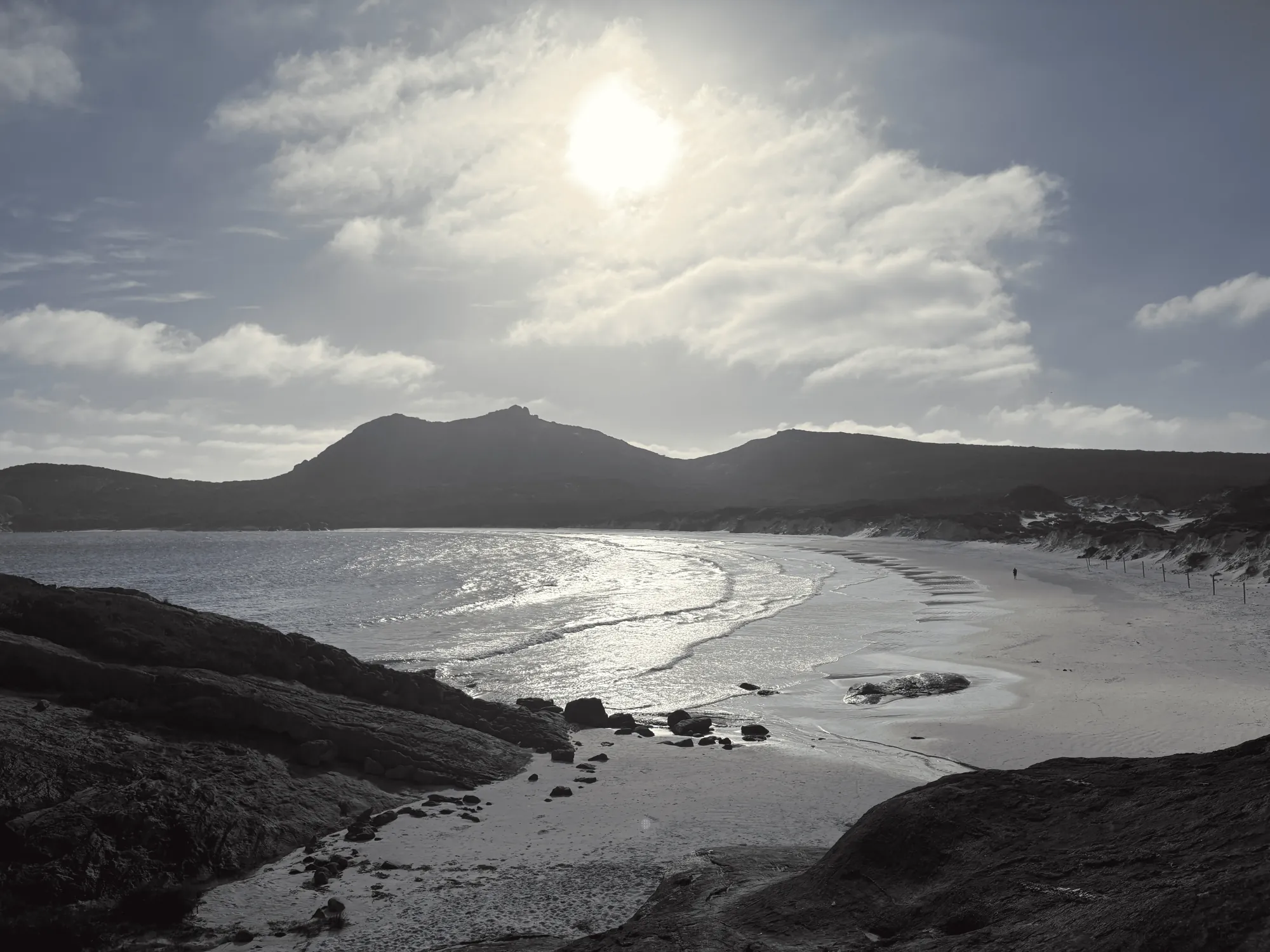
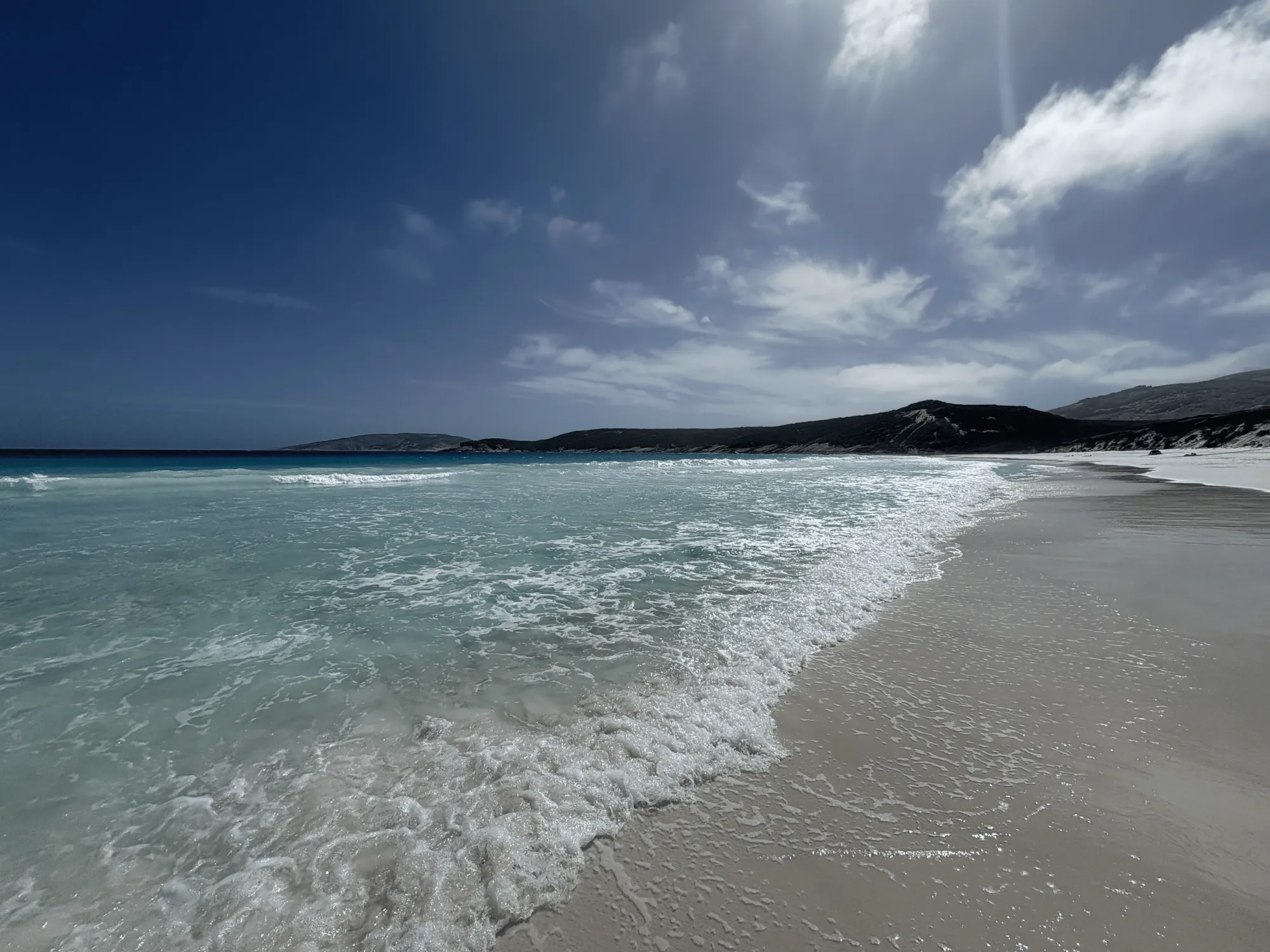
We drove from Bremer Bay to Esperance, around four hours, and went straight into Cape Le Grand National Park because the weather was perfect and we wanted to use every minute. Thistle Cove, Hellfire Bay... I don't even know how to describe it properly. The sand is bright, the water has that painted turquoise, and it feels unreal how clean and open everything is. These were the most beautiful, lonely beaches I've ever seen.
In that park there is also Lucky Bay, which is known for having wild kangaroos on the beach sometimes. Since we enjoyed the other beaches for too long, we missed Lucky Bay.
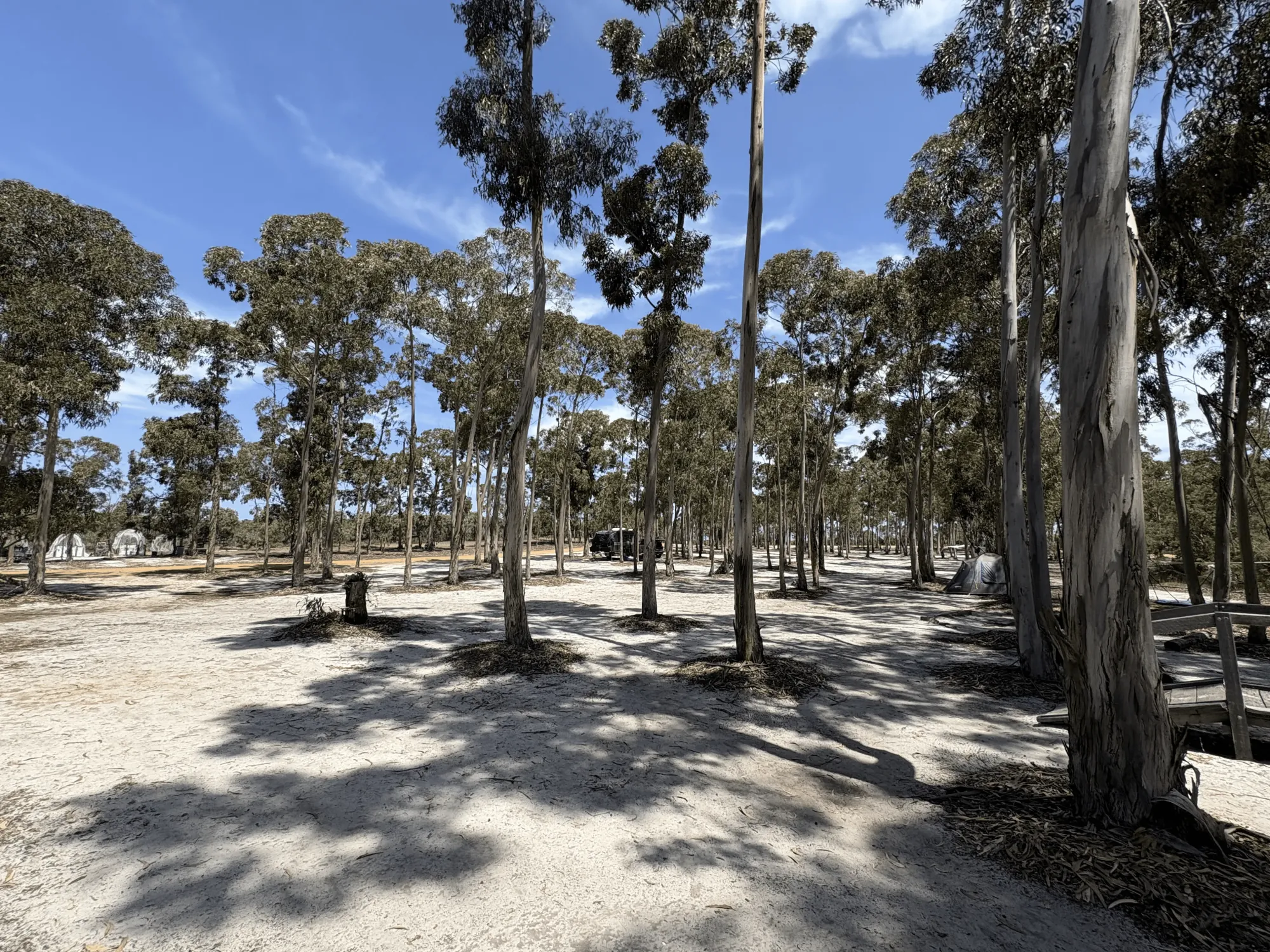
We stayed at an EcoCamp campsite at Dunns Eco Park in the middle of nowhere, surrounded by eucalyptus trees. In the evening, in the camp kitchen, we met Germans (an older couple traveling for a full year with a car and tent) and also a young Argentinian work-and-travel group. Nice catch-up.
Esperance to Norseman (12.12)
Since we spent the day before completely in the national park, we briefly visited Esperance in the morning for a coffee at Coffee Cat at the foreshore, and did grocery shopping. From that point on, Woolworths became our main supermarket. Aldi might be cheaper sometimes, but Woolworths felt like the best overall experience, especially for fresh seafood and meat.
We cooked almost every evening, often meat, seafood, fish. It was sometimes cheaper than in Germany (especially with the exchange rate at the time), and the quality of meat and seafood felt really good.
In the evening we reached Norseman. It felt like a small town with strong "ghost town" energy: not fully dead, but... quiet. Norseman is basically the starting point for the Nullarbor crossing, and the next days were going to be a different kind of Australia.
We stayed at a free camping spot, did a small walk to a viewpoint, passed a gold mine on the way (Pantoro, according to the sign around 100,000 oz per year), and had dinner: the first time "Ceviche à la Raffael" with seafood, coriander, and lime.
Nullarbor: cliffs free camp near the WA/SA border (13.12)
Nullarbor day one: full tank, coffee from a service station, and then you set the navigation to a campsite and it tells you something like: "in 750 km, turn right". That's not a joke. That's literally the kind of road you're driving.
We took photos at the "90 Mile" sign and the "Australia’s longest straight road" sign (approximately 145 km). It's not just a road without crossings; you literally don't have to move the steering wheel. It's just straight.
In general, the Nullarbor is a very special kind of driving: road trains, other campervans, and every 1-2 hours a roadhouse with food and fuel. We had meat pies. Driving is kind of boring, but for the two-day outback experience I'd do it again.
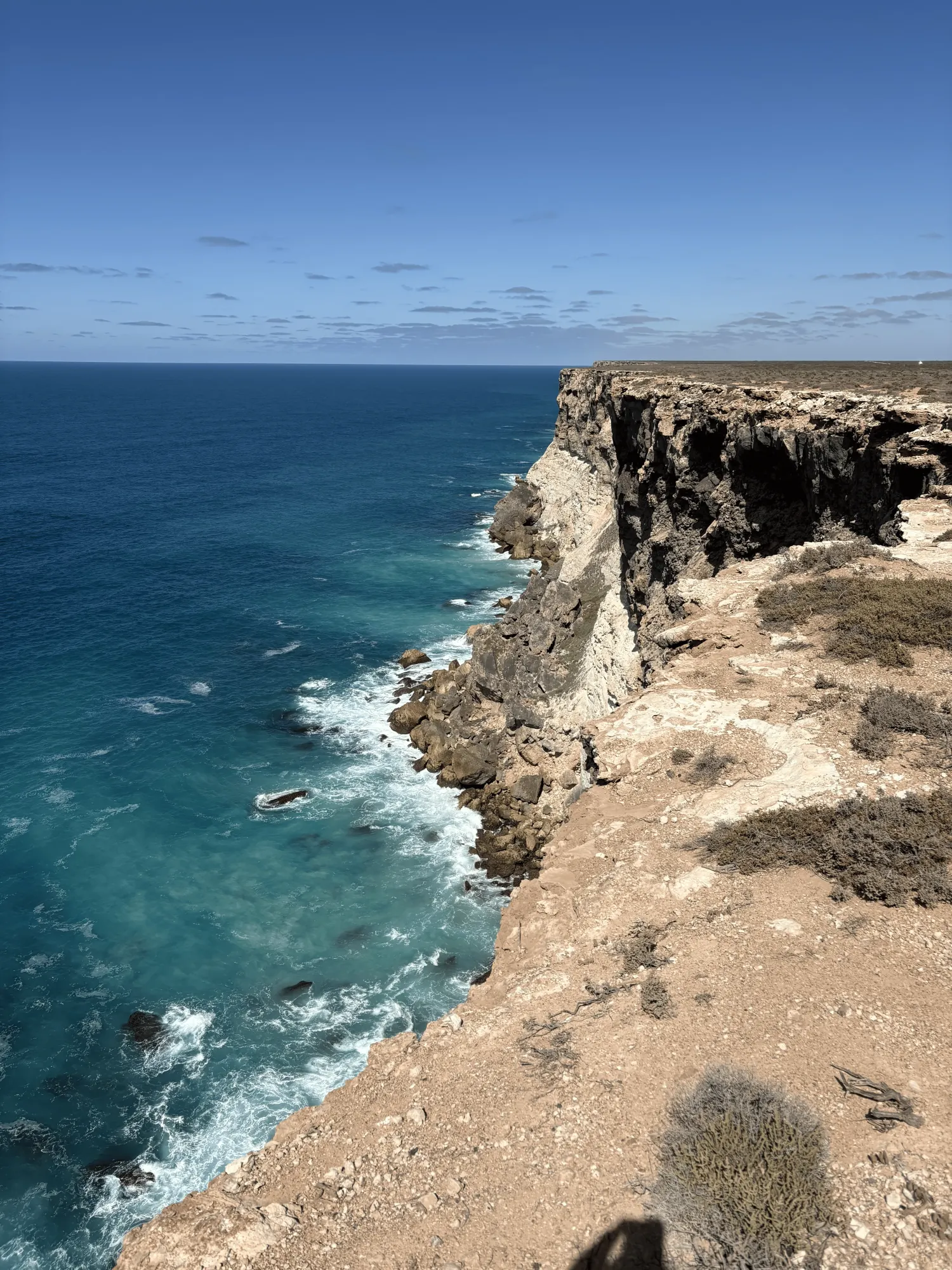
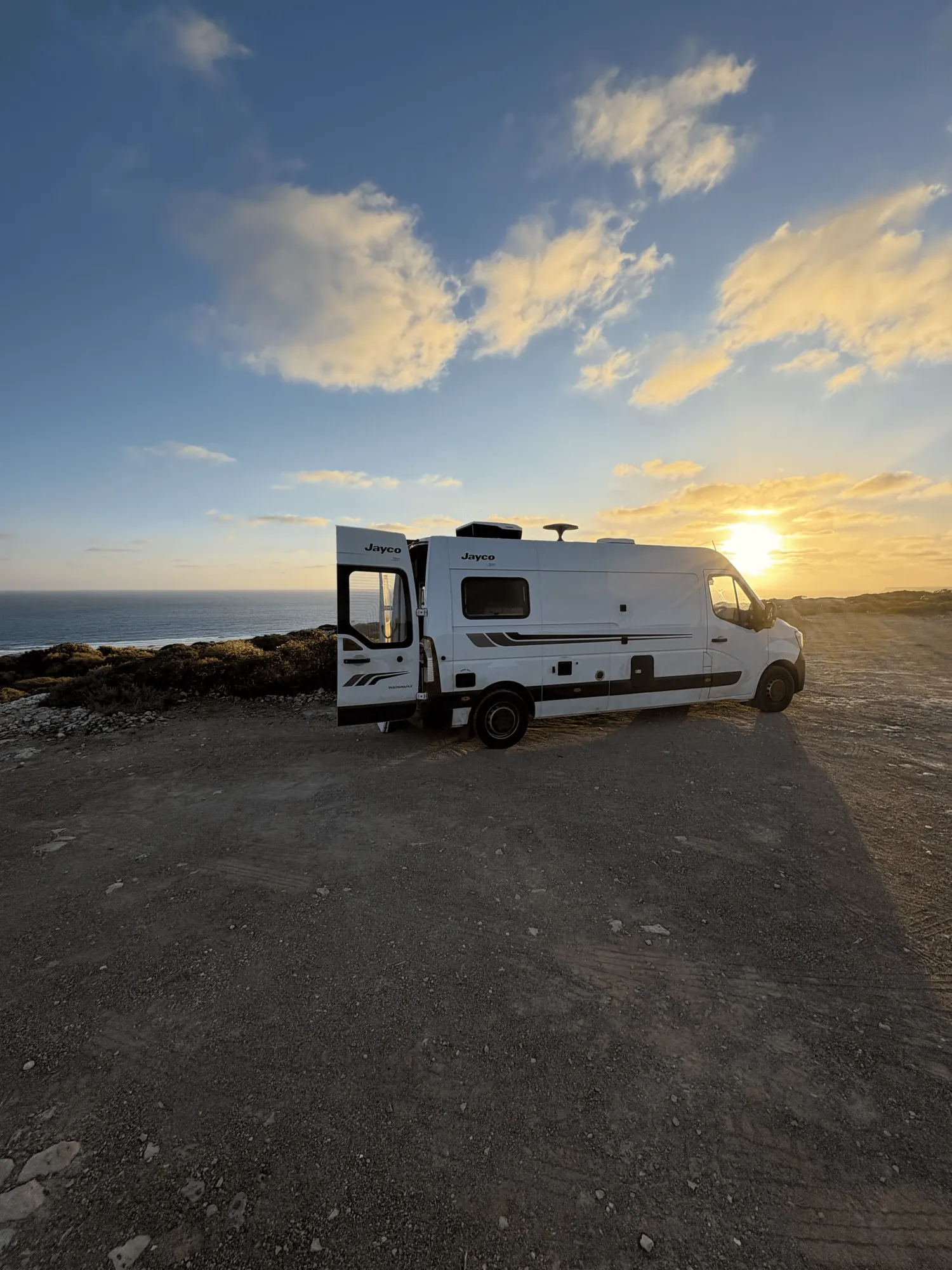
Somewhere during the day you cross the border from Western Australia to South Australia. We didn't end up at our planned free camp spot. We found an even better one earlier on the cliffs (this spot), around 50 km before our original target. Cold and windy, but the ocean below and the feeling of being far away from everything were worth it.
Ceduna (14.12)
After another 400 km we arrived in Ceduna. Before that, there's a quarantine checkpoint when crossing from WA to SA, where they inspect the vehicle to make sure you're not carrying fruit or similar fresh food across.
Ceduna itself wasn’t super exciting, but it was useful. We stayed at Ceduna Tourist Park, which was a perfect "maintenance stop": refill water, laundry, proper shower, shaving, and a good camp kitchen.
We had a nice chat with older Aussie ladies while hanging up laundry. These little social moments happen constantly on trips like this. People are curious, friendly, and it never feels forced.
That evening we tried kangaroo meat for the first and last time. It was okay, but the taste didn't really win me over. You can find it in every grocery store next to the chicken, pork, and beef.
Streaky Bay to Point Labatt to Talia Caves to Farm Beach (15.12)
We stopped at Sceale Bay for a short cool-down, then drove towards the Point Labatt Sea Lion Colony. Getting there was our first real "not properly paved road" experience: ridges, vibrations, slow driving. You can go faster (around 60 km/h) and it becomes smoother, but it still feels like your entire van is shaking itself apart. And if you need to brake, it gets chaotic quickly, so I drove very slowly most of the time.
At Point Labatt we watched sea lions from a distance. It’s a common place for their breeding, and you feel like you’re observing a quiet natural routine.
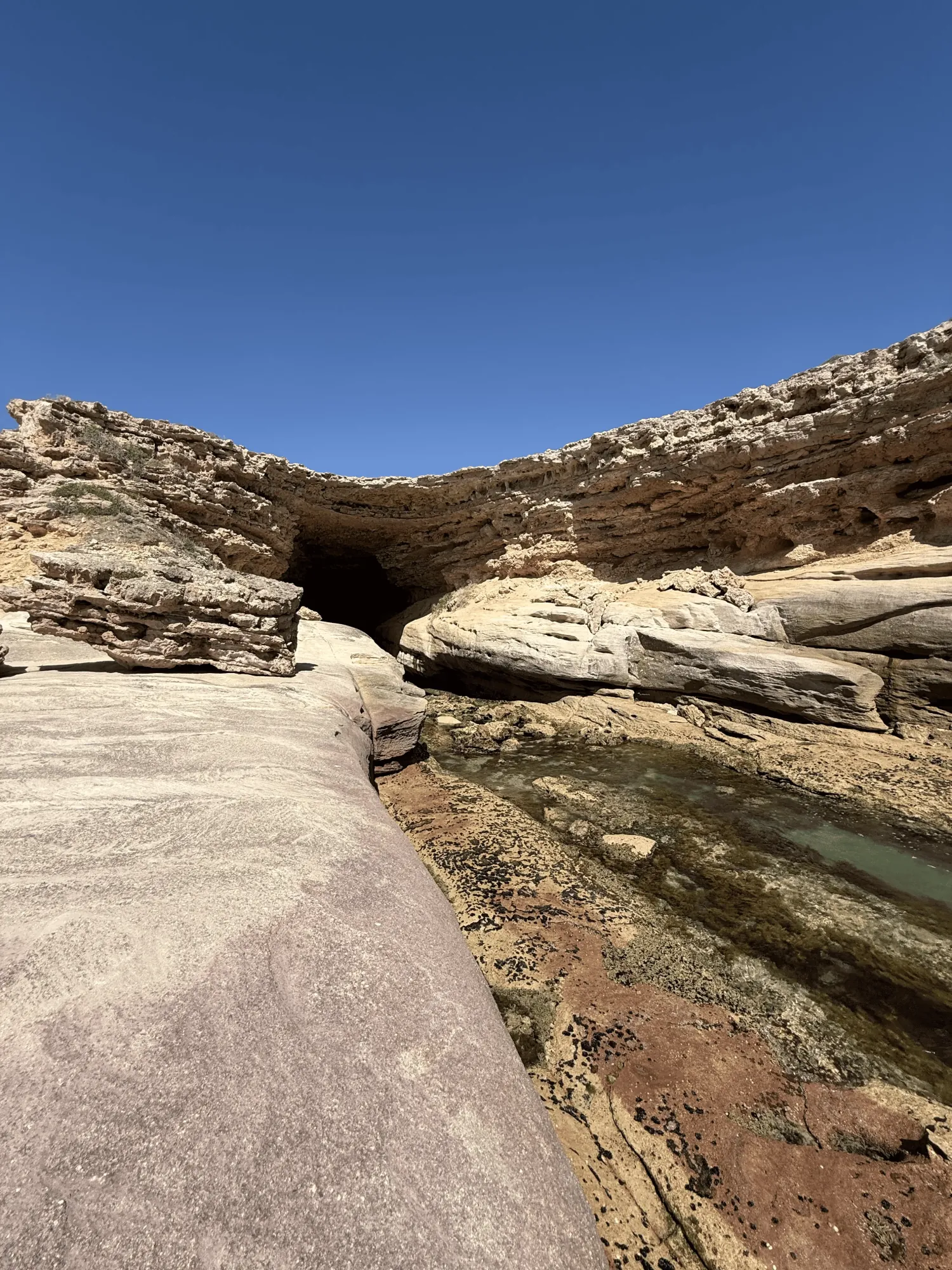
Talia Caves was next, also not super easy to reach, but it was worth it. You can really feel the violence of the ocean there. The energy, the wind, the noise.
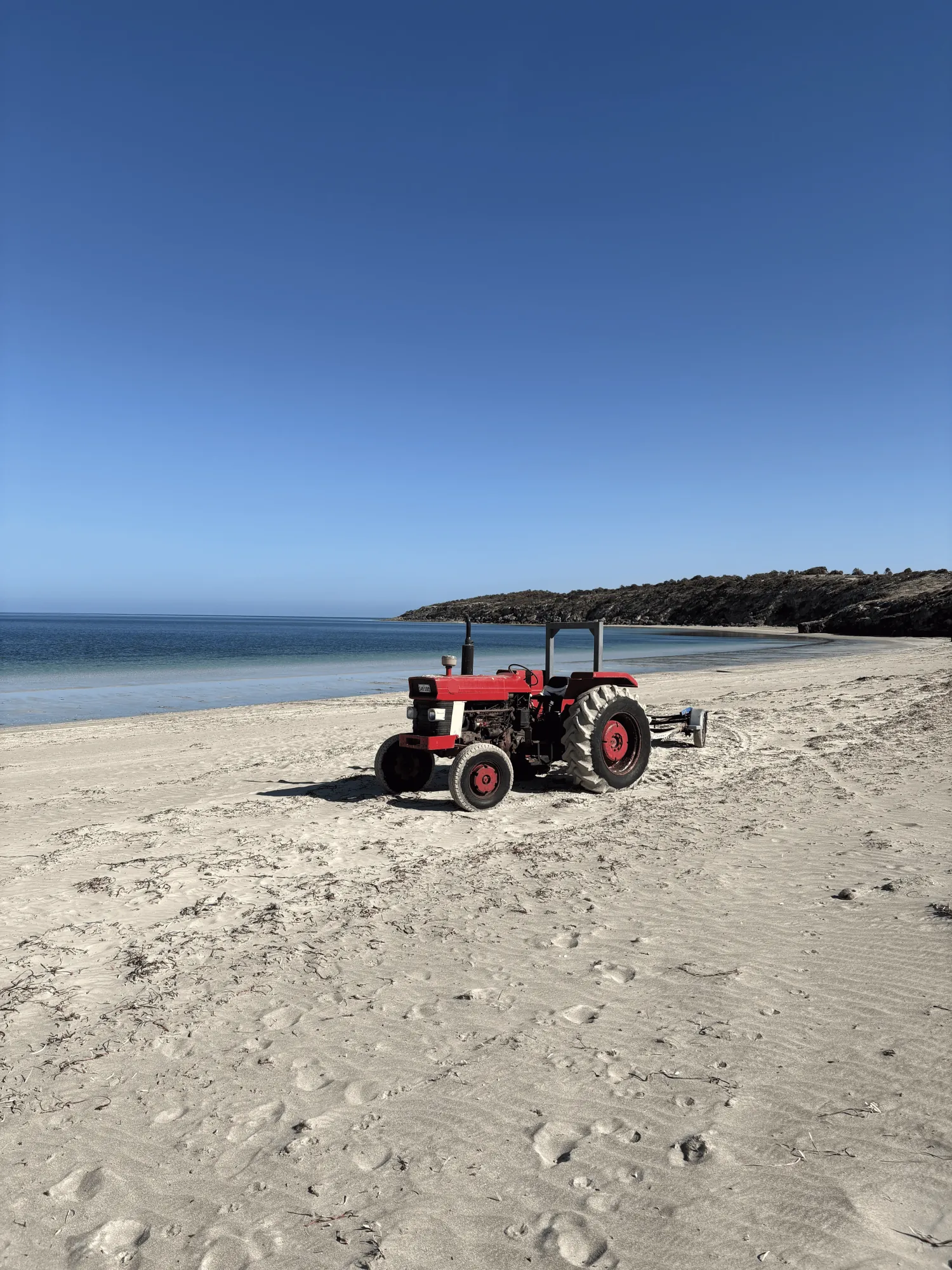
Later we drove to Farm Beach. The landscapes changed: more agriculture, more yellow tones, bright sky, less of the deep green-red contrast we had before. We saw huge John Deere machines, silos, and tractors literally pulling boats into the water on the beach.
The campsite "Farm Beach" required online booking for 20 AUD. Also a good lesson: even simple places are increasingly digitized. Booking when you're already in the national park may take a while, since the network connection can be really bad. You pay online and just register your license plate. I've never seen one, but according to some Aussies, "the ranger" checks the campsite every night.
Farm Beach morning → Port Lincoln (16.12)
Farm Beach in the morning was calm and beautiful. No waves, quiet water, and while I was swimming I saw a dolphin and some very cool starfish. We had breakfast with the usual chaos of flies, then drove to Port Lincoln.
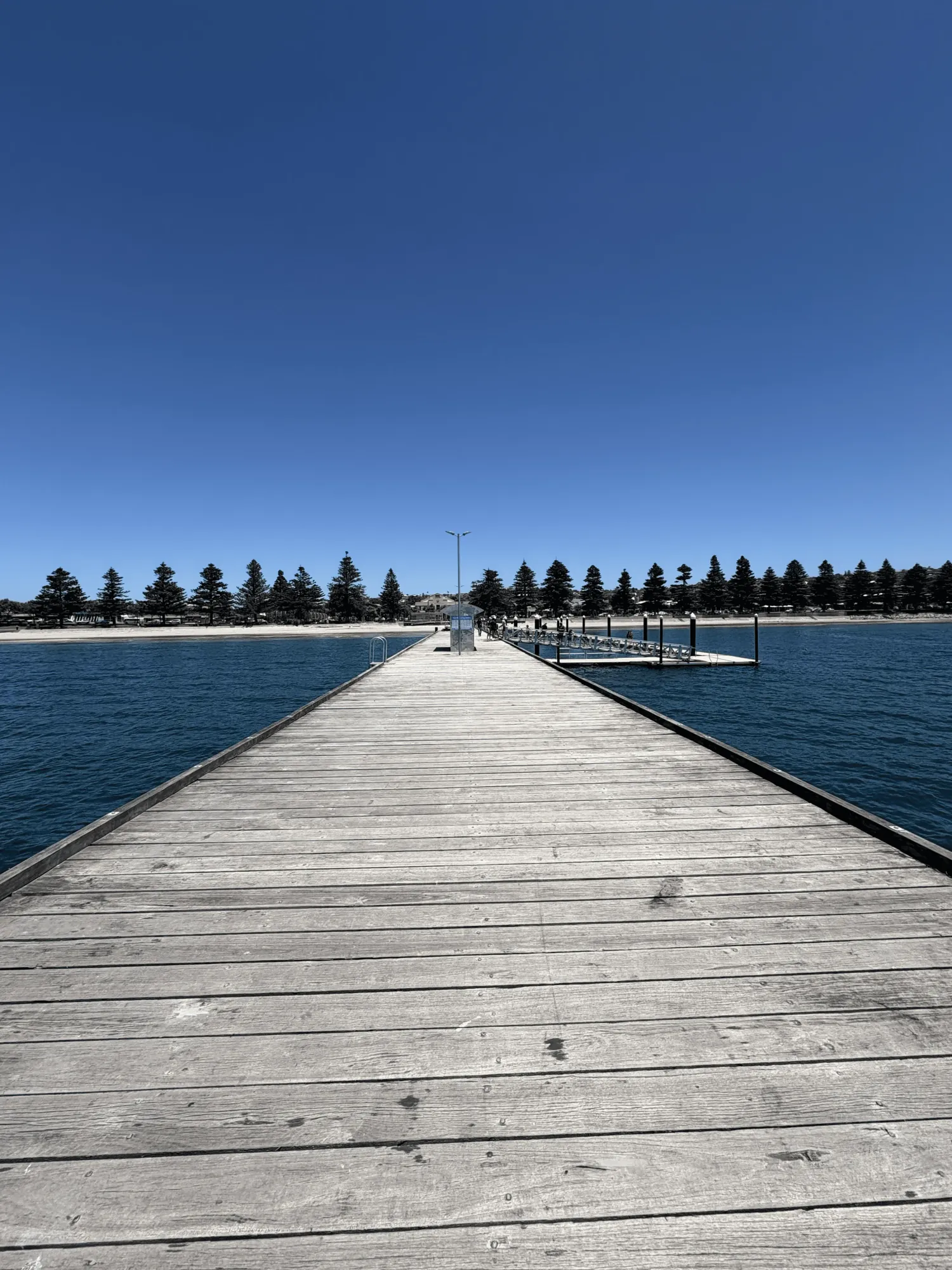
Energy was low, so we focused on recovery: good campsite, good facilities, little city walk, coffee at the foreshore. In the evening: seafood grilled in the camp kitchen.
Red Banks Beach → Clinton free camp (17.12)
We wanted to go towards Adelaide next, but it was too far for a relaxed day. So we planned a free camping stop around two hours before Adelaide.
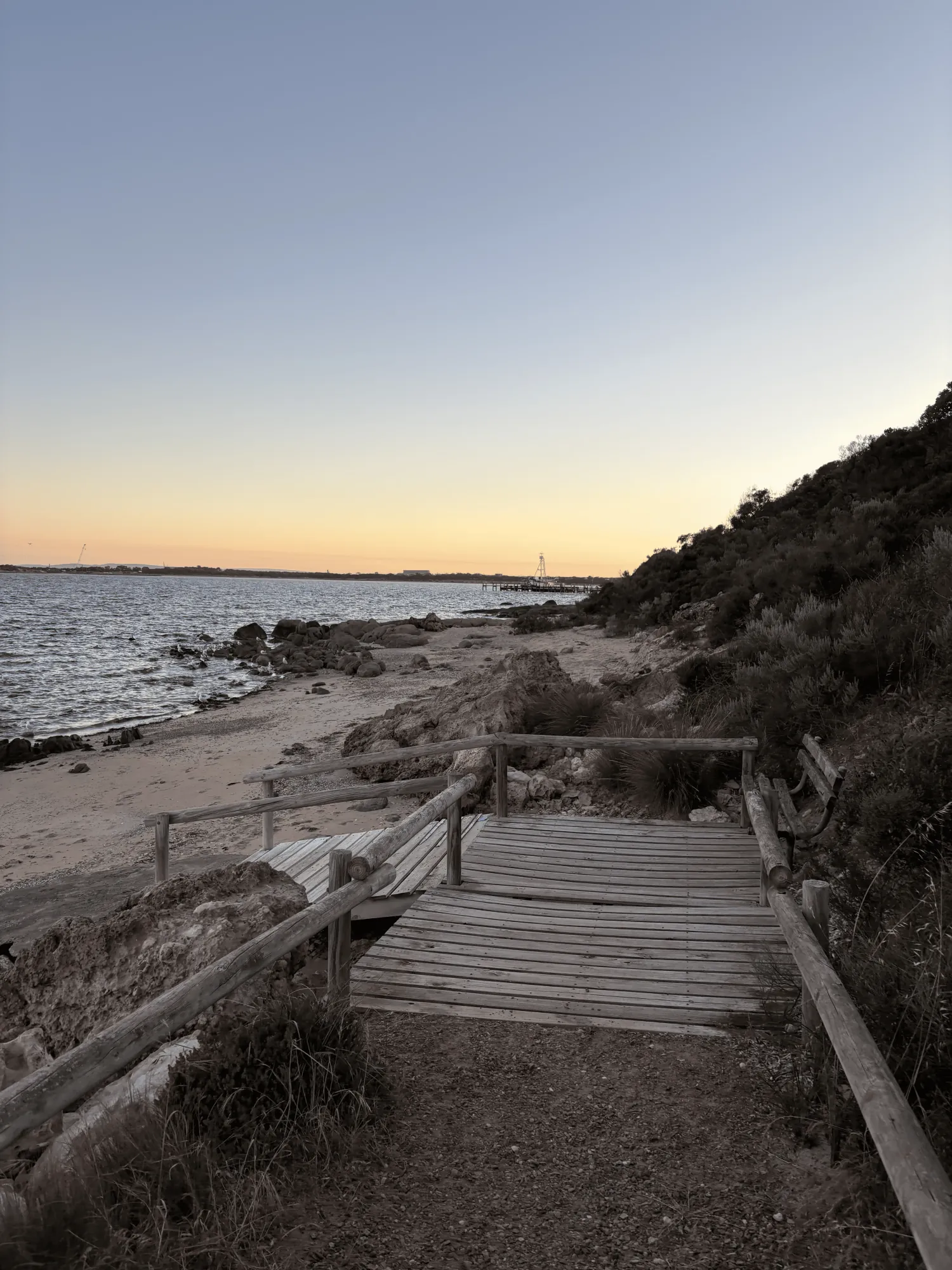
On the way we stopped at Red Banks Beach. It was very hot that day and a short heat wave was coming, with temperatures up to 40°C. That kind of weather shift is insane when you remember we had 9°C nights not long before.
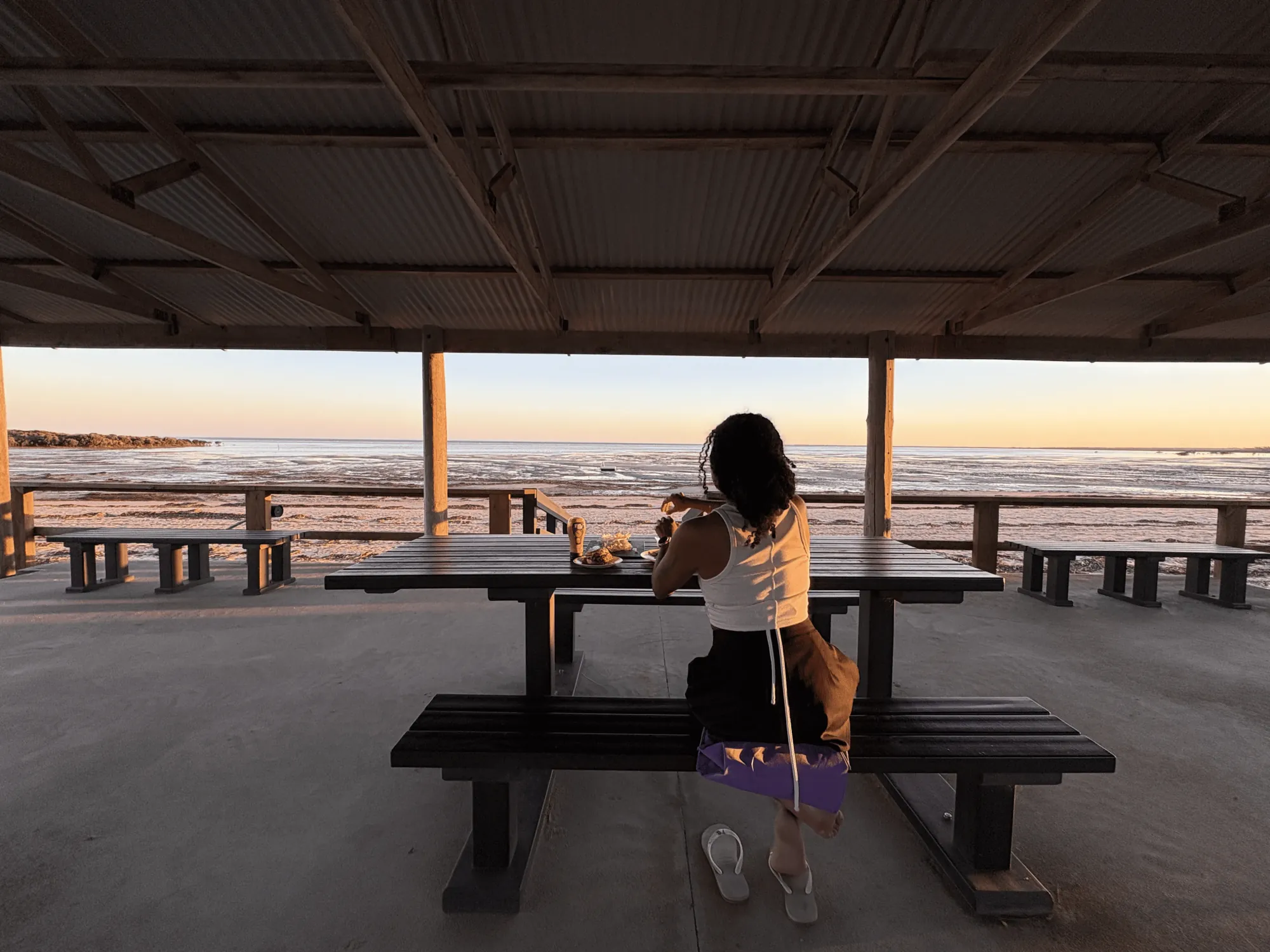
We stayed at a free camp directly near the beach and made burgers in the van kitchen while looking at the ocean. The small-town vibe in Clinton was very friendly. I really recommend going for random places in Australia that you don’t read in travel blogs. There are a lot of beautiful, inviting small towns.
Adelaide (18.12 - 19.12)
We left very early for Adelaide and didn’t even do breakfast because we wanted to secure a campsite. Holiday season had started and many places were booked out. Eventually we got lucky at Brownhill Creek Caravan Park: very green, good facilities, and a bus connection into the city.
After arriving we finally had breakfast and then went into Adelaide. It was extremely hot. We visited Victoria Square, the market, and the botanical garden. In the evening we ended up at a local bar near Rundle Mall where people were watching cricket. Australia vs. England in Adelaide, and you really feel how much cricket matters here.
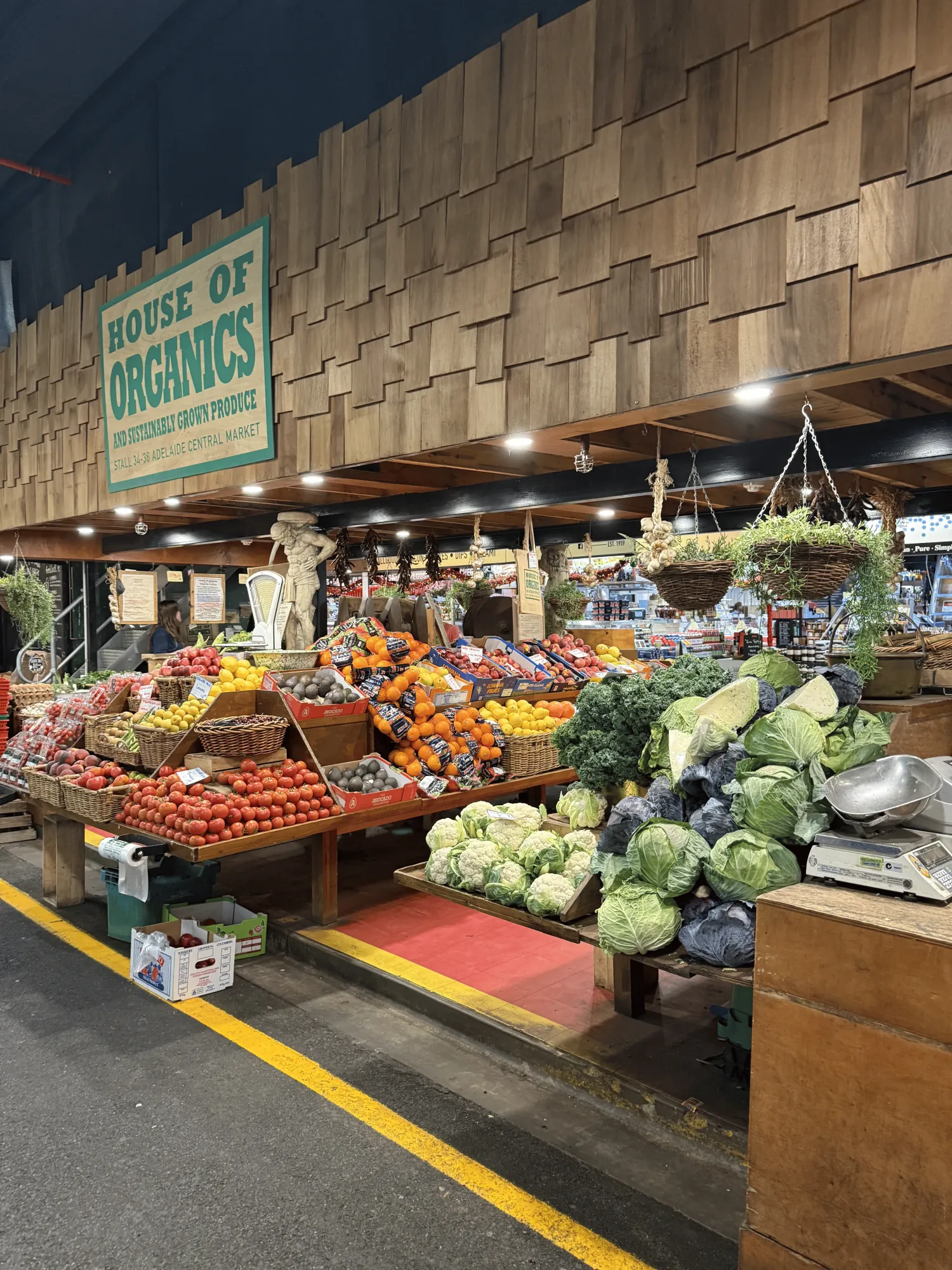
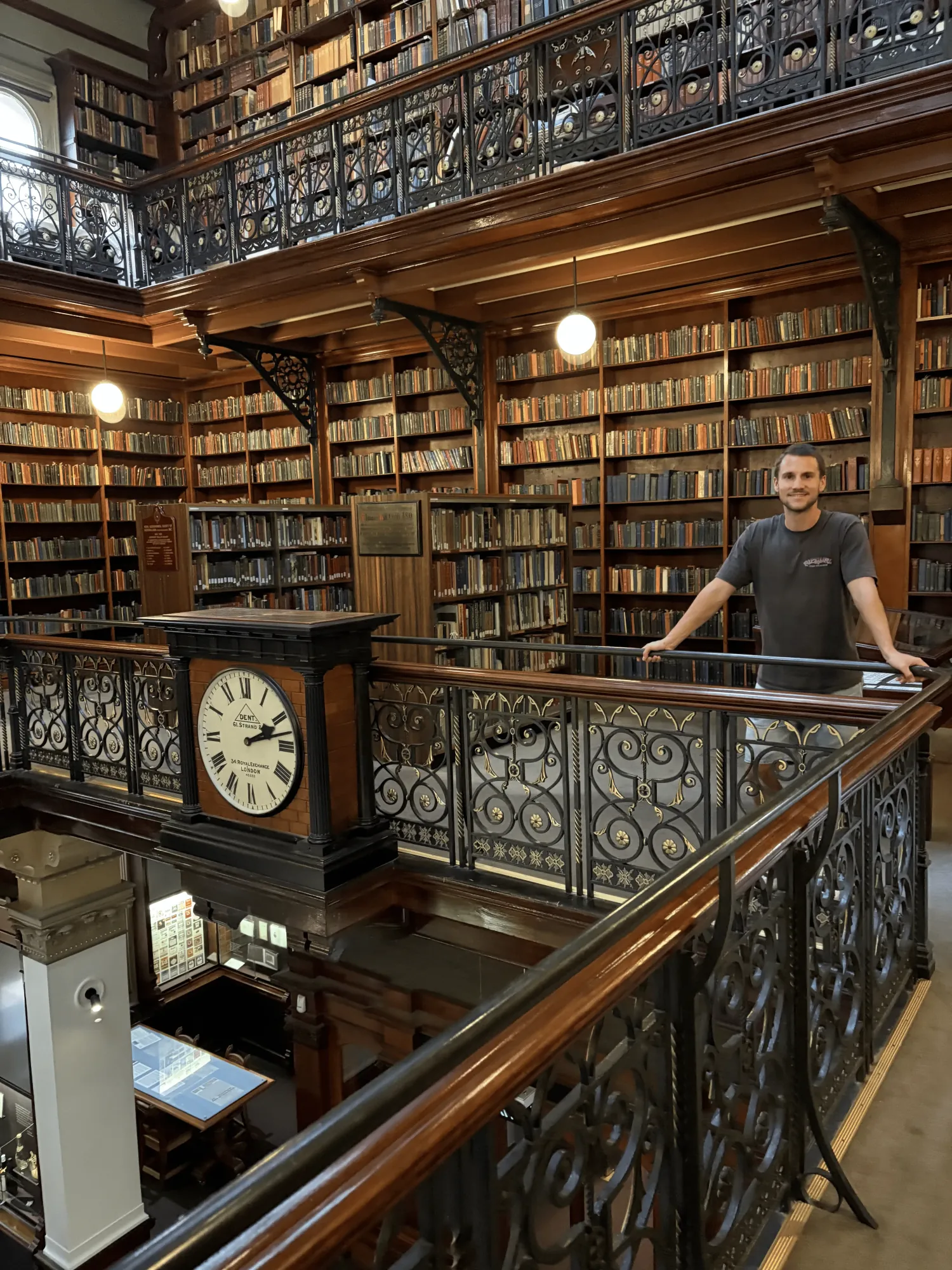
The next day we returned to the Adelaide Central Market because it was definitely the best food market we saw in Australia. It’s the perfect place to start a day with a small breakfast and then snack your way through random stalls. We also visited the State Library of South Australia, which is very impressive, and a museum where we learned more about regional art and Indigenous history.
Coorong National Park (20.12)
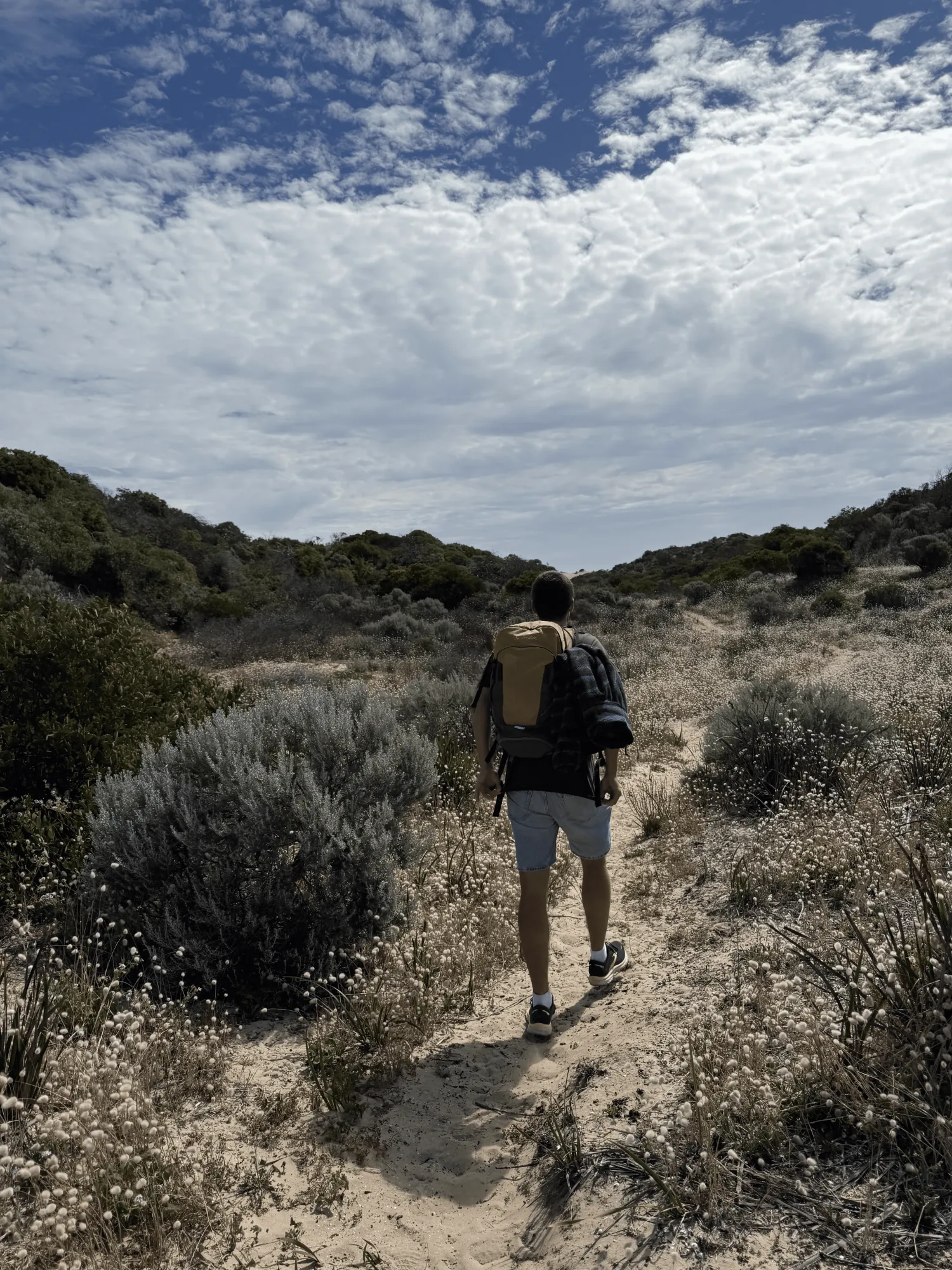
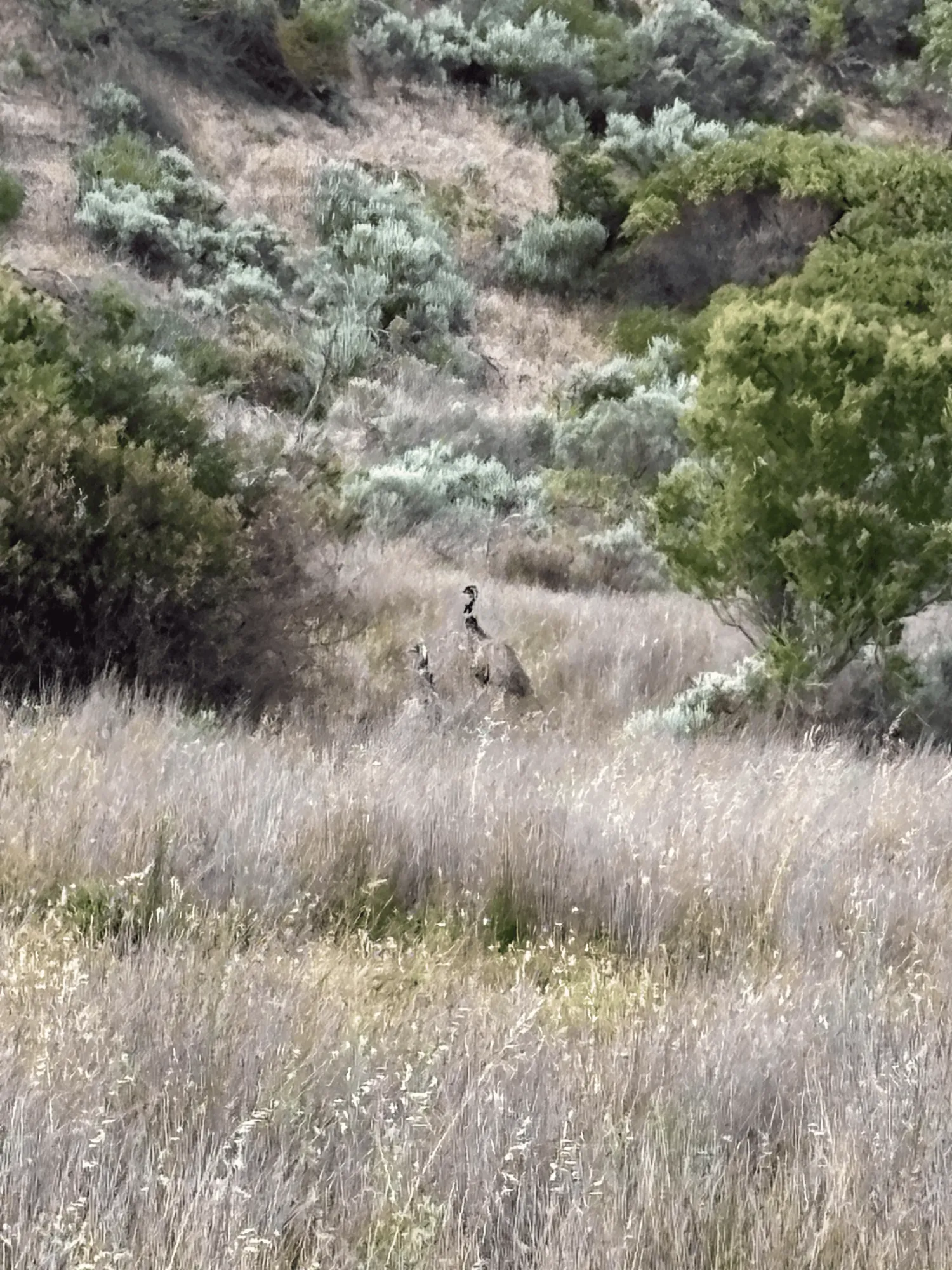
We left Adelaide and before starting the Great Ocean Road we did a stop at Coorong National Park and stayed at 42 Miles Campground. On the way we saw one of the many pink lakes. Not a famous one, but it actually had water in it and you could see the color from the high salt content. The national park itself felt like "maximum nature": very few people, strong wind, and a beautiful trail to the ocean from our campsite. Swimming wasn’t really an option. The coast felt too wild and cold. On the way back we saw emus, which we hadn’t seen this close before while walking (and not being in the car).
Mount Gambier (21.12)
This was our first real rainy day. We drove to Mount Gambier, didn’t do much, and spent time in the camper. We were happy to have a powered campsite because we could use the air conditioning for heating. It still sounds ridiculous to me in "Australian summer", but it was really cold.
In the evening, while grilling, we met a very nice family from Sydney traveling with two campervans and their sons. We talked for a long time. Again, these spontaneous campground conversations are honestly one of the best parts of camper travel.
Mount Gambier → Portland → Port Campbell (22.12)
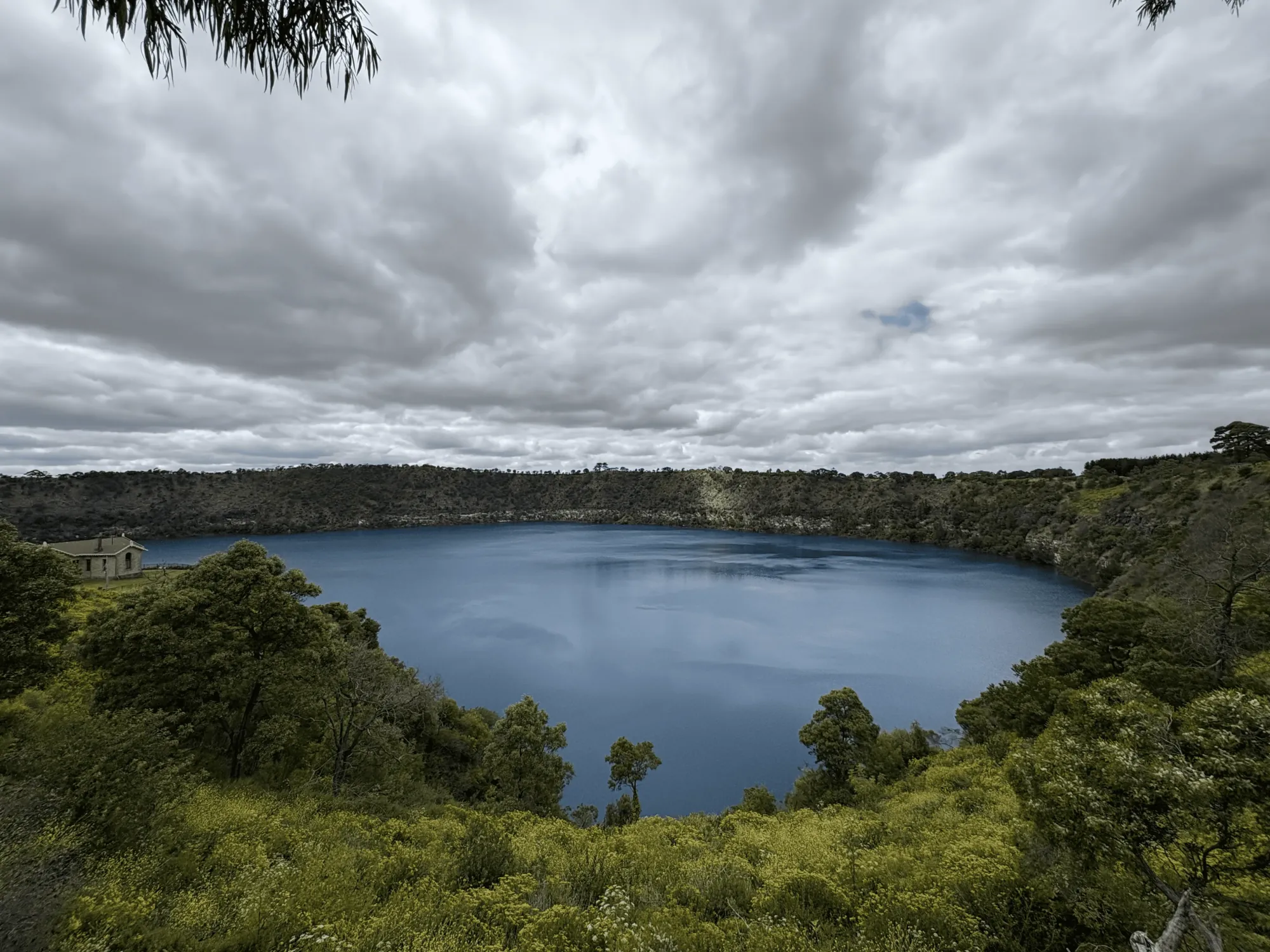
After breakfast we quickly checked out Blue Lake and then drove towards Portland. This was a recommendation from an Aussie I had met in Adelaide: "If you drive the Great Ocean Road, you can start earlier, in Portland, not Warrnambool like usually recommended."
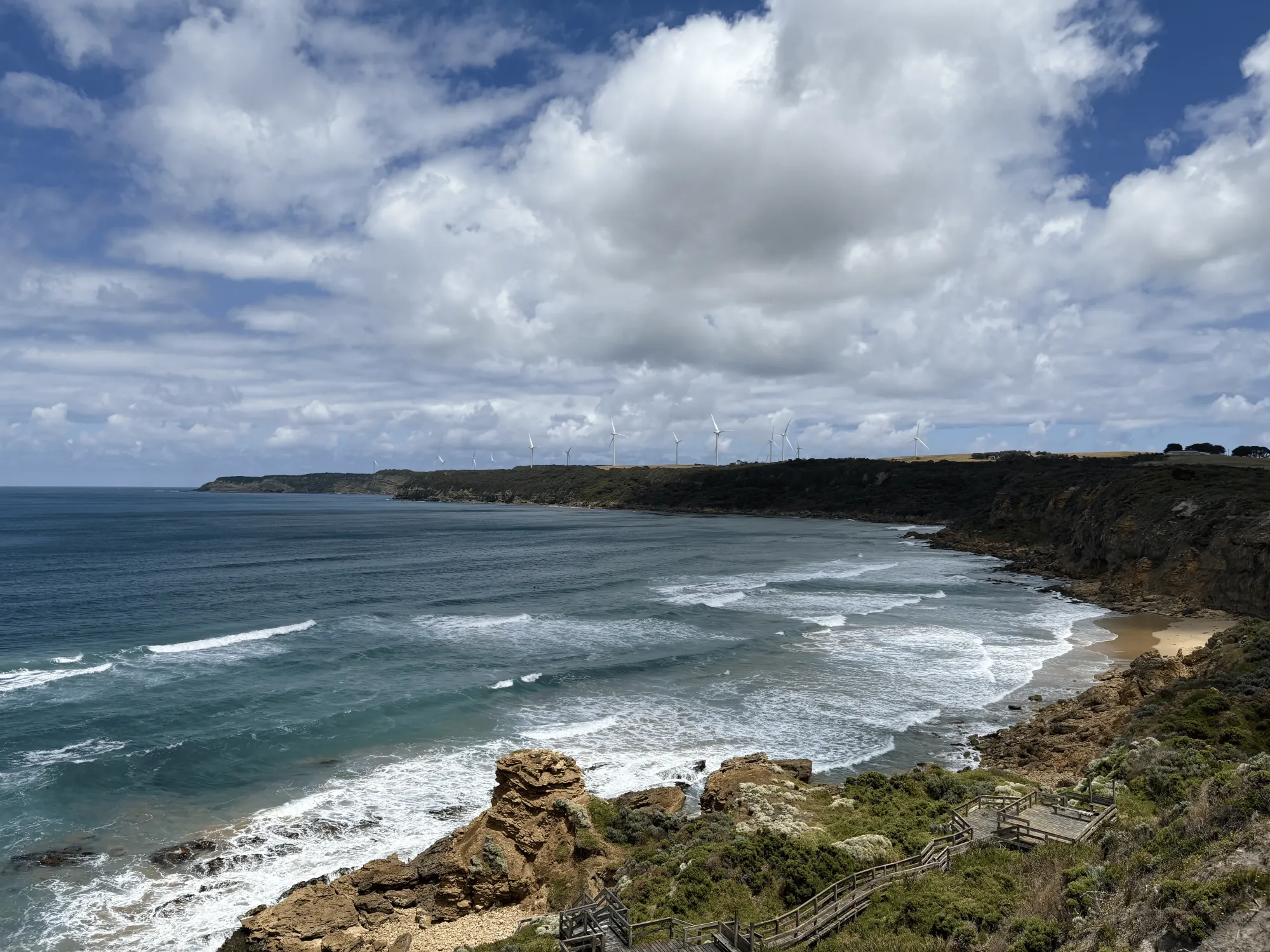
Portland gave us cliff vibes, lighthouses, and wind turbines. Very impressive landscape.
We continued to Port Campbell and along the way, we stopped in Port Fairy for coffee at Rebecca’s Coffee. The town felt cool: small, surfer vibe, people casually hanging out.
This night we stayed at an NRMA Holiday Park, one of the few campsites we booked in advance. I feared that the whole Great Ocean Road would be completely overcrowded in the holiday season. It was actually quite calm, except for the tourist bus chaos at the 12 Apostles viewpoint.
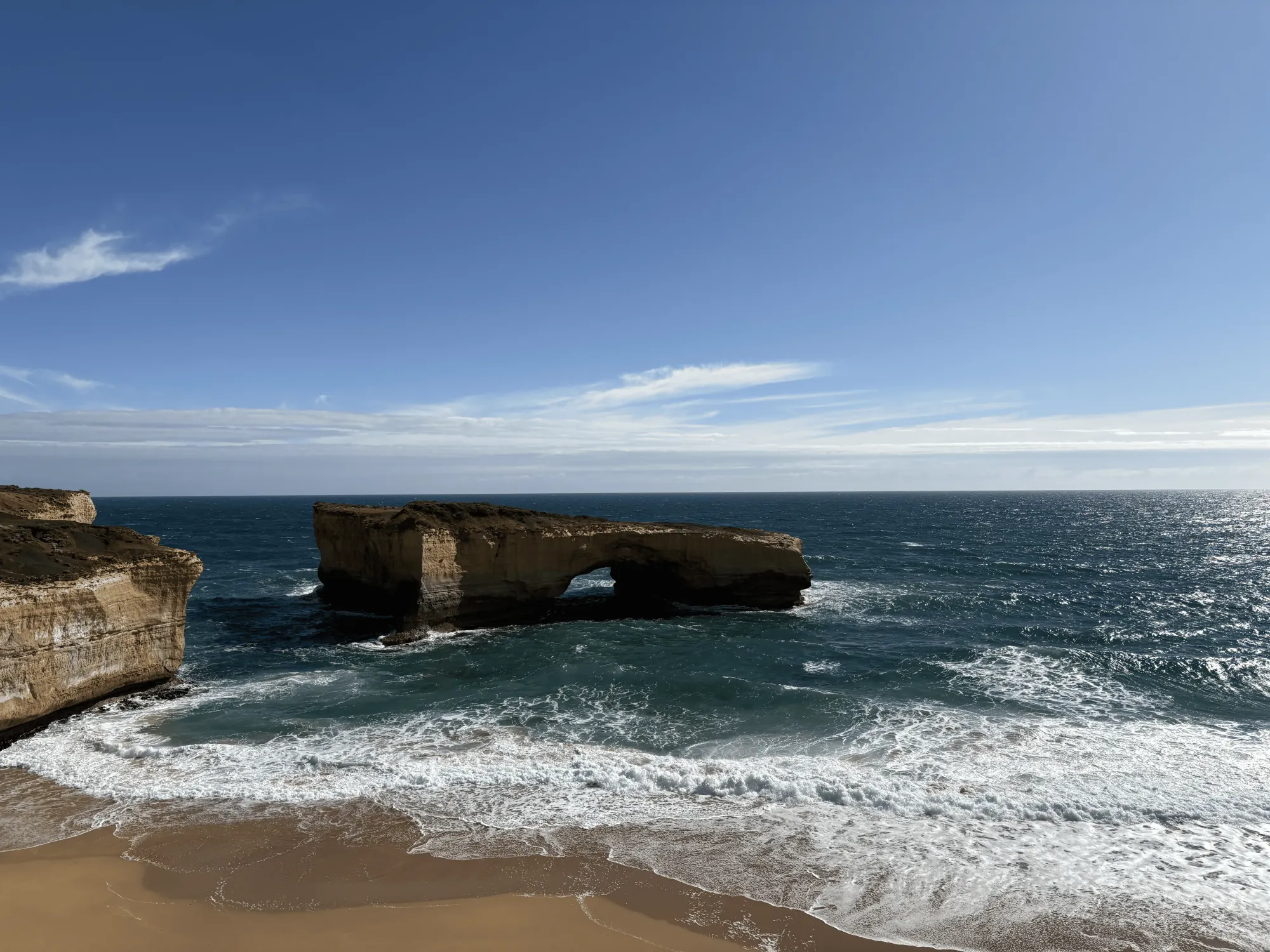
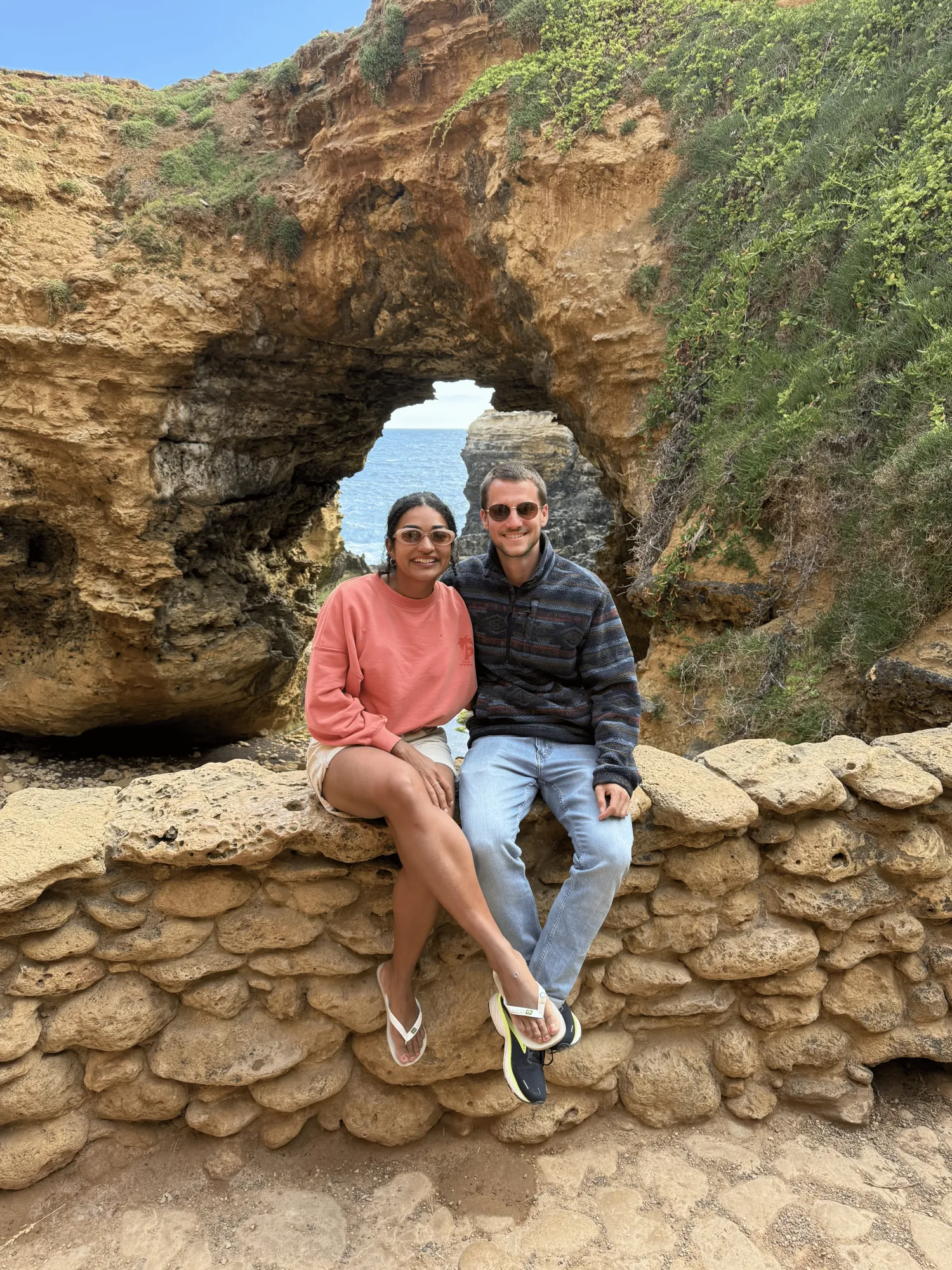
After check-in we visited The Grotto and London Bridge. London Bridge in the evening light with strong wind was one of my favorite moments on the Great Ocean Road. Everything just fit together: colors, wind, atmosphere.
Great Ocean Road → Apollo Bay (23.12)
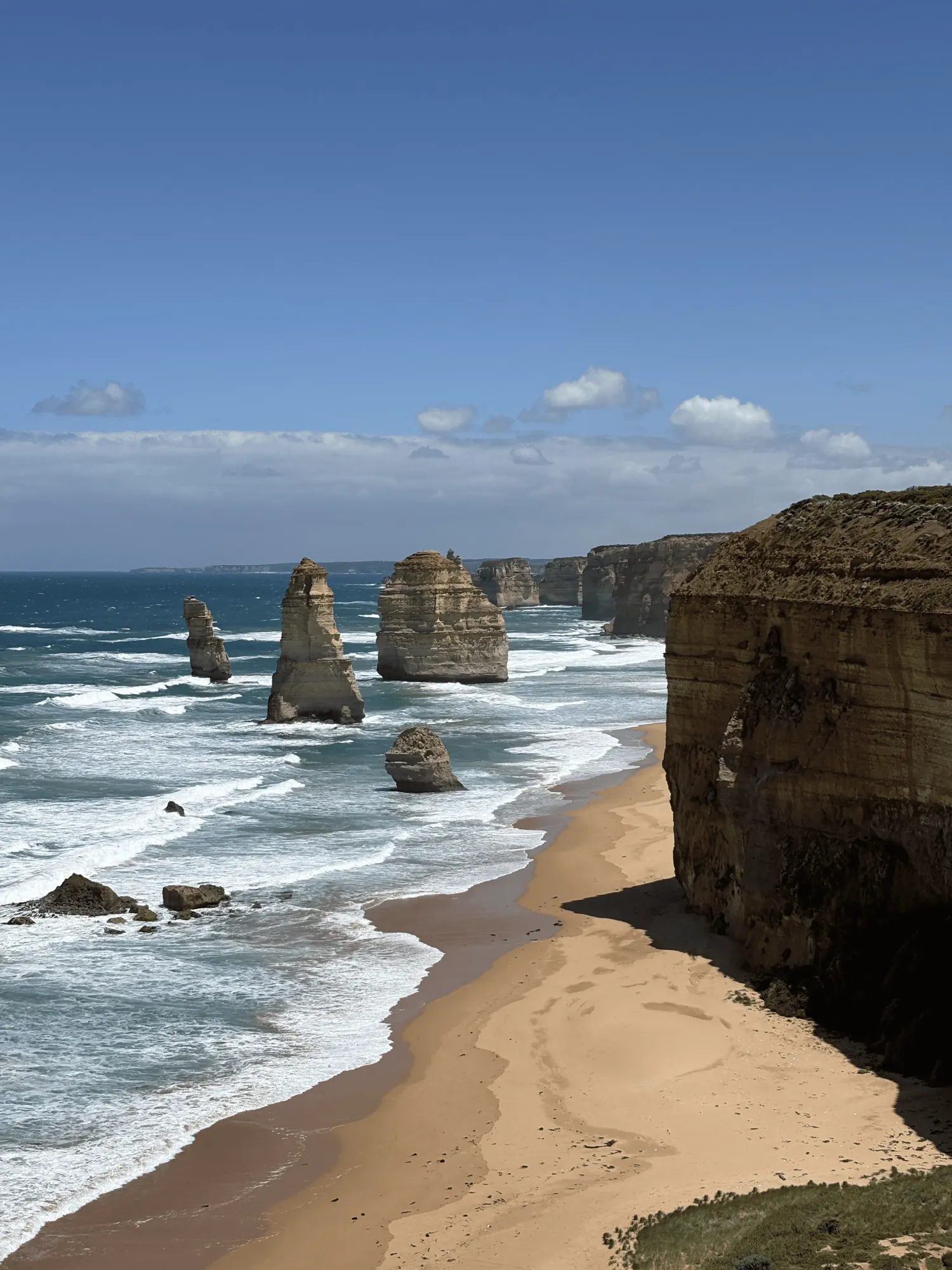
We started around 9:00 and planned to arrive in Apollo Bay (Apollo Bay Recreation Reserve) in the late afternoon. On this road you can basically stop every few kilometers for a viewpoint (the brown signs along the road), and honestly: the 12 Apostles are impressive, but they’re not the only impressive spot. Many other viewpoints (Bakers Oven, Razorback, Island Arch Lookout, just to name a few) felt equally stunning with far fewer people.
The morning weather was bad and we even did a small nap in the car. Later the sun came and stayed for the rest of the day.
We also visited the Great Ocean Road Wildlife Park (recommended by a friend). It’s small and lovingly run. We saw emus and one koala properly up close. Actually, we saw some wild koalas later that day, the only time on the whole trip.
Torquay - Free Camping on Christmas Eve (24.12)
This day started with rain and an unexpected road closure that cost us about a 1.5-hour detour. We walked a famous koala path but unfortunately didn’t see any. Instead we finally saw a kookaburra, a famous Australian bird. Until then we had only heard them (laughing).
In general, traveling through Australia you will see a lot of interesting and beautiful birds you’ve never seen before (or maybe only in a zoo). Different parrots and cockatoos, and for most of the others I don’t know the names. Besides the look, the sound of the birds is also very different and sometimes weird to my European ears. I haven’t encountered that on other continents.
In the late afternoon we arrived in Torquay and couldn’t find a campsite anymore, since the reception was already closed. We decided to free camp spontaneously. Christmas Eve dinner happened at a Chinese restaurant because basically everything else was already closed.
We arrived late at our free camping spot near Melbourne. To create at least a bit of Christmas mood, we used the camper TV exactly once: we streamed Home Alone.
Melbourne (25.12 - 26.12)
On the 25th we checked into Dandenong Tourist Park. We did a small run, but it was so windy that it wasn’t even fun. Melbourne weather is special. We didn’t go into the city because everything was closed anyway, so we did laundry and started cooking early.
Christmas dinner: lamb cutlets with lemon/honey, rice and salad. As a starter we did crackers with brie and fig jam, plus salami and avocado. Simple, but it felt cozy in that campsite kitchen.
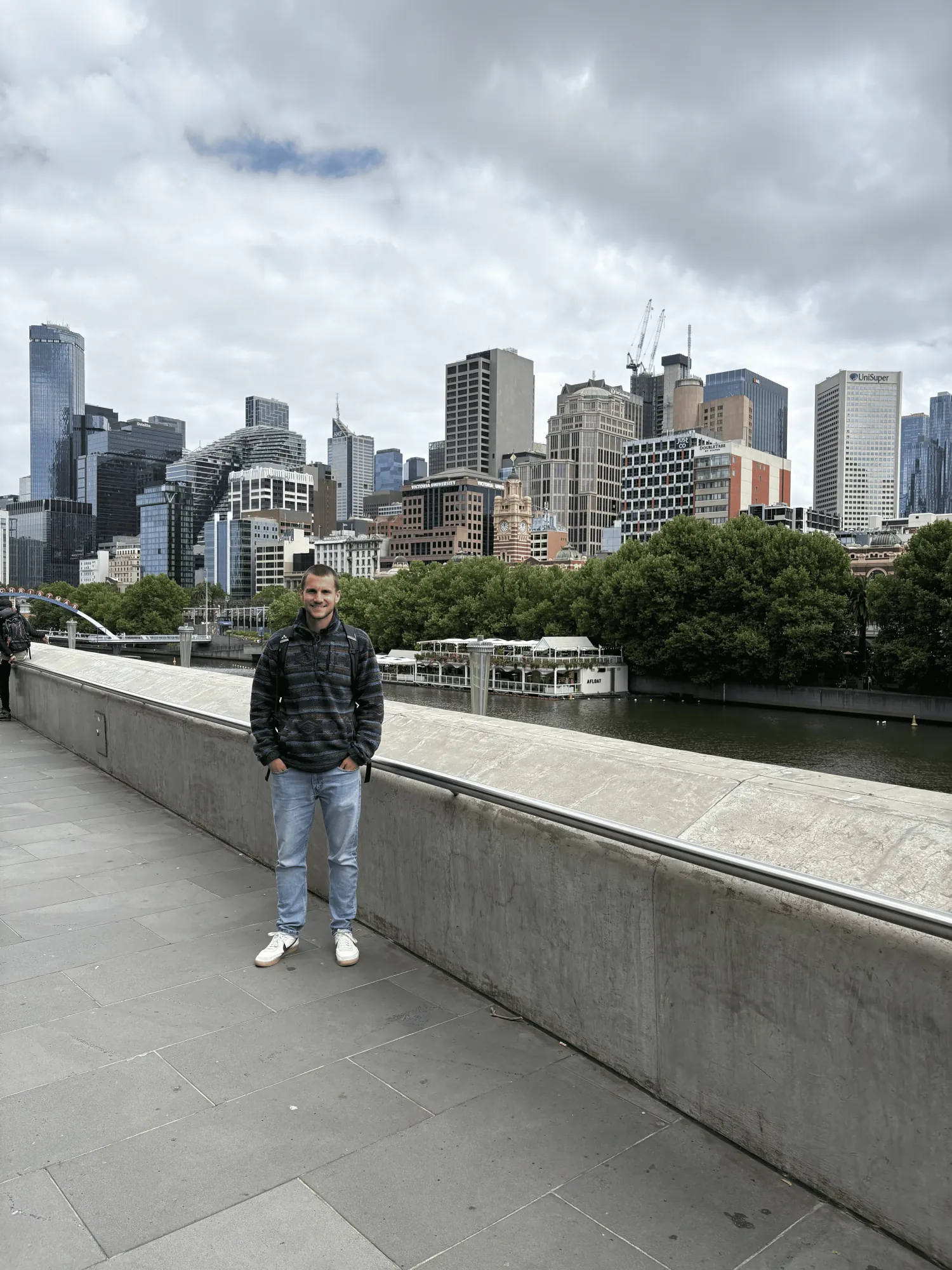
On the 26th we went into Melbourne city. Public transport was slightly annoying because Melbourne uses the Myki card instead of simple tap-on/tap-off with credit cards like other cities. The weather was cold, windy, around 15°C. Later it got sunny but still not warm. It’s hard to believe that this region can have 45°C heat waves and fires a couple of weeks later.
Boxing Day meant discounts everywhere. Some sights like the State Library of Victoria were closed, but we visited an art gallery and later went to the cricket stadium area where there was a Boxing Day event vibe: food trucks, music, a small festival feeling. We finished the day at St Kilda Beach for a small beer in the sun. People say there are penguins in the evening, but we were there late afternoon and didn’t see any.
Long drive day towards Sydney (27.12)
At this point we needed to move. The drop-off appointment in Sydney was coming and time was running out. We planned a full driving day and stayed at a free camping spot about 1-2 hours before Sydney. No power meant no heating, and we had one last cold night. Since we drove the full day to get close to our drop-off spot, we didn’t see much of Australia between Melbourne and Sydney. One of the few negative parts when you don’t fully plan the trip in advance, but travel more day to day.
Sydney outskirts & Blue Mountains (28.12)
We checked into Ingenia Holidays Avina near Sydney because we wanted to have a smooth last camper day. The next day we had to return the van at 12:30, so this was the "buffer day": cleaning, packing, and still doing something fun.
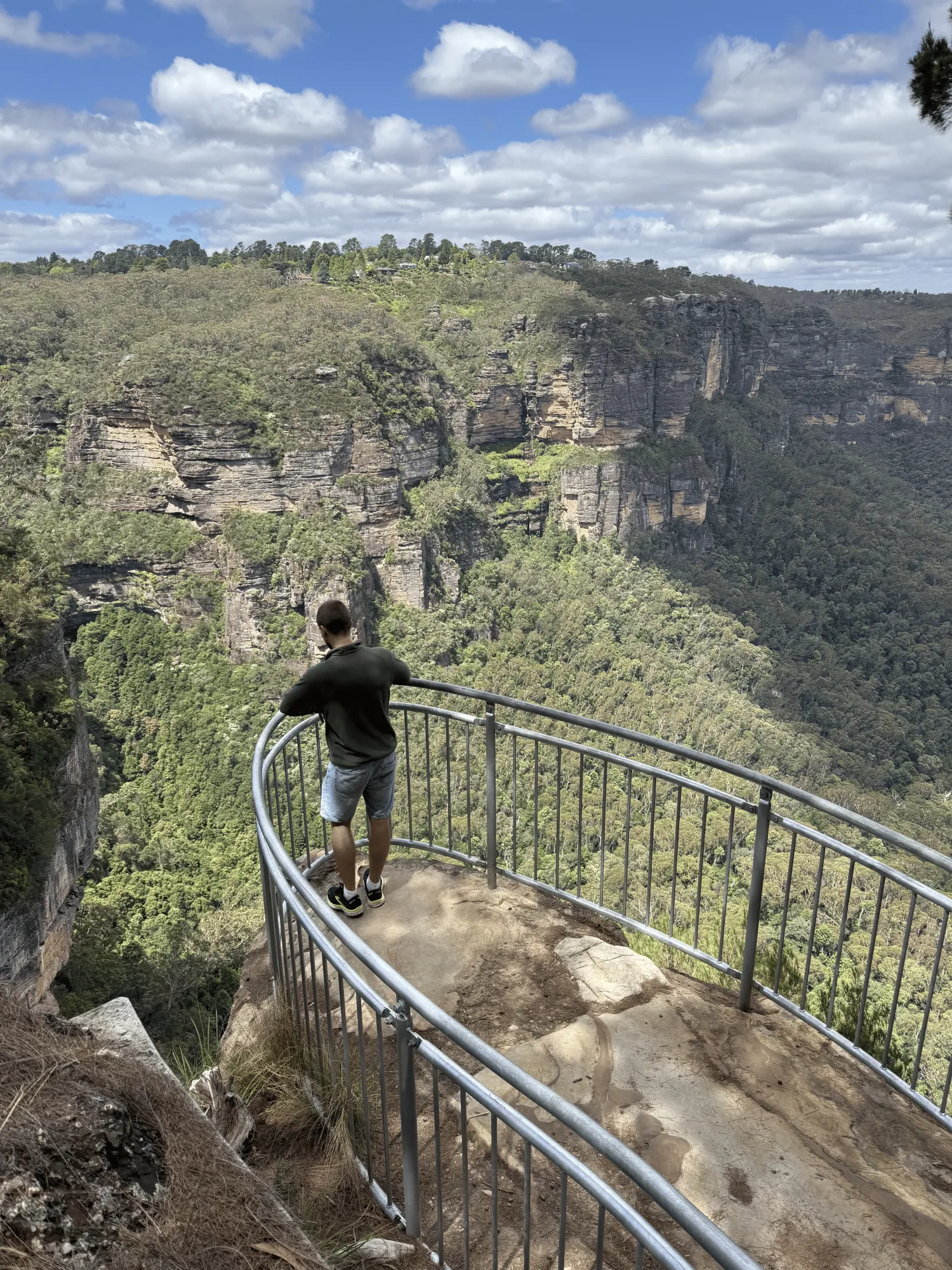
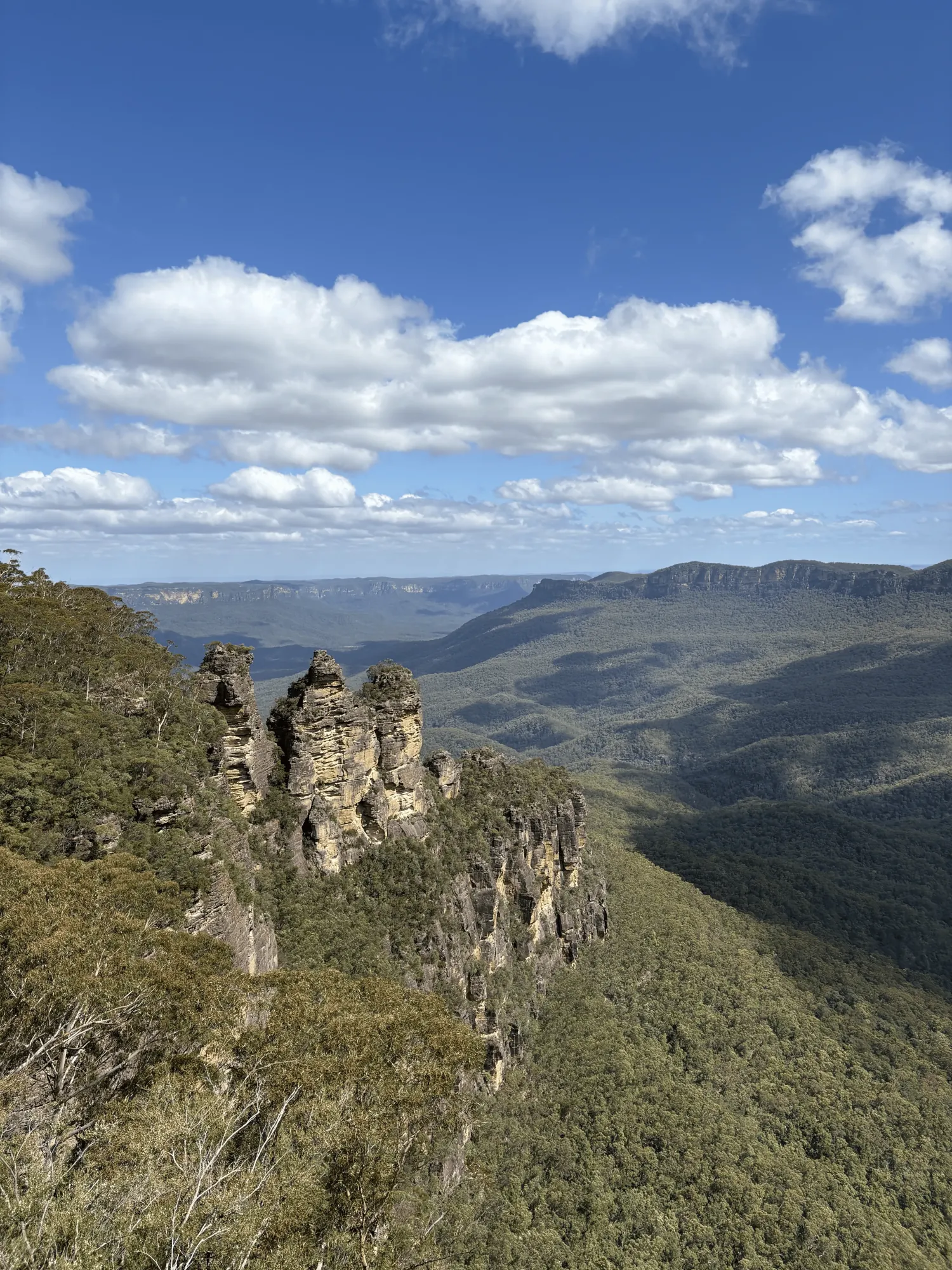
After check-in and breakfast we drove to the Blue Mountains. We did a small hike, visited the Three Sisters, and got coffee before heading back. In the evening we grilled seafood: green prawns, squid, and barramundi. If you haven’t heard of barramundi, try it. You can eat it like salmon, in big fillets.
Camper return (29.12)
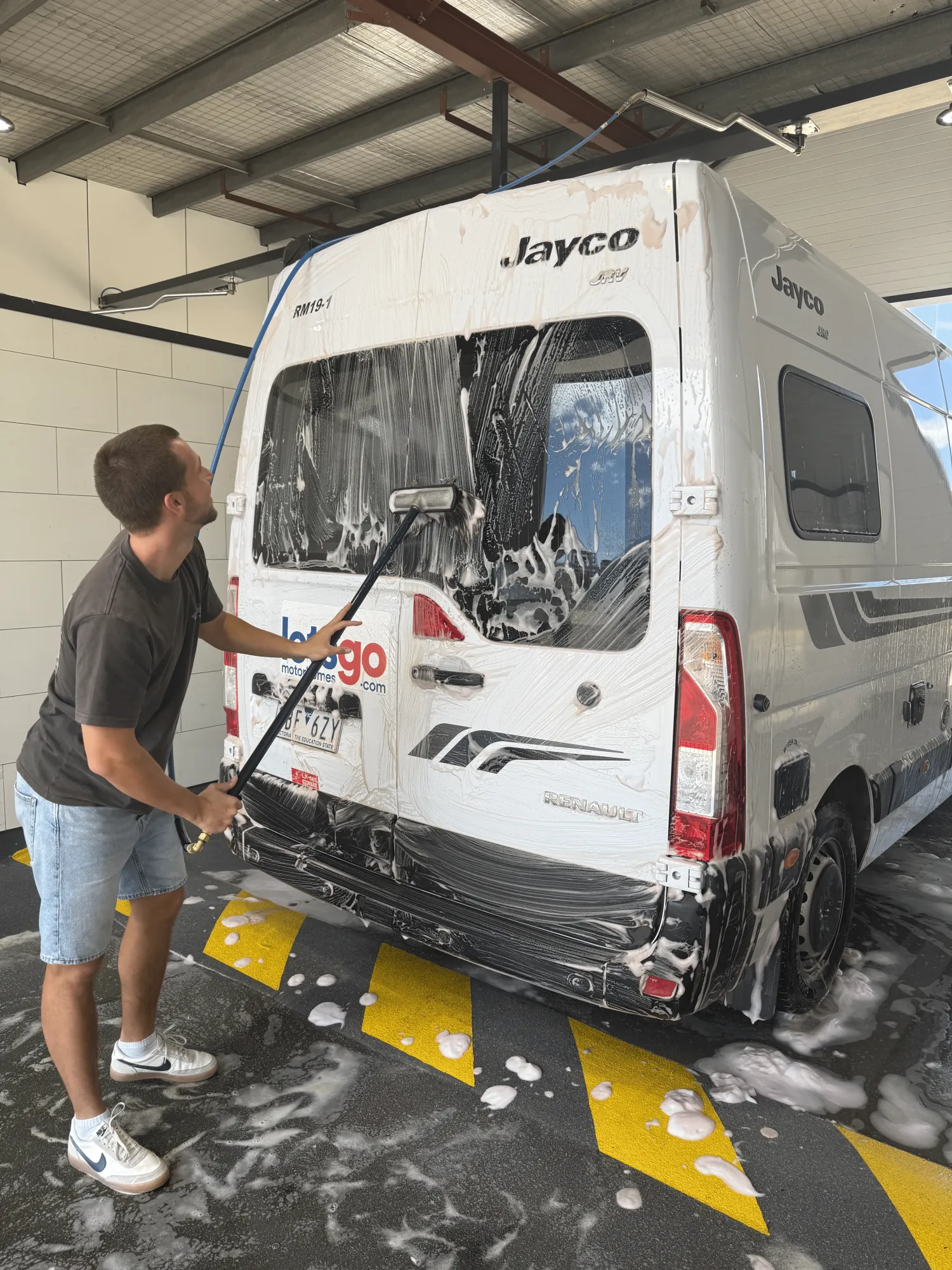
We woke up at 6:30, had breakfast, then the mission started: dismantle the bed (we kept it built the full trip), empty grey water, empty toilet, refuel, and do a full car wash inside and outside.
The handover went perfectly. We had tiny stone chips on the windshield, but according to the employee that’s basically expected after 6,700 km from Perth to Sydney on Australian roads. We got the full deposit back. I’ve rented a few cars in the past, but never paid for special insurance, always the minimum required package available. Just wanted to share this good experience, because online you mostly read the bad stories where people have to pay for something that was already there before the rental.
We went by public transport to our hotel: Lakeside Hotel & Conference Centre, a bit outside, but green, nice, and affordable around New Year’s. Public transport in Australia is generally very easy and cheap, tap-on/tap-off with your credit card, except Melbourne.
That day we didn’t go into the city. It was enough. We just went to Macquarie Centre nearby.
Sydney: Manly, Opera House & first "wow" moment (30.12)
The hotel had a gym, which felt like luxury. After a month of improvised workouts (push-ups and pull-ups on playgrounds whenever possible), a small room with 2-3 push and pull machines felt like the world’s best gym.
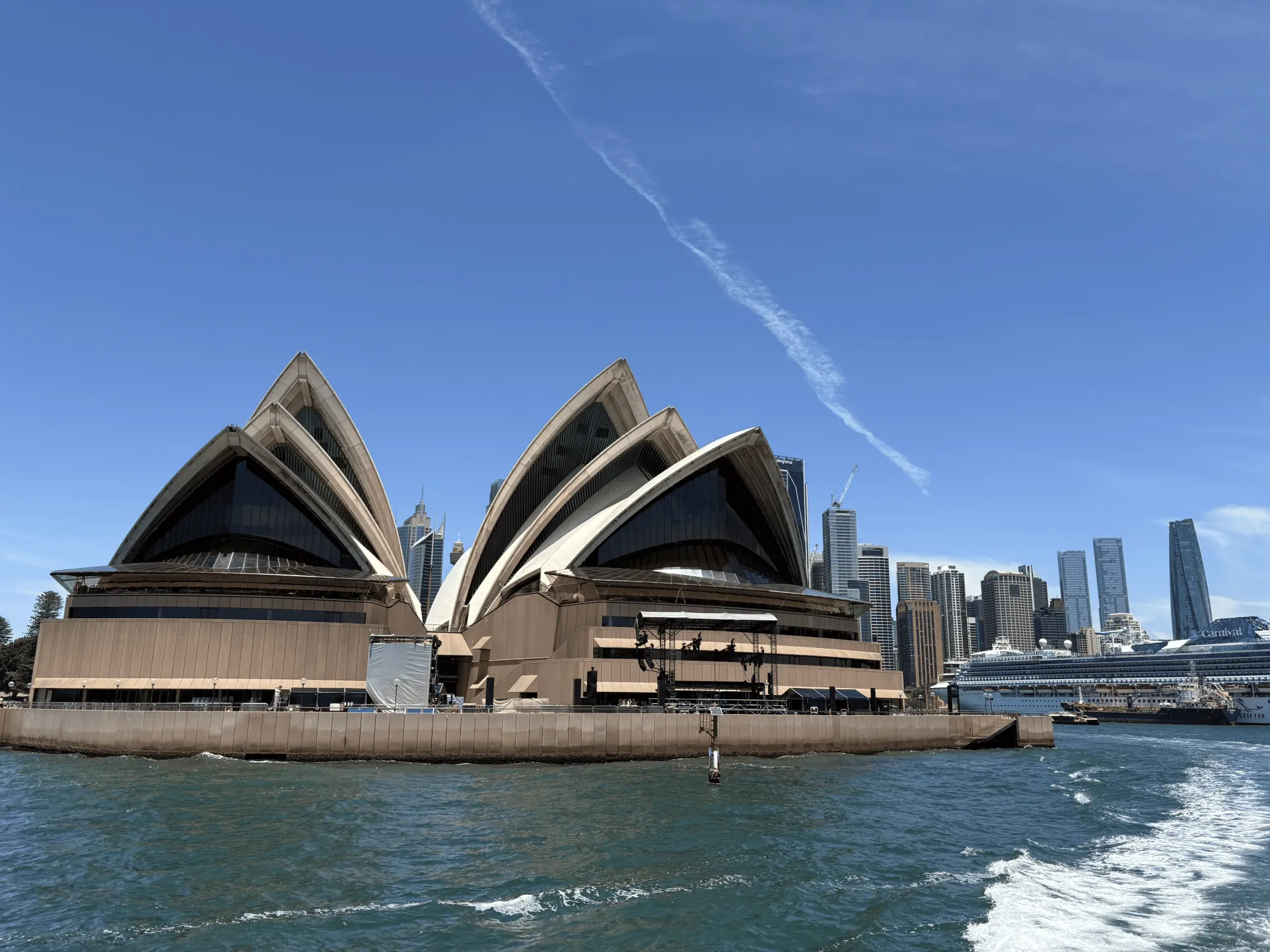
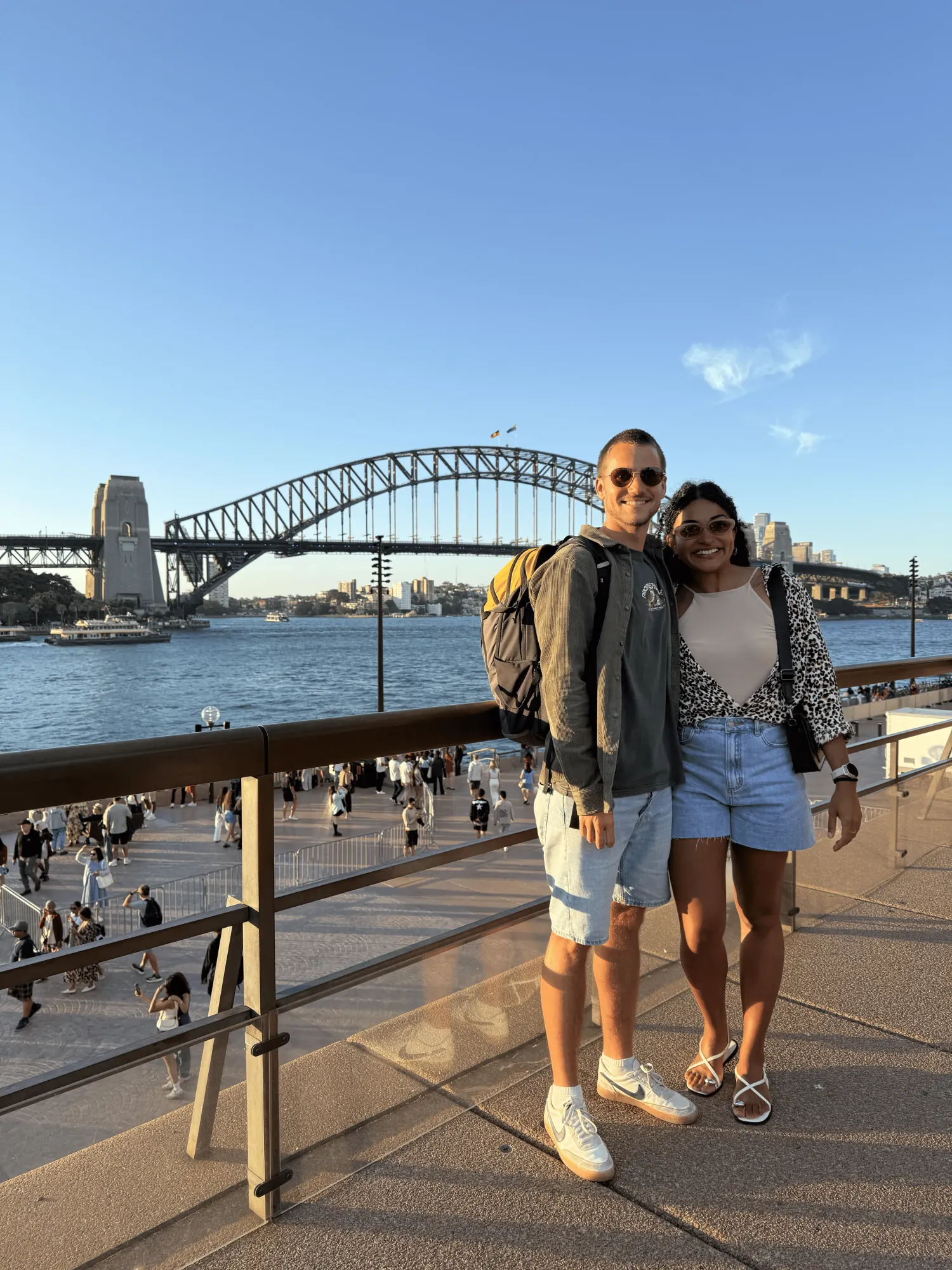
Then we went into Sydney early for breakfast, crossing the Harbour Bridge by bus. That first view is insane. Seeing the Opera House is a special moment. Somehow you know the image since you were a child, but then suddenly you’re really in front of it.
We took the ferry to Manly Beach. The ferry ride is definitely a highlight and almost as impressive as Manly itself. Seeing a crowded city beach felt like an interesting contrast after so many empty Australian beaches before.
We didn’t have much time in Manly because we booked a free walking tour at 15:00. In the evening we had fish & chips, saw the Opera House and Harbour Bridge up close, and ate what might have been the best ice cream of my life at Royal Copenhagen Ice Cream (Circular Quay). Pistachio with real pistachios. In Australia one scoop is enough. They don’t do European "tiny ball" portions.
Sydney: New Year’s Eve (31.12)
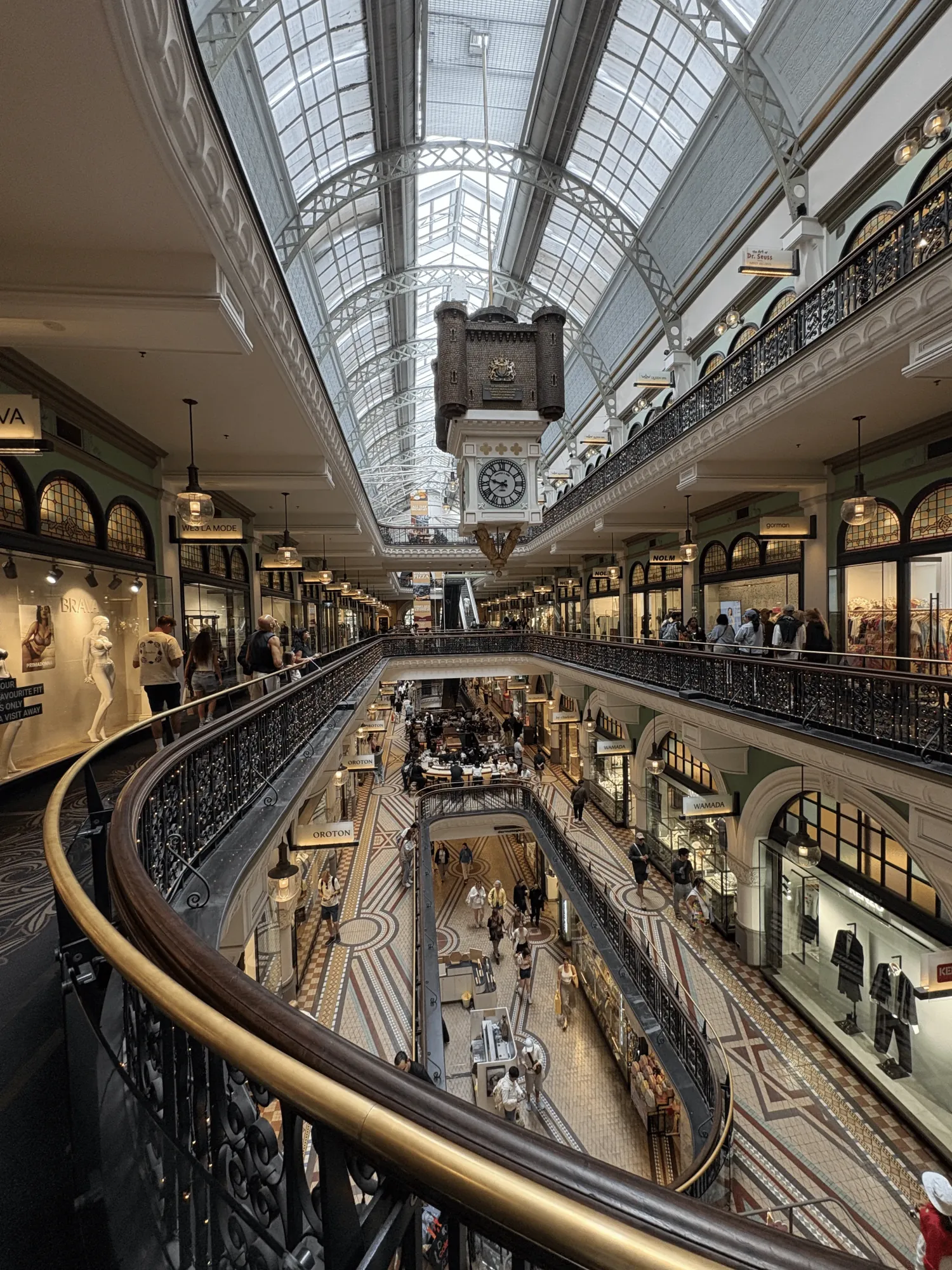
We slept a bit longer because we knew the night would be long. We dressed up and went to the Queen Victoria Building (they say "QVB"). Australians like to shortcut everything. We had breaky there. Afterwards we visited the State Library of New South Wales.
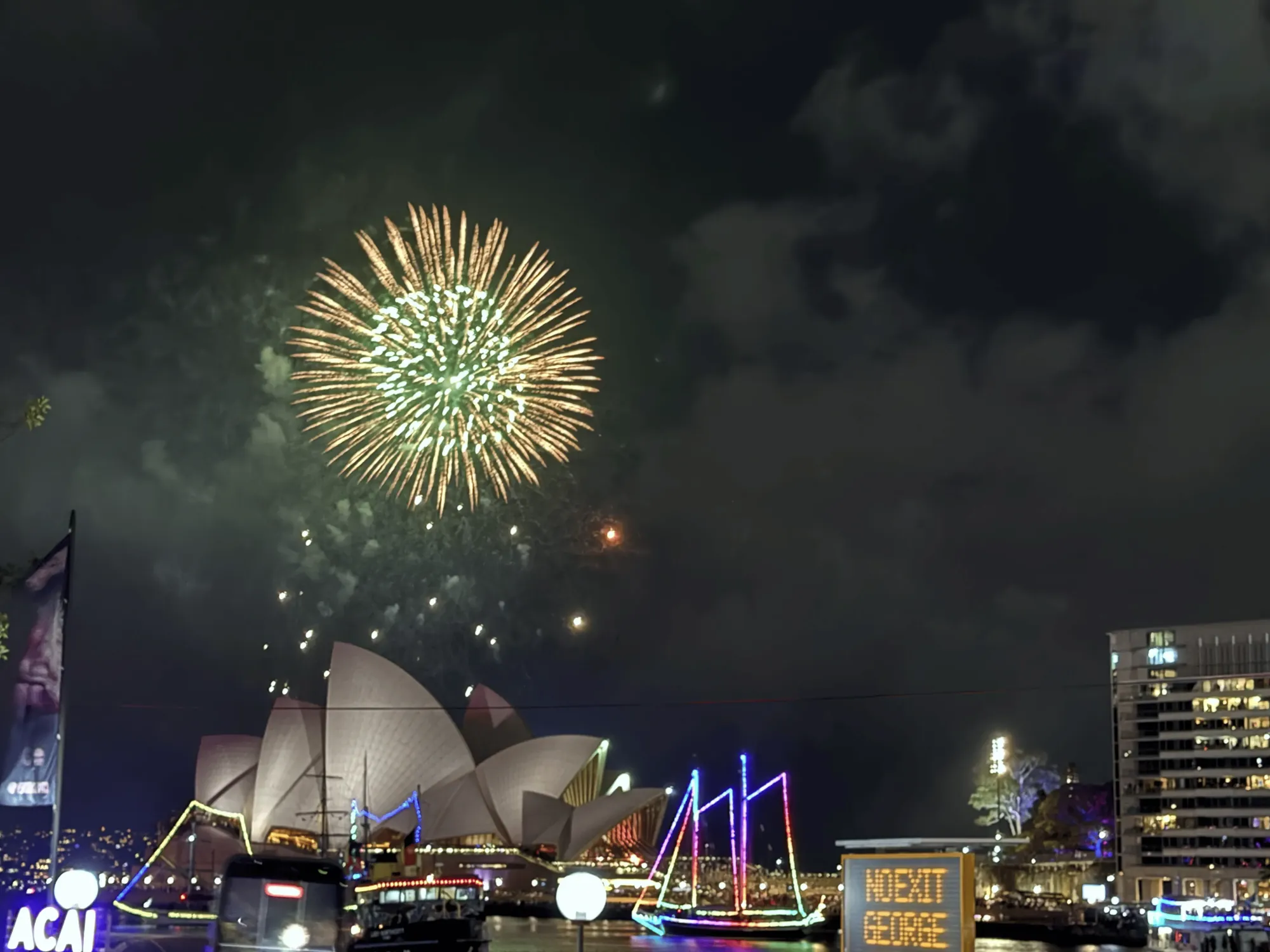
Later we went towards our planned vantage point for the fireworks: Campbells Cove. The strange part is the waiting. You basically commit your whole evening from around 16:30 until midnight just to secure a good view of the Opera House and Harbour Bridge. Inside the secured area there’s no alcohol allowed (and none sold), but there are food trucks. You can prepare with snacks and drinks before entering. It’s a weird but unique experience.
Train to Brisbane (01.01) & Gold Coast arrival (02.01)
We had a free New Year’s breakfast at the hotel, checked out, and went to Central Station with the metro. We bought snacks at Woolworths and boarded the overnight train to Brisbane around 15:00. From there, early in the morning, we continued to the Gold Coast.
When we arrived in Southport it was raining. With heavy luggage we escaped into a café at 7:00 in the morning, ate breakfast, and luckily could check into our accommodation shortly after. We stayed there until January 26 and had a very great time at Gold Coast before flying back via Sydney to Munich.
Reflections & practical notes
Australia is incredibly safe. We felt safe free camping, safe in cities at night, and safe in rural areas. That’s not something I take for granted when I compare it to other countries I’ve traveled to.
Western Australia and the Nullarbor have brutal stretches with bad internet coverage, and inside national parks you often have nothing. If you want a smoother experience, having a local SIM with an actual phone number can make sense. We had an eSIM without a number, which was okay for data, but not ideal for calling when you can’t get through the booking procedure online.
Fuel prices during our trip were mostly between 1.60 and 1.90 AUD per liter. In the outback it can get higher, but that range was typical for us. Our camper (Renault Master) used about 10 liters/100 km over the full distance. In total we drove roughly 6,700 km.
Camping is flexible, but not infinite. You can often drive to campsites and ask for spots, but in some regions and during holiday season it would have saved us time to book in advance. Margaret River was the classic "fully booked" situation.
The spectrum of camping options is huge. We had everything from free camps (but only allowed in a few places), to national park campgrounds with minimal facilities, to fully equipped holiday parks. Big4 and NRMA were consistently good choices. Prices ranged from 0 AUD (free spots), 20 AUD (National Parks) up to 60 AUD for holiday parks, most often around 30-60 AUD depending on power and location. At the time, the EUR/AUD exchange rate was around 0.56, so roughly half in euros, plus a bit.
Food felt slightly more expensive than Germany in general, but meat, fish, and seafood were often cheaper and higher quality, and we heavily used that advantage. BBQ stations everywhere made cooking fun and social.
Regarding "dangerous animals": you hear stories, but we didn’t see a single snake, even though we hiked a lot in various conditions. In Queensland you see more big spiders outside, but it never felt like a real threat. Regarding sharks, just follow the safety instructions. For sure, there are accidents involving animals, but remember that we humans tend to overestimate very low probabilities (Daniel Kahneman).
Also interesting: rural Australia feels "typically Aussie", while the big cities are extremely multicultural, especially with strong Asian influence. That contrast is part of what makes the trip feel so diverse.
If you want to dive into completely new cultures, there are definitely better places on Earth. Australia is part of the Western world. But if you want to have a great time in paradise, with friendly people, beautiful nature, and wildlife, Australia is a really good choice for a road trip.