
Paying myself first for six years
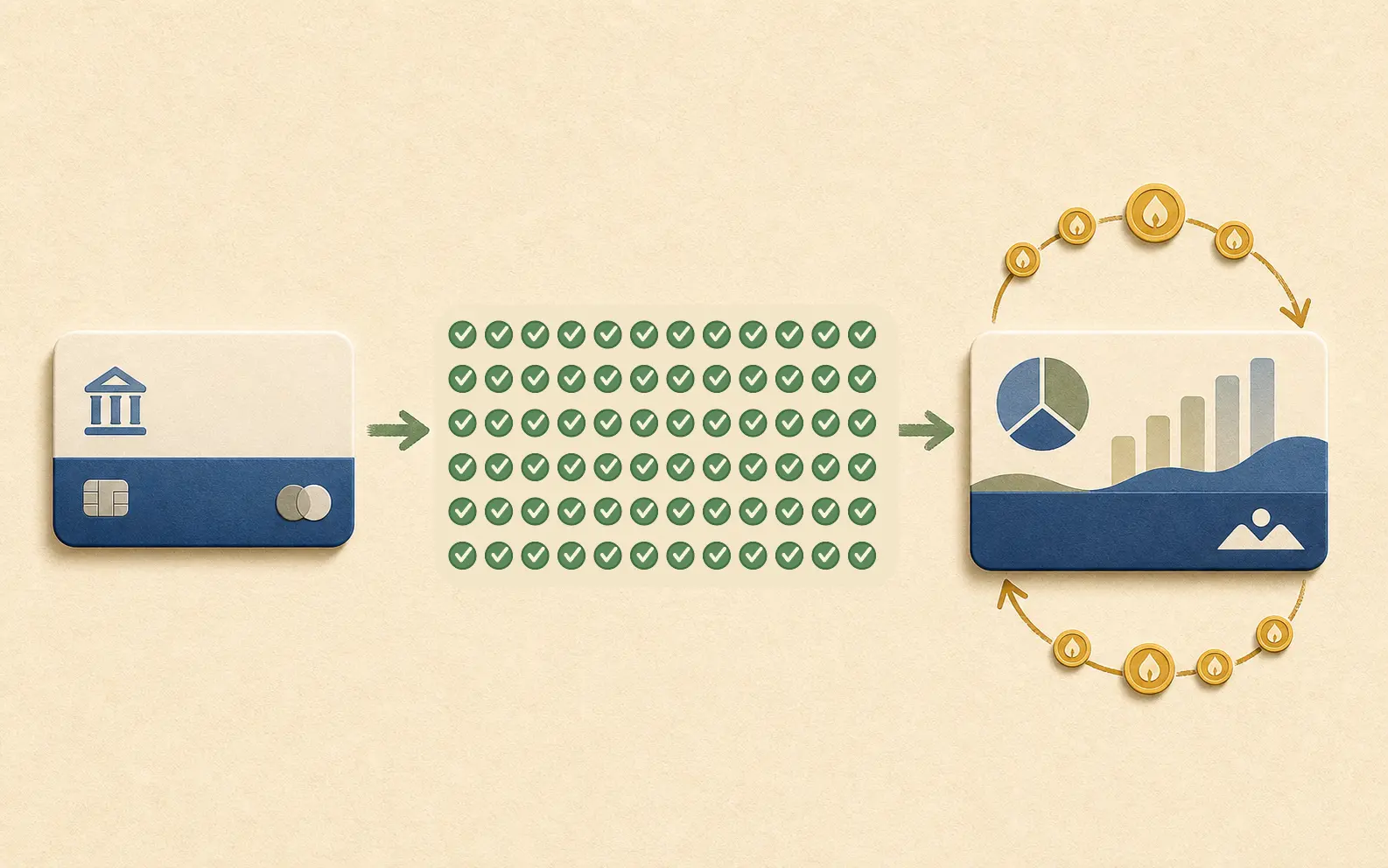
Six years ago, on 1 July 2020, right after starting my first full-time job, I set up a monthly standing order from my main bank account to my brokerage account. That is basically what "pay yourself first" means, and it shows up everywhere across the internet and in finance books. Instead of saving what remains at the end of the month, a fixed amount moves away first, automatically, and I can live on what remains after paying myself. It is a bit like paying my rent, but the account belongs to my future self.
I was lucky that I got decent financial advice early. My flatmate back then was very into finance and inspired me. Around that time I binge-watched Finanzfluss and Finanztip, read about ETFs, and started with a simple automated savings plan almost immediately.
Looking back, this was a very good time to set up this automated process. For the first time in my life, I had more income than I needed for normal life. Before my lifestyle costs could creep up, I spent some time looking at what was worth paying for and what really benefited my life and well-being. The rest went into the stock market, fully automated. I was living in a shared flat in Friedrichshafen, Germany. Rent is usually one of the biggest fixed monthly expenses, but because my rent was still student-style, I was able to start with a high savings rate from the beginning.
What I actually did
The standing order has been running since July 2020. Every month, money leaves my regular account and goes into my brokerage account. From there it is invested through a monthly savings plan.
During these six years, I changed the plan many times. I switched between funds and individual stocks. I adjusted the allocation. I learned more, changed my mind, and probably overthought many things. I already wrote about that investing path in my first 5 years in the stock market.
But what I have not done: I never stopped paying myself first. I reduced the amount for a few months when life got more expensive, but most adjustments went in the other direction. In general, I tried to increase the standing order when my salary increased. It was not a clean straight line upward, but the principle behind it stayed.
For me, automation is the important part. Some frugal people like me might be able to save the same amount by manually shifting it to their brokerage account at the end of the month, but even then it costs mental capacity to actually do it.
From July 2020 to the day I started writing this, the standing order has been running for six years: 72 monthly transfers in a row. Even starting from zero, that number feels powerful to me. Right now, think about an amount you could save every month and multiply it by 72. Crazy, isn't it? I did all of this in my twenties, and it is something I am really proud of.
If I use a rough 7% annual return assumption, the portfolio built from these six years of saving would now have an expected average monthly return close to half of my monthly savings amount. Of course, this is only a theoretical average. Markets do not move smoothly. But as a mental model, I find it motivating: after around 10 years of the same habit, a 7% average return would roughly match my own monthly saving.
The second small loop: reinvesting dividends
The more concrete part for me is my dividend strategy. After doing this for several years, I was able to set up a second automated savings plan. Thanks to my depot tracker app, I know the average amount of dividends I receive each month. I used that information to create another savings plan that reinvests those dividends automatically because I do not need that cash flow. From time to time, I can increase the amount or change the companies and funds I want to buy.
The number I like tracking in this context is average net dividends per month compared to my average monthly expenses:
For me, this is now getting close to 10%. That is still far away from covering my life, but it is a meaningful amount. The numerator is slowly increasing automatically. I just need to watch the denominator and think twice before increasing it. I definitely have lifestyle inflation as well, but at least I am aware of it and think it through.
Final thoughts
This habit worked well for me because my context made it possible: stable income, no family to support, manageable fixed costs, and a personality that does not naturally spend a lot. I definitely remember months where I did not have much cash left at the end. Usually this happened when several weekend trips, vacations, or bigger expenses came together in a short time window. That's just part of the game.
What I want to keep:
- Savings plan always stays automated
- Increase the amount when income increases. Allow (temporary) reductions when life needs flexibility.
- Track and increase the dividend-to-expense ratio.
- Do not let saving reduce things that are actually worth spending money on.
- My personal minimum savings plan is 10% of gross income, although I do not yet know whether this will be possible in every life phase, especially with family.